



Lithium battery overview
Modern energy storage systems for self-sufficient applications
Lithium batteries are the first choice when you need reliable, lightweight, and long-lasting power on the go or in your off-grid system. On this page, you'll learn about the different lithium technologies, the differences between Li-ion and LiFePO4, and which battery is best suited for your camper, boat, or solar system.
What are lithium batteries?
Lithium batteries utilize advanced energy storage chemistries that differ significantly from those of conventional lead-acid, AGM, or gel batteries. The most important variants are:
- Lithium-ion (Li-ion): High energy density, but more thermally sensitive.
- Lithium polymer (LiPo): Very light, flexible, but less robust.
- LiFePO4 (Lithium iron phosphate): Extremely stable, very durable, ideal for motorhomes, solar storage & off-grid systems.
Although all technologies belong to the “lithium family”, safety, cycle stability and application areas differ significantly.
The differences: Lithium-ion vs. LiFePO4
The following comparison shows the most important technical differences:
| feature | Lithium-ion | LiFePO4 |
|---|---|---|
| Energy density | Higher | Slightly less |
| Cycle stability | 500–1,000 cycles | 2,000–6,000+ cycles |
| Temperature behavior | Good in cold weather | Robust in heat, requires heating in freezing conditions |
| Security | Thermally unstable | Extremely safe, non-flammable |
| Areas of application | Power stations, mobile devices | Motorhome, solar, self-sufficient systems |
In summary: For solar systems, campers, garden sheds or self-sufficient energy, LiFePO4 is clearly the best choice – safe, durable and virtually maintenance-free.
If you are specifically looking for the safest and longest-lasting lithium batteries, you will find all suitable models in our LiFePO4 battery collection . This technology is ideal for motorhomes, solar systems, and all off-grid energy systems.
How do you find the right battery?
Choosing the right battery depends on your vehicle, the available space, and your energy needs. Three factors are important:
1. Space available & installation location
- Under-seat (e.g. Fiat Ducato, VW Crafter, Sprinter): The compact NOVA Base 100Ah fits perfectly under the driver's seat.
- Storage box / rear garage: NOVA Core 150–200Ah delivers significantly more capacity in the same space.
- Wiring: The NOVA Core series can be operated up to 4x in series or parallel – ideal for large motorhomes.
2nd season & use
- Summer camping: The NOVA Base series is lightweight, compact and ideal for standard consumers.
- Winter operation: NOVA Core with heating mat can be charged down to -30 °C – perfect for winter tours.
3. Which devices need to be supplied with power?
| consumer | Recommended battery |
|---|---|
| LED, USB, water pump | NOVA Base 100–120Ah |
| Refrigerator, light, small inverter | NOVA Base 150Ah or Core 150Ah |
| Coffee machine, induction hob, air conditioning | Core 200Ah+ with 1500–2000W inverter |
| Winter operation & high performance requirements | Core 300–480Ah |
Lithium technology
LiFePO4 batteries
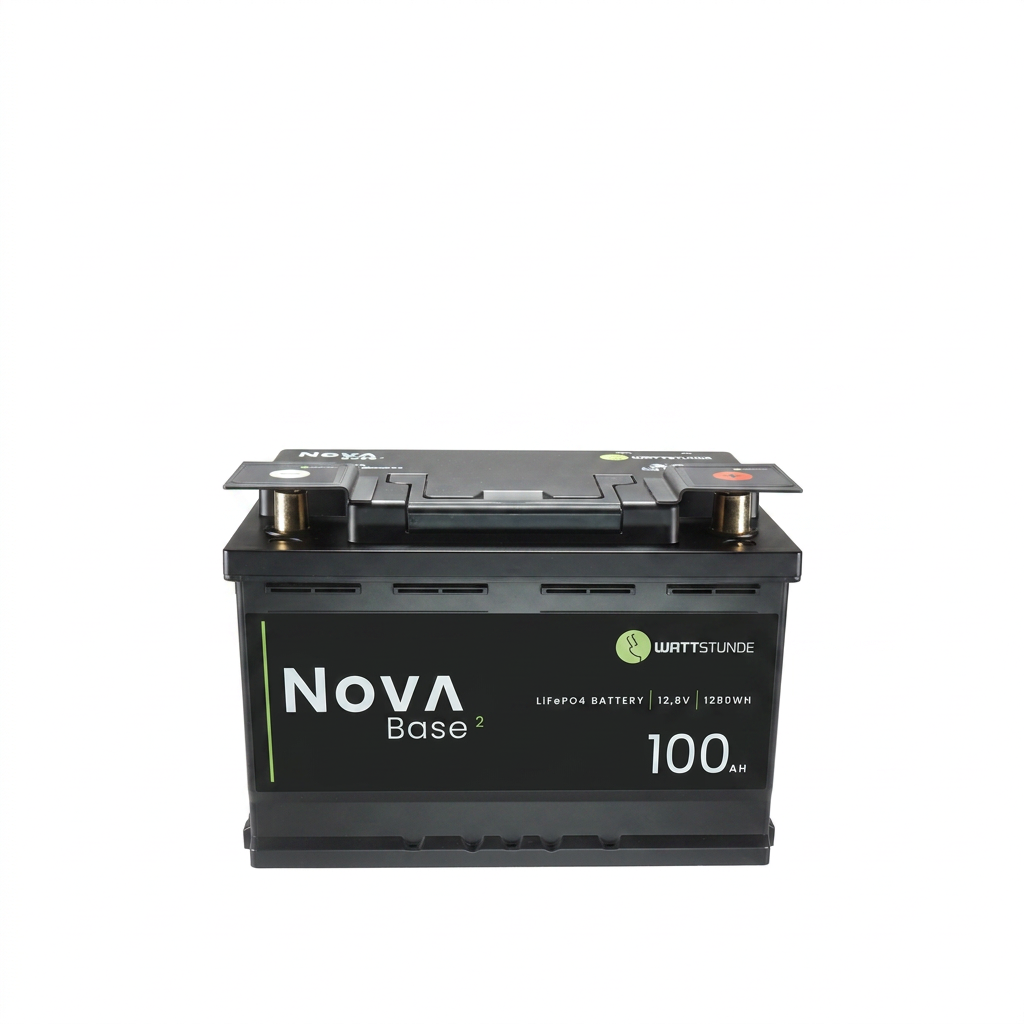
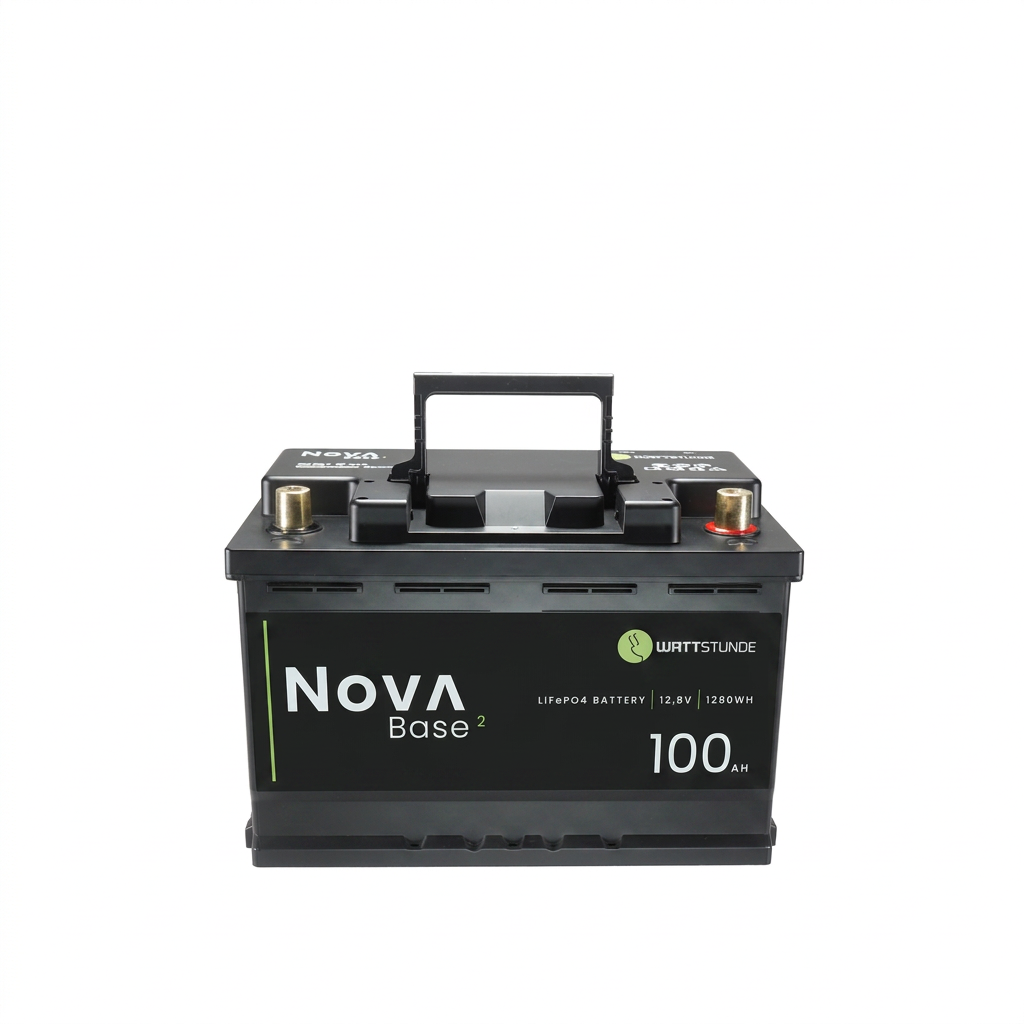
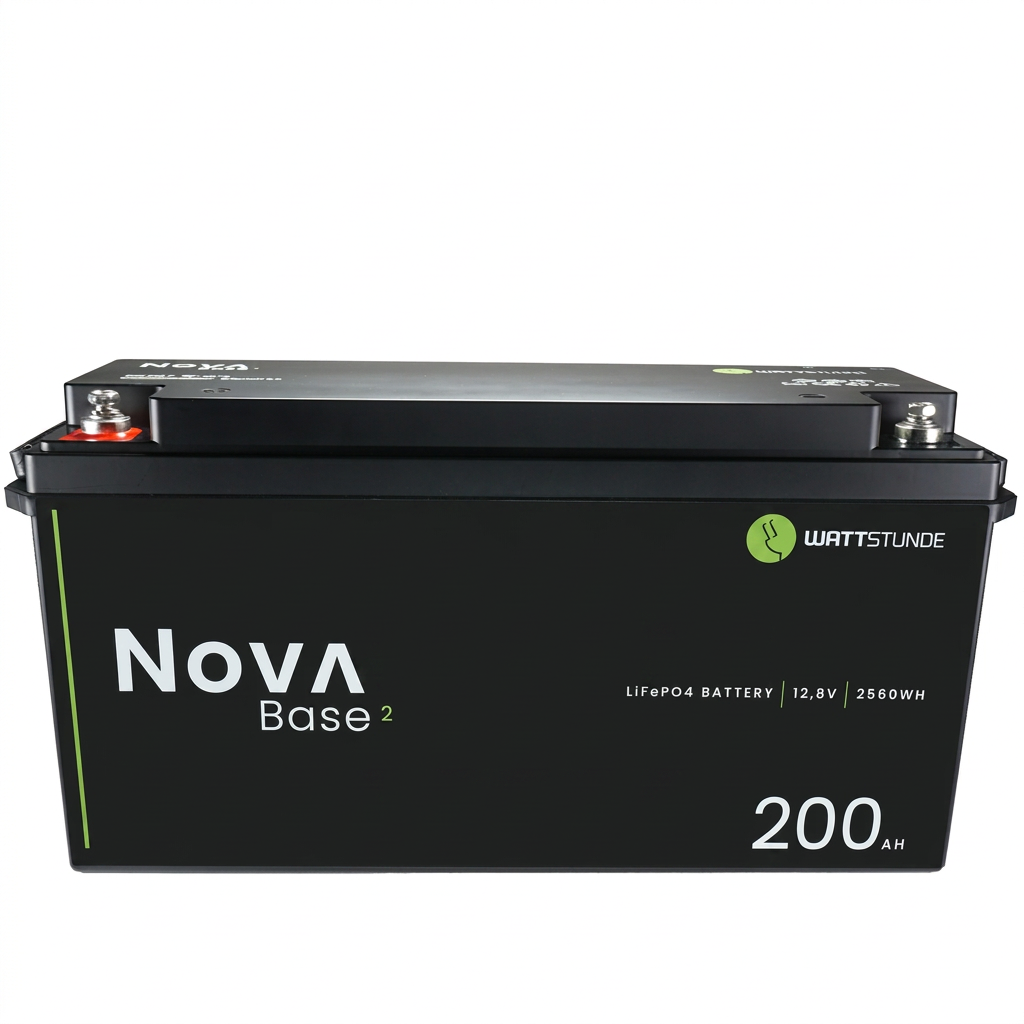
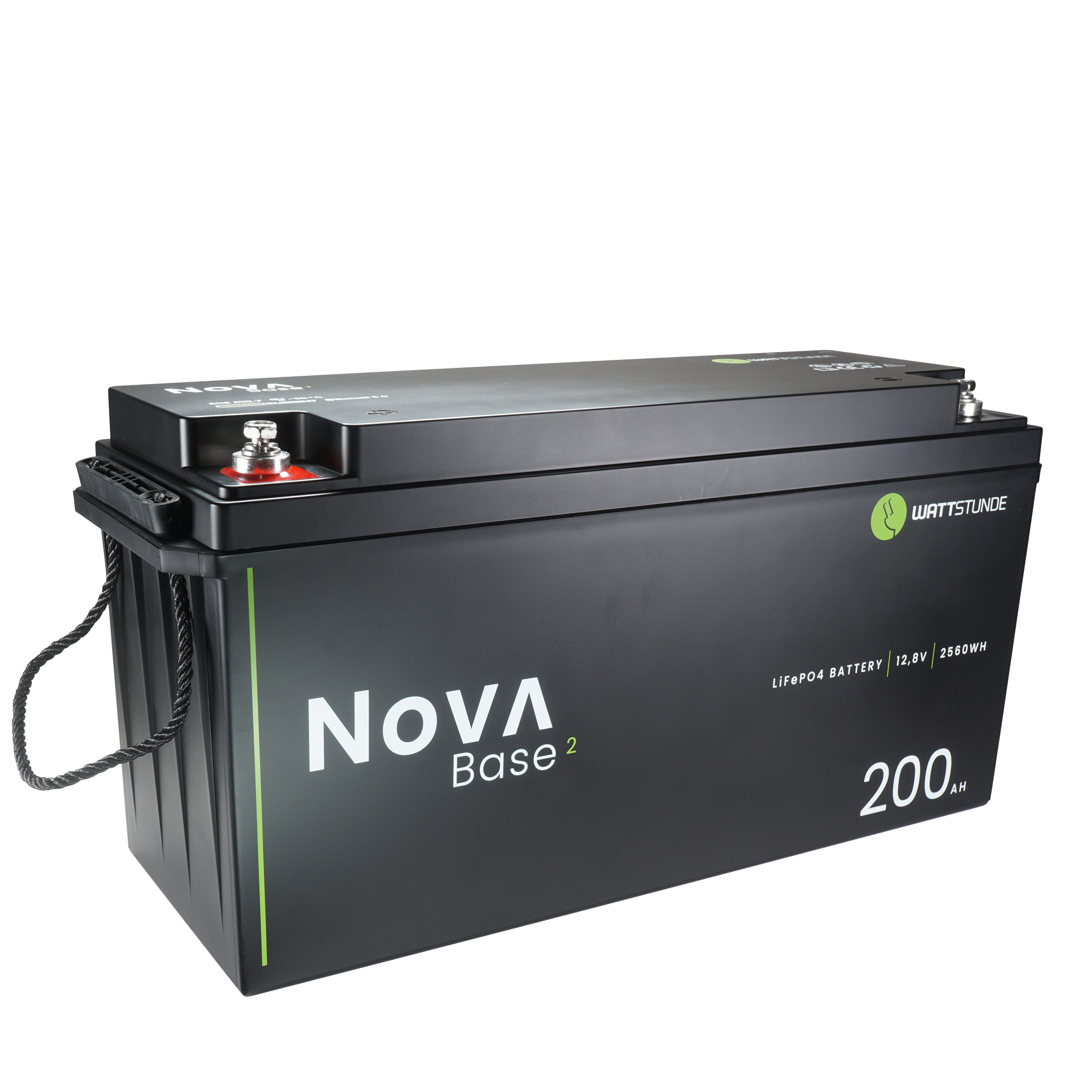
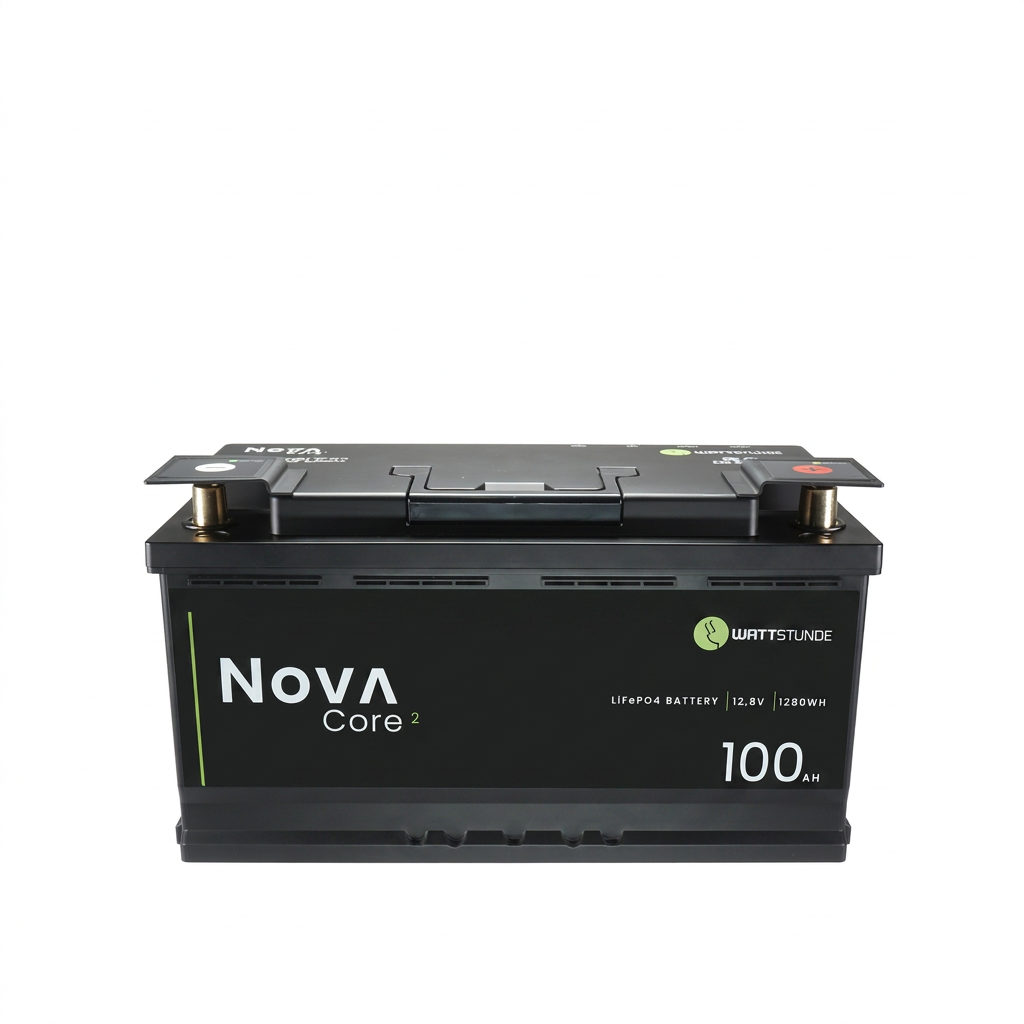
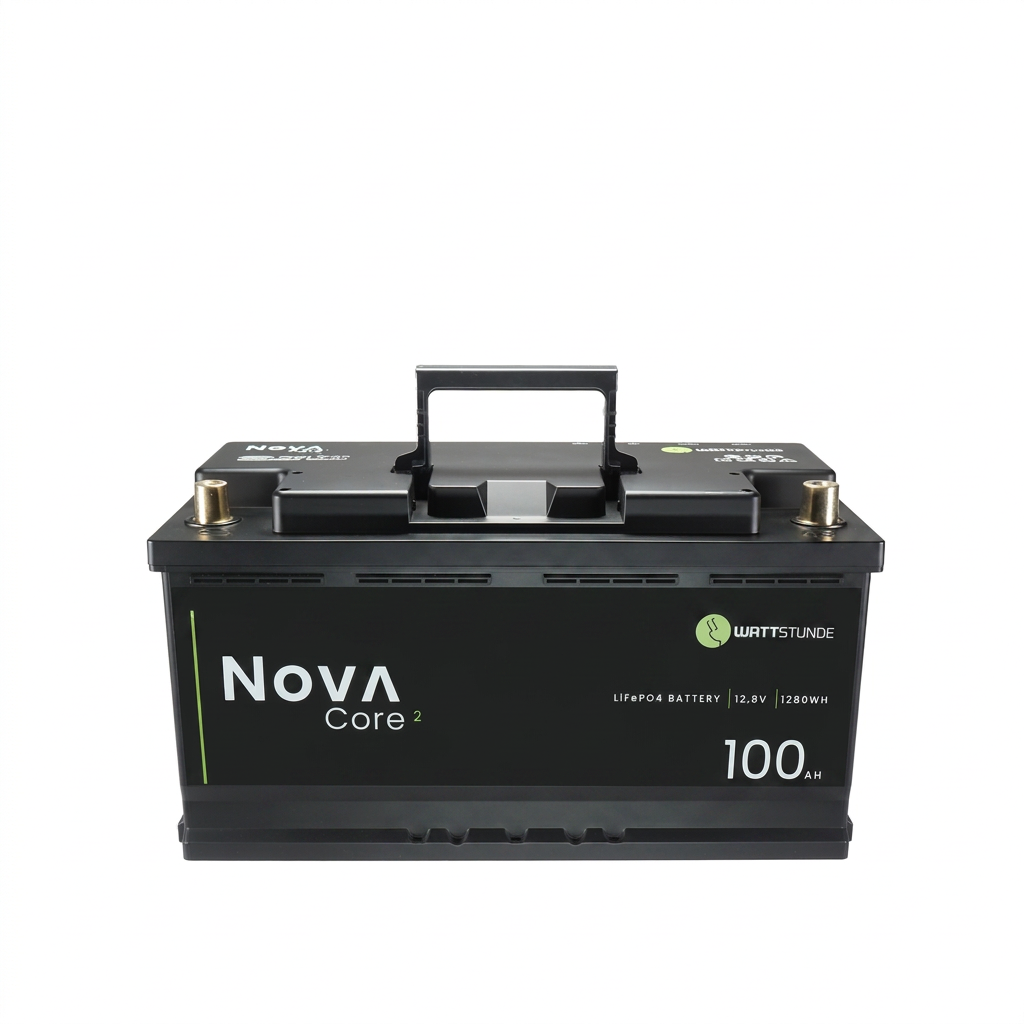
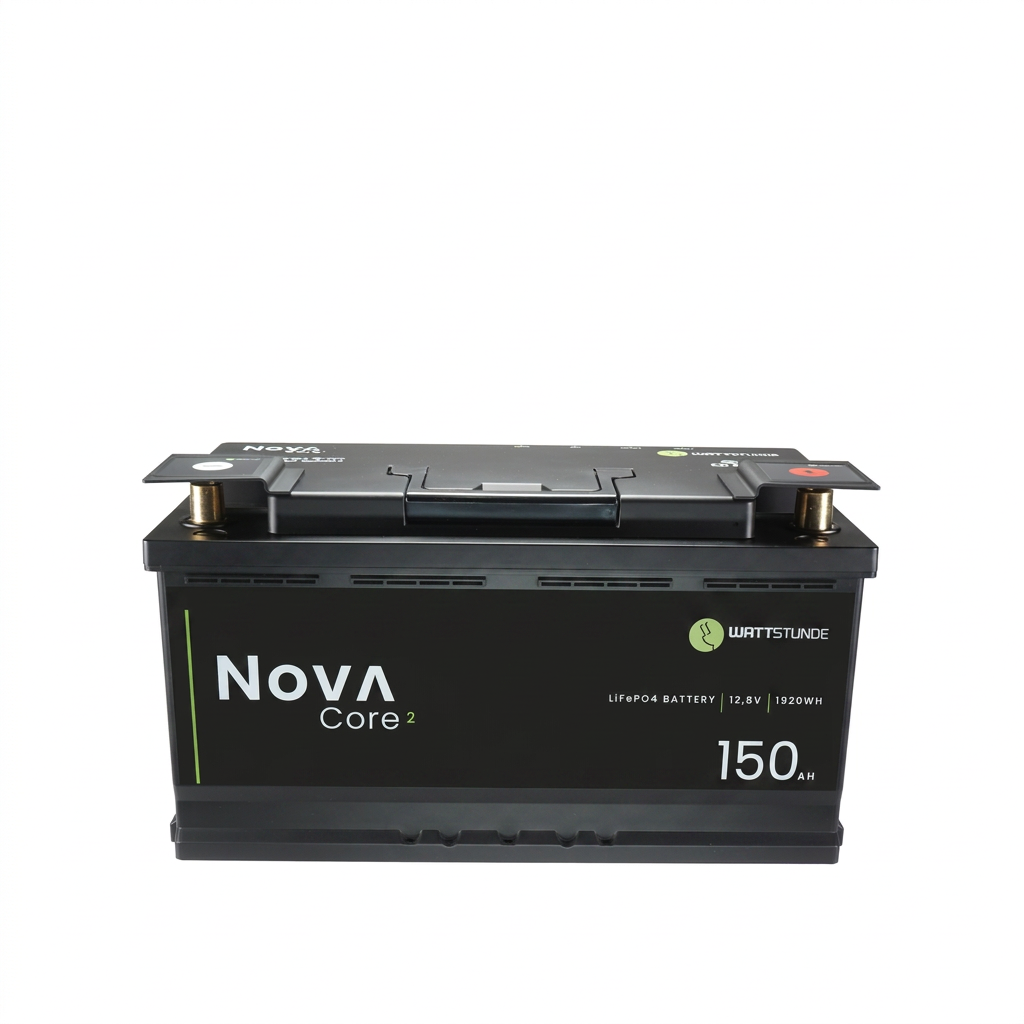
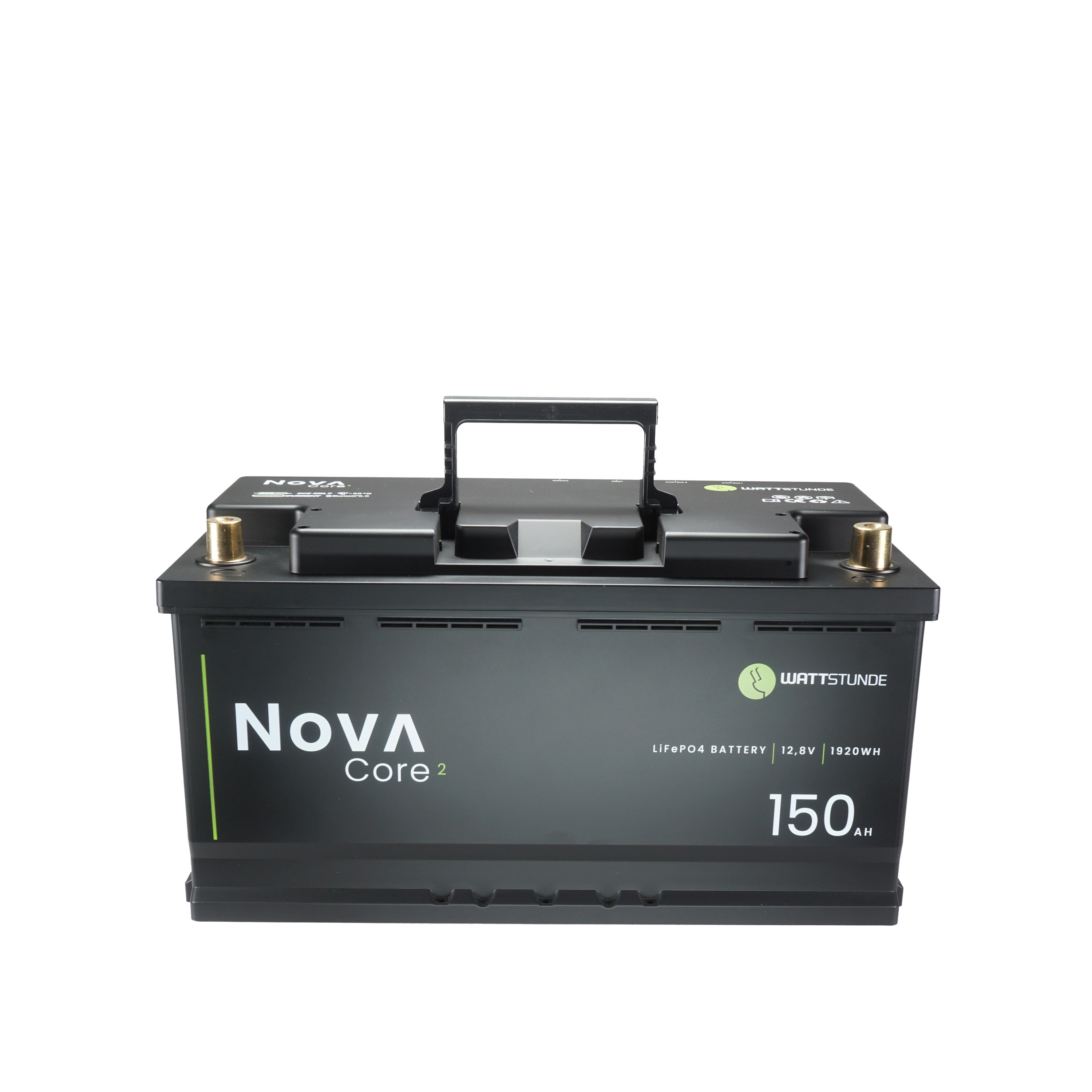
The NOVA battery series from WATTSTUNDE
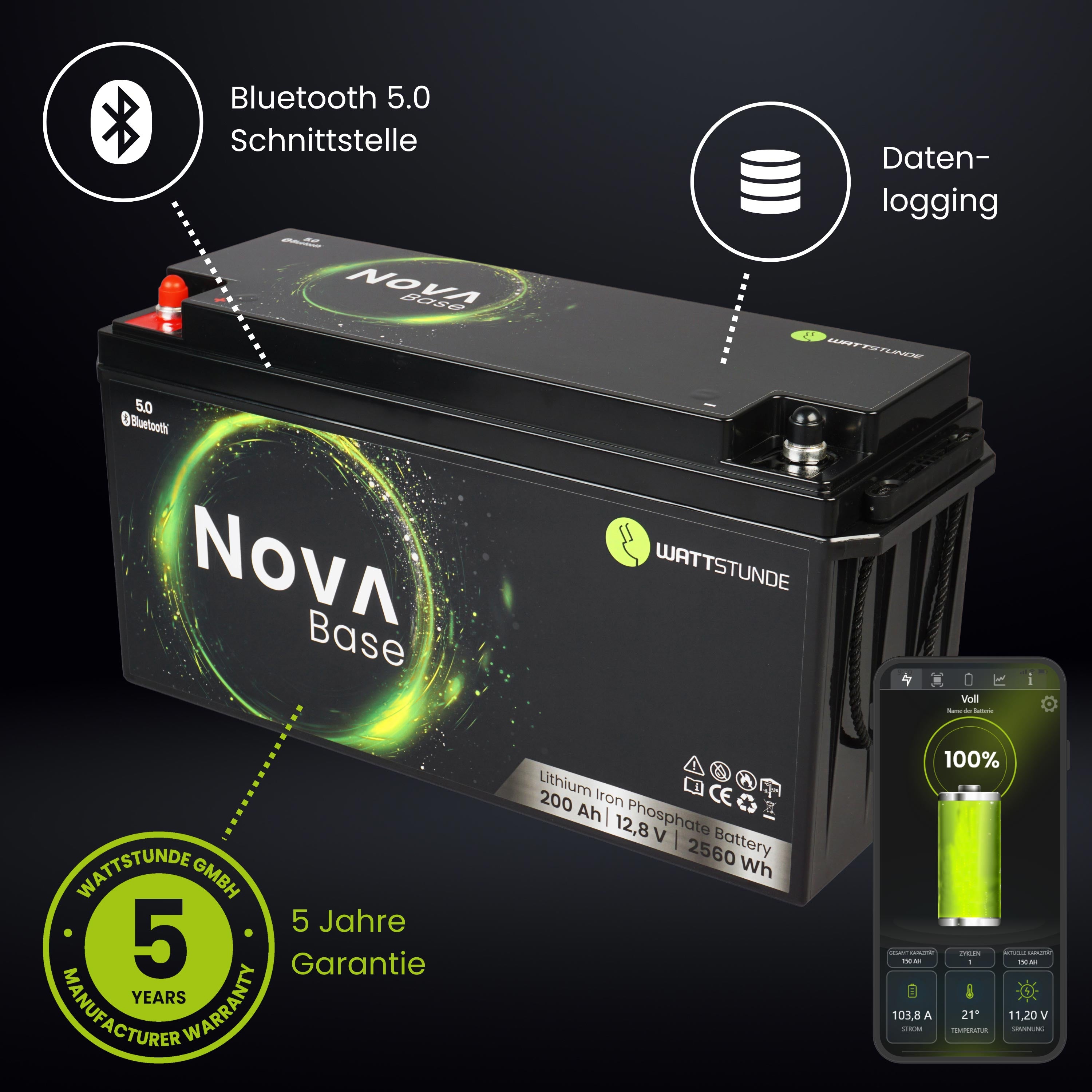
The ideal solution for compact vehicles or moderate applications.
- 20–200 Ah capacity
- Compact DIN dimensions (under-seat compatible)
- Up to 3,000 cycles
- 5-year warranty
- Integrated BMS
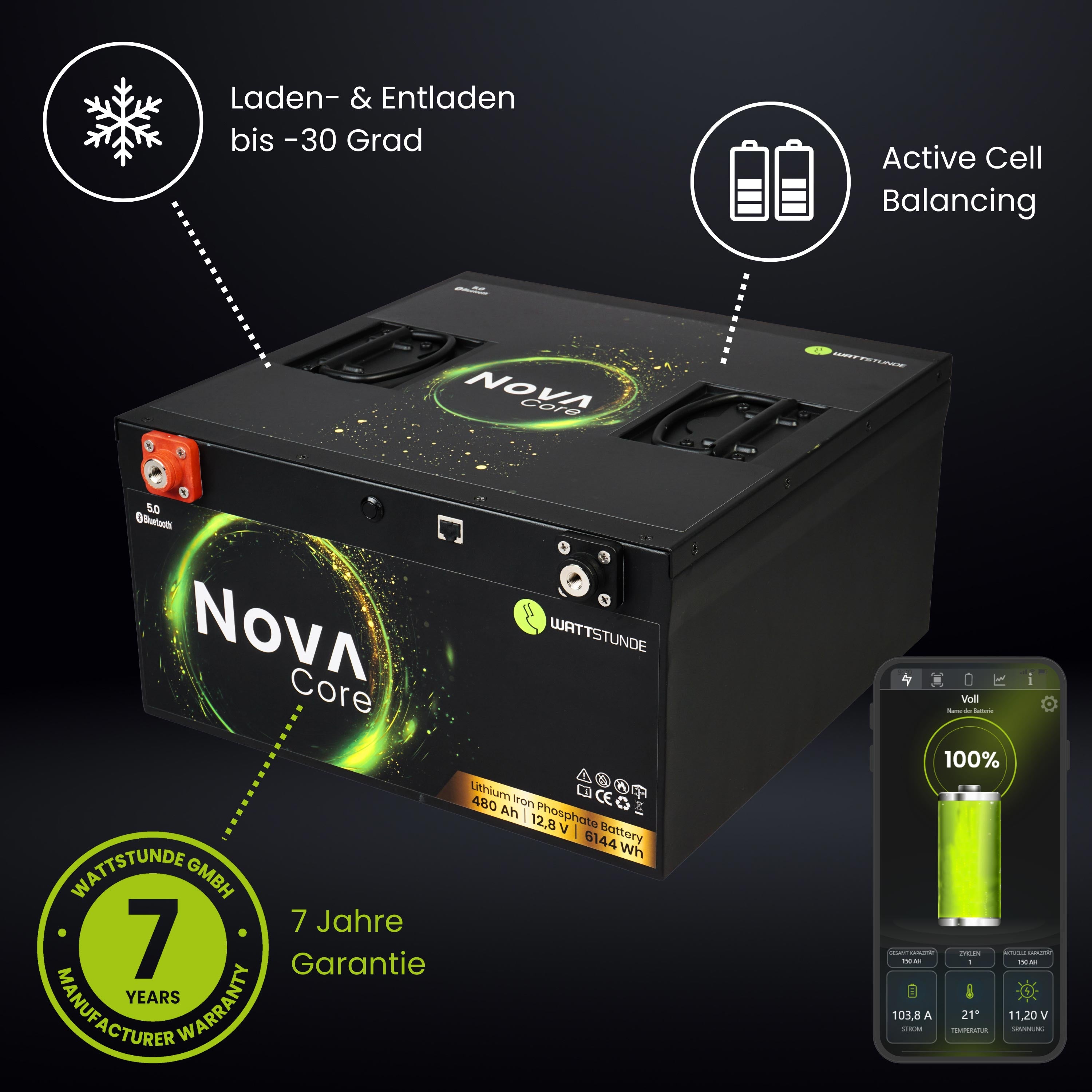
For the highest demands – even in winter or during continuous operation.
- 100–480 Ah capacity
- Integrated heating mat (rechargeable down to -30 °C)
- Up to 6,000 cycles
- Bluetooth app & switchable
- Up to 7 years warranty
Technical comparison: NOVA Base vs. Core
| feature | NOVA Base | NOVA Core |
|---|---|---|
| capacity | 20–200Ah | 100–480Ah |
| heating mat | No | Yes |
| Bluetooth/App | Partially | Yes |
| Switchable | Yes | Yes (up to 4x) |
| guarantee | 5 years | Up to 7 years |
Why Solarkontor?
Solarkontor stands for high-quality lithium and LiFePO4 storage systems, real-world testing, and personalized consultation. The NOVA series from WATTSTUNDE was developed for campers, off-grid systems, and self-sufficient power supply – reliable, safe, and durable.
Do you want to know which battery fits your vehicle? Our team will be happy to help you.
FAQ | 10 frequently asked questions about lithium batteries
Many users face the question of which lithium battery is truly suitable for their motorhome, solar system , or off-grid system. The following answers will help you better understand the technical differences and select a safe, durable, and suitable battery for your application .
1. What is the difference between lithium-ion and LiFePO4?
Lithium-ion batteries have a higher energy density but are more thermally sensitive and offer fewer charging cycles. LiFePO4 batteries are significantly safer, longer-lasting, and more stable – making them ideal for RVs, solar storage systems, and off-grid applications.
2. Which lithium battery is best for my motorhome?
LiFePO4 is considered the best choice for motorhomes because this technology is safe, lightweight, and durable. It offers stable voltage, many charging cycles, and is ideally suited for appliances such as refrigerators, lights, inverters, or coffee makers.
3. Can I retrofit a lithium battery in an older motorhome?
Yes, in most cases retrofitting is easily possible. It's important that the charger, booster, and, if applicable, solar charge controller are compatible with lithium batteries. A battery management system (BMS) provides additional protection for the battery.
4. How many Ah should my lithium battery have?
It depends on your energy consumption. Small campervans often manage with 100–120 Ah, while larger motorhomes or off-grid systems tend to require 150–300 Ah. Appliances like coffee machines or induction hobs significantly increase the demand.
5. How long does a lithium battery last?
A high-quality lithium battery (especially LiFePO4) can achieve 3,000 to over 6,000 charging cycles. Depending on usage, this corresponds to a lifespan of 8 to 15 years or more.
6. Can a lithium battery also be used in winter?
Many lithium batteries should not be charged in freezing temperatures. However, special models with an integrated heating mat – such as modern premium series – allow charging down to -30°C. Discharging is also possible in cold weather with most models.
7. Is a lithium battery dangerous?
LiFePO4 batteries are considered particularly safe because they are thermally stable and non-flammable. The integrated BMS provides additional protection against overcharging, deep discharging, overcurrent, and short circuits.
8. What are the benefits of a BMS for a lithium battery?
A battery management system (BMS) monitors voltage, temperature, and charging and discharging currents. It protects the battery from damage and ensures a long lifespan. A BMS is essential for lithium batteries.
9. Why are lithium batteries lighter than AGM or gel batteries?
Lithium technologies have a significantly higher energy density, which means that much less mass is needed for the same capacity. This saves weight and improves efficiency in motorhomes, boats, or off-grid systems.
10. Can I connect multiple lithium batteries together?
Yes, many lithium batteries, and especially LiFePO4 models, can be connected in parallel or in series. This allows you to increase capacity or voltage – ideal for large solar systems or high-performance inverters.
