


Shore power & charger – Power supply at the pitch
A stable power supply in your campervan doesn't just mean solar panels on the roof or charging while driving – shore power also plays a crucial role. This is especially true if you want to charge regardless of the weather, quickly top up your battery before your trip, or have a reliable power supply at campsites. In this part of our component guide , we'll look at how shore power works in a campervan, what you need to consider when choosing chargers, and how to safely connect your vehicle's electrical system to the 230V mains.
Why additional charging options are so important
Solar power output can fluctuate significantly depending on weather, season, and location. On overcast days, in autumn and winter, or when parked in the shade, the solar system often doesn't provide enough energy to reliably fully charge the battery. Solar power is ideal, but highly dependent on the weather.
A charging booster can compensate for this problem while driving, but it too has its limitations: No one wants to have to constantly drive around just to generate electricity . Especially at scenic campsites or during longer stays without changing location, the booster cannot provide any power.
Shore power (230 V), on the other hand, is a very convenient charging source – but it's not available everywhere and not at all times. Remote campsites, wild camping, or spontaneous overnight stays often don't offer access to a power outlet.
That's precisely why a combination of solar power, a charging booster, and shore power is the best solution for a reliable energy system. The strengths of each charging method complement each other, and their weaknesses are offset. This allows you to recharge your battery at any time – regardless of weather, location, or travel plans.
And if you would like to delve deeper into specific topics such as solar, charging boosters, batteries or inverters : You will find further detailed articles, step-by-step explanations and practical examples on all these topics in our blog.
Using shore power – here's how it works
When charging via shore power, your camper is connected to an external power source using a CEE plug. These plug types are standard at campsites, weatherproof, and reliable.
The shore power supply connects to a battery charger that charges your onboard battery using the correct charging curve. Modern chargers typically deliver 10–30 amps and automatically adjust the charging process to your battery type.
Additionally, depending on the installation, the shore power supply can directly power the 230V sockets in the vehicle. This allows you to operate electrical devices such as coffee makers, laptops, or chargers without an inverter. This saves energy, reduces losses, and relieves the strain on your vehicle's battery.
Key advantages:
- Works regardless of the weather
- Perfect for recharging before or during longer stays in one place.
- Gentle charging through optimized charging curve
- 230V sockets in the vehicle can be used directly, even without an inverter.
To ensure the connection remains secure, you should always use an outdoor-suitable extension cable .
WATTSTUNDE CEE feed-in cable with RCD protection
The WATTSTUNDE CEE power inlet cable with integrated residual current circuit breaker (RCCB) is not designed to supply conventional shore power to the vehicle, but rather allows you to safely connect the 230V output of a power station to your vehicle's electrical system. This way, you can charge your leisure battery via the charger – or use certain 230V appliances in the vehicle – without needing a permanently installed shore power connection.
The integrated residual current device (RCD) ensures a high level of safety: Normally, an RCD requires a functioning earth connection, which is not present in power stations without a shore power connection. The feed-in cable simulates this earth connection, allowing the RCD to function correctly and reliably detect fault currents.
Why is this important?
- Residual current devices (RCDs) detect dangerous fault currents.
- Protection for you and the vehicle from electrical hazards
- Especially important in humid conditions or with metallic vehicle bodies
In short: The cable offers a safe, mobile alternative to the classic shore power connection – especially if you want to use your power station as an energy source for your on-board electrical system.
Selecting the correct charger
A shore power charger plays a central role in charging via 230 V. It should be perfectly matched to your battery type.
Pay special attention to:
- Charging characteristic for AGM, Gel or Lithium
- Charging current (typically 10–30 A – matching the battery capacity; more powerful chargers are also possible, these will then shorten the charging time.)
- Temperature compensation (important for AGM/Gel)
- Maintenance charging for idle periods
A lithium-compatible charger is essential if you are using a LiFePO₄ battery. An incorrect charging profile can significantly shorten the lifespan of your battery.
Safety aspects of network connection
Shore power means 230 V – and that means you're working in a voltage range that, in the event of a fault, can be significantly more dangerous than the 12 V vehicle electrical system. While 12 V generally poses a low risk to humans, even minor faults at 230 V can lead to electric shocks, sparks, or, in the worst case, fires. Therefore, careful and standard-compliant handling of shore power is essential!
Important safety rules:
- Always use a residual current device (RCD) or an insulation monitor to protect yourself from dangerous fault currents.
- Only use cables with IP44 or higher, as they must withstand moisture, rain and mechanical stress.
- Never use damaged, pinched or kinked cables – even minor damage can lead to short circuits or heat generation at 230 V.
- Always keep the charger, plug and connectors dry and well-ventilated to avoid leakage currents or corrosion.
Temporary solutions such as loose adapters or wobbly power strips are taboo.
Many campers underestimate the risks of external power sources because they're used to simply "plugging in" at home. However, conditions inside a vehicle are different: vibrations, temperature fluctuations, humidity, and limited space significantly increase the demands. Professional installation ensures that your onboard electrical system remains reliable, stable, and, above all, safe.
Combination with the on-board electronics
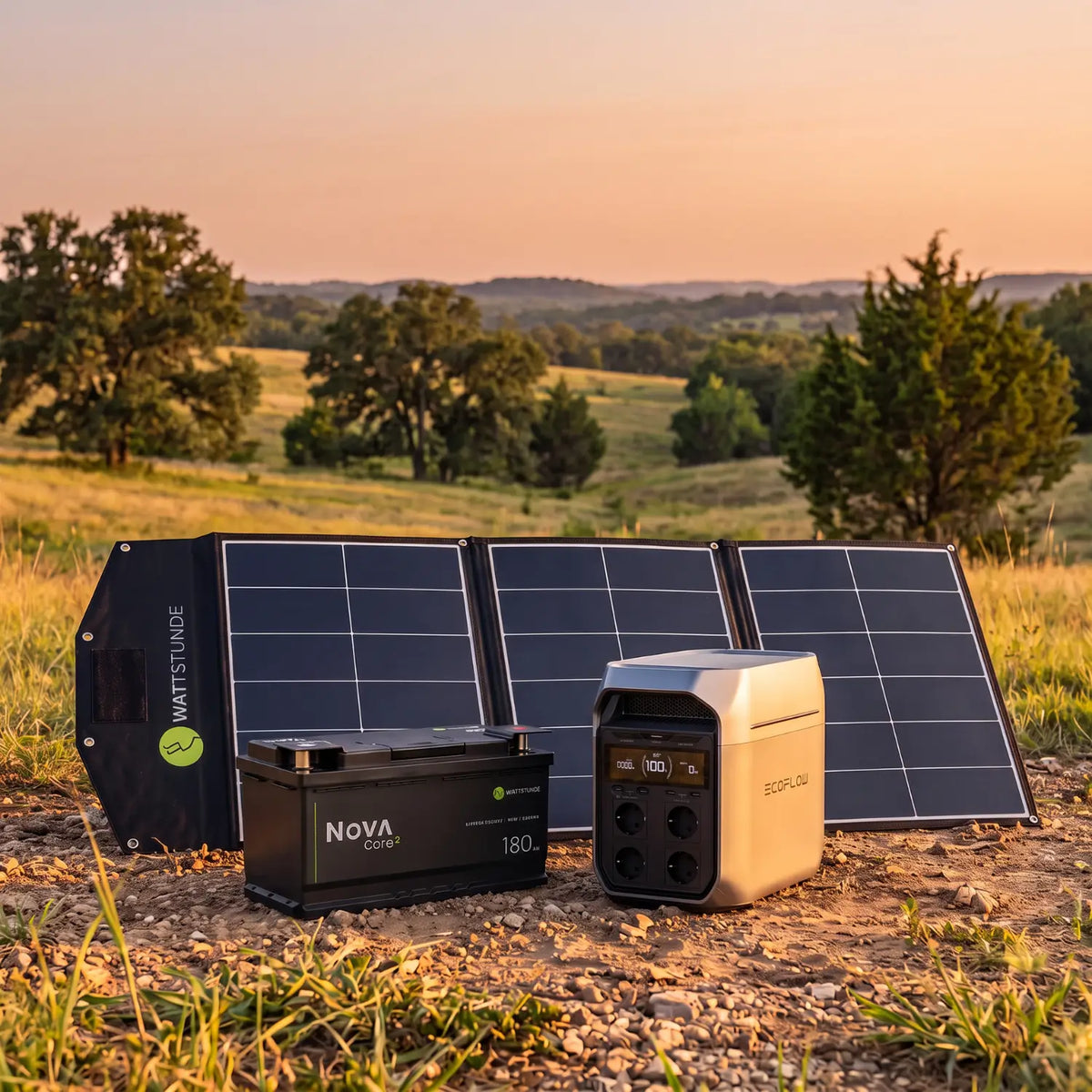
Shore power is just one component of the overall system. It complements the other charging sources effectively and ensures you remain flexible at all times – whether you're driving, stationary, or the sun is shining. While solar power provides continuous energy during the day and the charging booster reliably recharges your battery while driving, shore power offers a stable, weather-independent option for fully charging your leisure battery or directly powering appliances. A power station can also perfectly complement your setup – for example, as a mobile power source for devices outside the camper or as a backup if other charging sources fail.
This creates a powerful, versatile and fail-safe power system that adapts harmoniously to your everyday life – whether you are camping for several days, looking for a spot at a campsite or traveling long distances.
Conclusion & Outlook
A securely installed shore power connection and the right charger ensure that you can reliably charge your vehicle regardless of the weather – whether at the campsite, in your driveway, or on the go. Especially when combined with solar panels and a charging booster, this creates an energy system that provides you with a flexible and self-sufficient power supply.
The next article in our component guide will be about inverters – that is, how you can generate 230 V in your camper even without shore power .