


The season is about to begin, the first trips are planned – and now, if not before, you'll find out if your camper's power supply is truly suited to your everyday travel needs. Perhaps your current solution is reaching its limits, perhaps you'd like more independence, or simply more comfort.
A well-planned solar and battery upgrade ensures your camper has a reliable power supply – without improvisation or unpleasant surprises on the road. Here you'll learn what's important and how to proceed effectively.
Why now is the right time
The start of the season is the ideal time to check and specifically improve your power system. Perhaps you already noticed towards the end of last season that your current power setup no longer really suits your everyday travel needs – be it due to empty batteries, insufficient charging power, or unnecessary limitations.
Now you have plenty of time for planning, installation, and testing before longer trips. Those who only realize on the road that the battery or solar power isn't sufficient usually have to make compromises.
A well-coordinated system gives you security and flexibility – whether it's a weekend trip or a longer tour.
This is how your power supply works in your camper.
The power supply in the camper consists of several components that work together as a system:
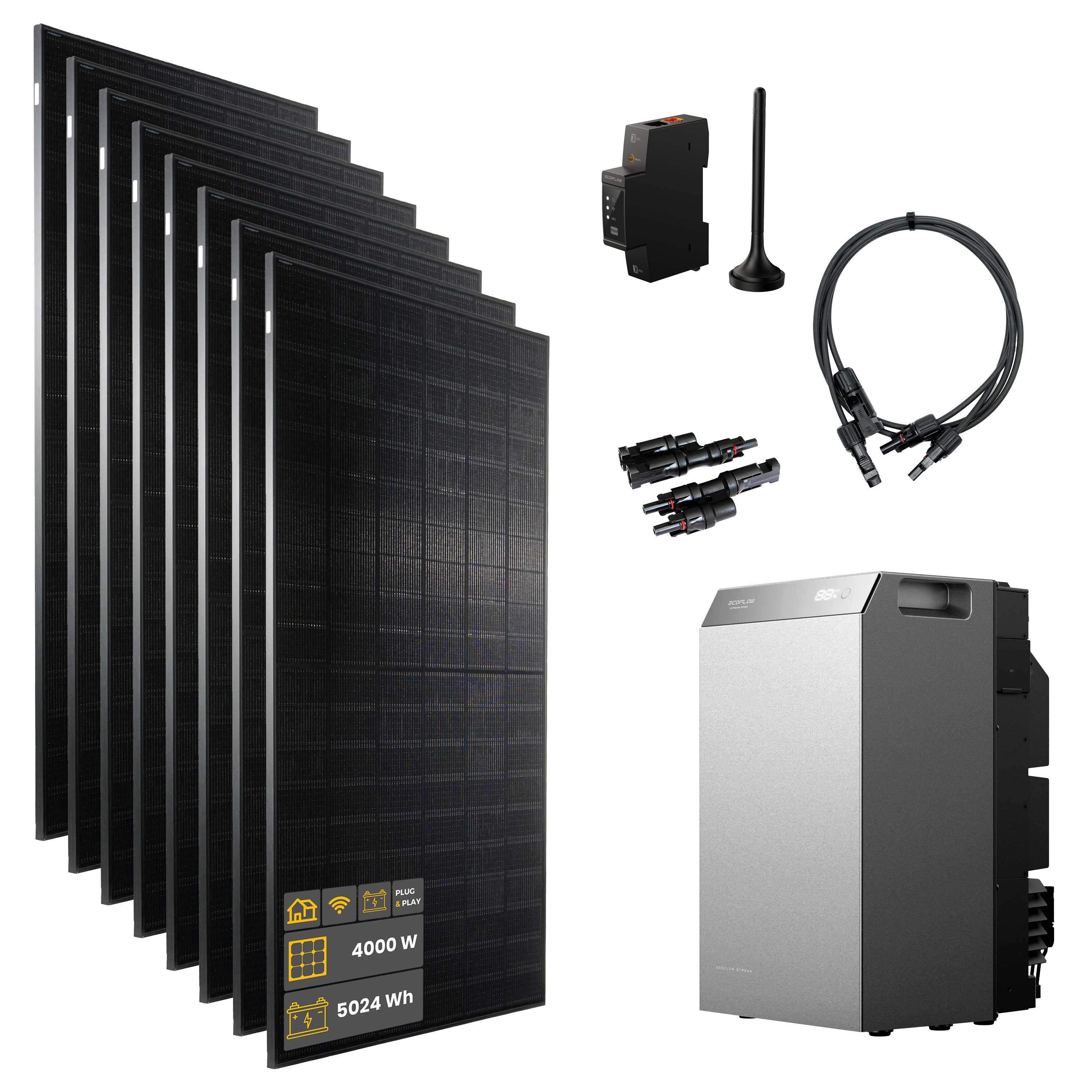
- Solar panels generate electricity
- Batteries store energy
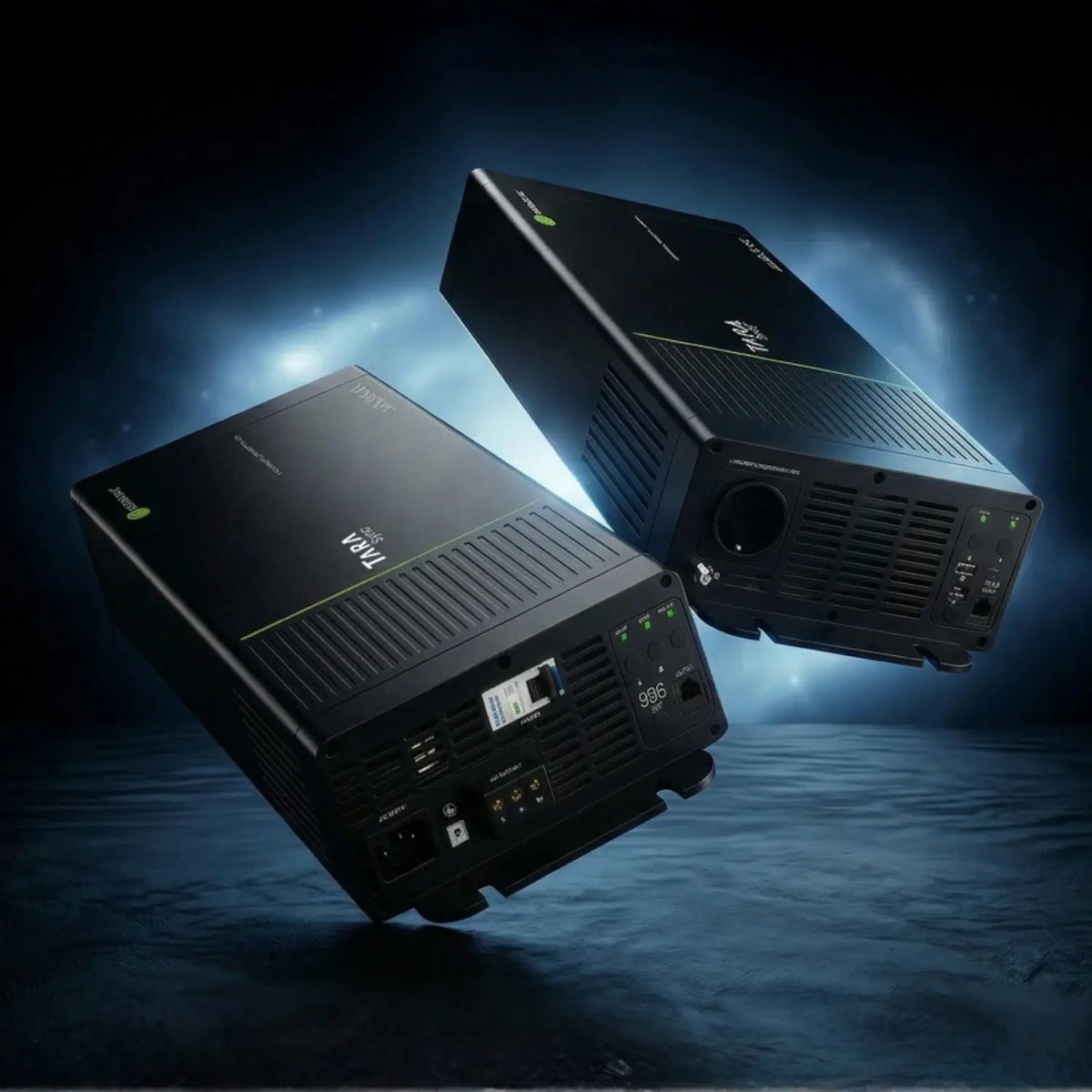
- Charge controllers , charge boosters and shore power chargers control and distribute them
- Consumers such as lights, refrigerators, or laptops use electricity
A power station can also be a useful addition – for example, as a flexible extension to an existing setup. In combination with an alternator charger , it can be charged while driving and offers a practical way to provide additional power without directly interfering with the vehicle's fixed electrical system.
What matters is not the individual component, but how they work together. You can find a detailed overview of the structure and function of a campervan power supply in our basic article on power supply in motorhomes. If you are specifically interested in how you can be as self-sufficient as possible while traveling – including with flexible solutions like power stations – it's also worth taking a look at our topic page "Self-Sufficient for Your Next Adventure," which we have linked here .
Realistically assess your electricity needs
Before you retrofit solar panels or a battery, you should know how much electricity you actually need. The real requirement depends less on the size of the vehicle and more on how you use your camper.
Typical questions include:
- Which devices do you use daily?
- How long can you stand independently?
- Do you tend to travel more in the summer or also during the shoulder seasons?
Lights, water pump, refrigerator, chargers, and laptops quickly add up. A realistic assessment is the basis for any sensible design. We explain in detail how to determine your needs step by step in our guide to calculating solar panel requirements for campers . Additionally, you'll find a clear, practical explanation in the WATTSTUNDE YouTube video on calculating power requirements . If you'd like to try it out right away, our self-sufficiency calculator will also help you quickly and easily estimate your needs and possible setups.
Retrofitting solar panels and batteries effectively – here's what matters
Choose the right battery
The battery is the heart of your power supply. It determines how much energy is available to you and how reliably your system works.
AGM and lithium batteries are the most common. AGM batteries are tried and tested and robust, while lithium batteries offer more usable capacity, less weight, and faster charging. Which solution is better for you depends on your usage patterns and your existing system.
Capacity is also crucial: A battery that's too small is one of the most common reasons for dissatisfaction. In the battery guide on the blog, you'll find a detailed comparison of battery types and helpful decision-making tools.
Design solar power appropriately
Solar power ensures your battery is recharged while you're on the go – whether you're driving or stationary. The optimal amount of power depends on your energy consumption, battery capacity, and available roof space.
Realistic planning is crucial: Too little solar power provides little relief, while too much often cannot be fully utilized. Our solar panel guide for campers explains the different types of modules available and what you should consider when selecting and installing them.
Combining components correctly
Solar power and batteries alone are not sufficient in many setups. Only with the right additional components does the system become reliable:
- Solar charge controllers ensure a clean charging of the battery
- Charging boosters efficiently charge the auxiliary battery while driving.
- Shore power chargers ensure power supply at campsites
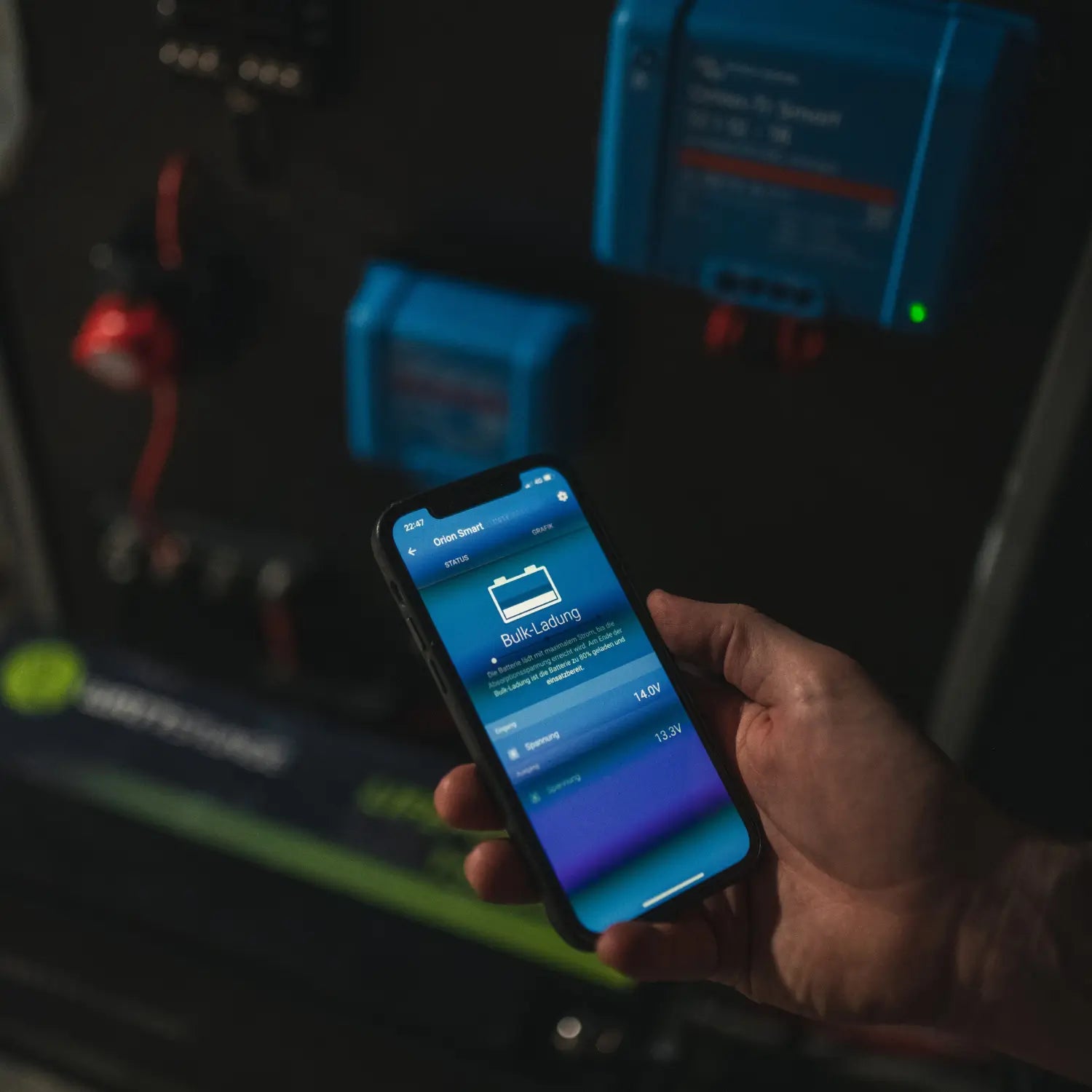
Especially in modern vehicles, a charging booster plays a crucial role. When using a lithium battery, a charging booster is mandatory , as it's the only way to guarantee safe, controlled, and complete charging while driving. Even with other battery types, a charging booster ensures significantly more efficient charging and an overall more reliable electrical system.
Common mistakes when retrofitting and what you should really pay attention to
The good news first: With some planning, an electrical system can be very well adapted to new requirements. Above all, it's important not to consider the individual components in isolation, but as part of a coordinated overall concept.
Switching from AGM to lithium batteries is a real step forward , but it also brings new requirements. Lithium batteries have a different charging behavior than AGM batteries. Therefore, chargers, charge boosters, and, if applicable, the solar charge controller should be designed accordingly. If these components are chosen appropriately, you'll benefit from faster charging and significantly more usable capacity.
Expanding an existing lithium battery also requires careful planning. For multiple batteries to work together harmoniously, their type, capacity, age, and state of charge must be compatible. If these factors are taken into account, the system can be reliably expanded and operated stably in the long term.
A well-thought-out approach is also worthwhile when it comes to solar modules. Different module types or orientations require proper wiring and the appropriate solar charge controller. This is precisely where flexible options arise: With a second, separate charge controller, you can, for example, easily add a SOLA Ease SunFolder as a mobile solar module. This allows you to expand your system in a targeted way without having to change existing components.
In addition to the battery and solar power, it makes sense to keep an eye on the entire system:
- Do the charging boosters, solar charge controllers, and chargers fit the new configuration?
- Are the cable cross-sections designed for higher currents? Our cable cross-section calculator can help you assess this.
- Are the fuses and protection devices correctly sized?
- Is your setup already prepared for future expansions?
Those who take these points into account create the best foundation for a high-performance, safe and expandable power system – and get the maximum out of their retrofit.
Start the season relaxed with the right electrical system
When solar panels, batteries, and chargers are properly matched, your camper becomes practical and reliable for everyday use. You won't have to worry about dead batteries while traveling and can plan your trips with flexibility.
Whether it's a small optimization or a complete retrofit – a well-planned electrical system is the basis for a relaxed start to the season.
If you are unsure which solution suits you best, it is worth taking a look at our further guide or seeking personal advice.