System planning & component combinations – Find your perfect setup
Now that you know the most important components of a campervan power supply, it's time to look at the big picture: How do I combine all these components into a system that perfectly suits my travel style? In this final part of our Component Guide series, you'll find concrete example setups, clear decision-making aids, and a practical checklist for your own system. Whether you take weekend trips, live in your van full-time, or work on the road – you'll find the right guidance here.
Practical setups for different travel profiles
Every travel style places different demands on the power supply. That's why we're looking at three typical profiles – from a minimalist setup to a fully self-sufficient system.

🔋 Mini System – Light & USB
Ideal for those who only need the essentials: light in the evening, charging a smartphone, a small cooler, maybe a camera or power bank.
Daily consumption : approx. 150–200 Wh
Battery : LiFePO₄, approx. 60 Ah (≈ 770 Wh usable) → sufficient for 2–3 days of self-sufficiency
Solar : approx. 120 Wp, good daily balancing
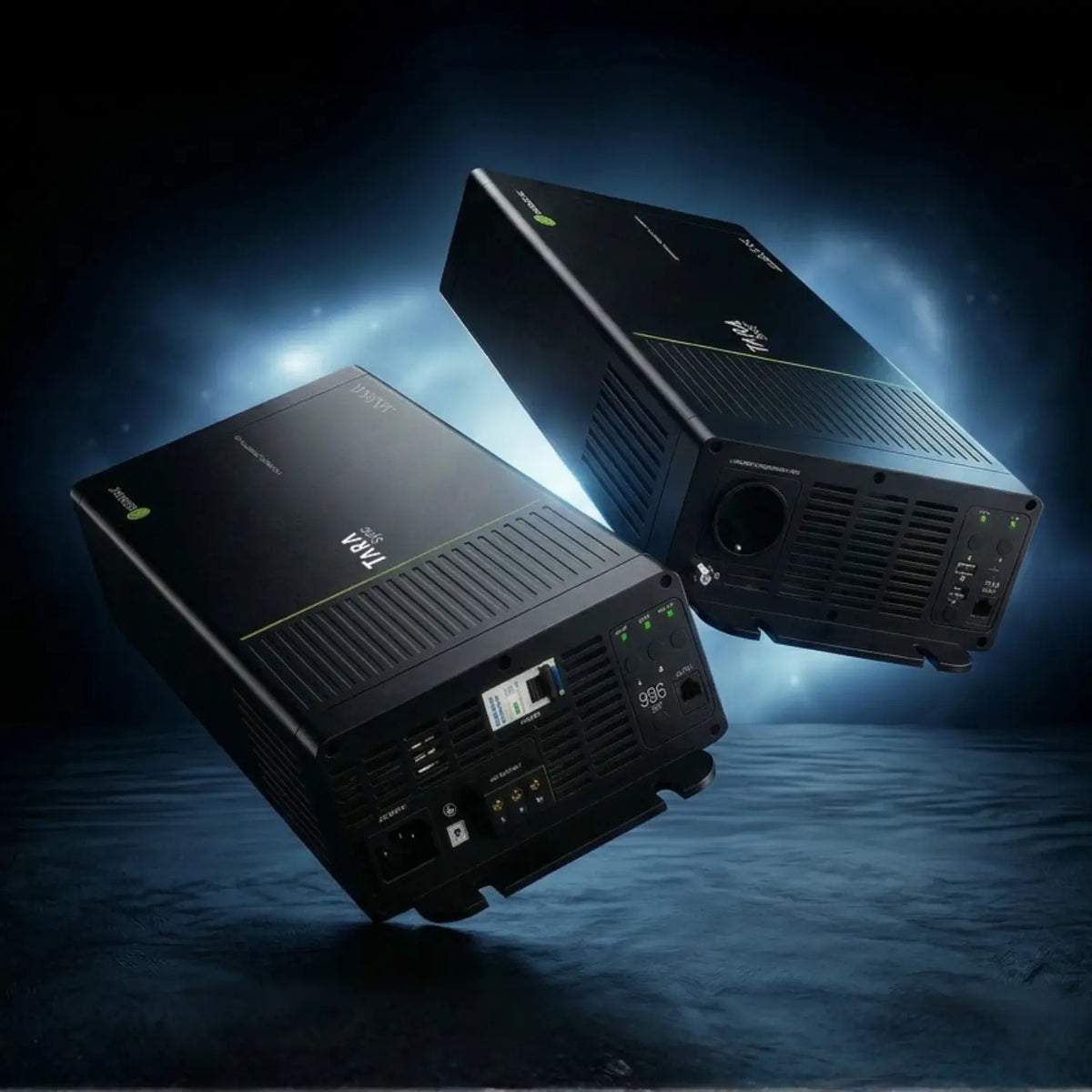
Inverter : 500–1000 W pure sine wave for laptop or coffee machine
Charging technology : MPPT controller, small shore power charger optional
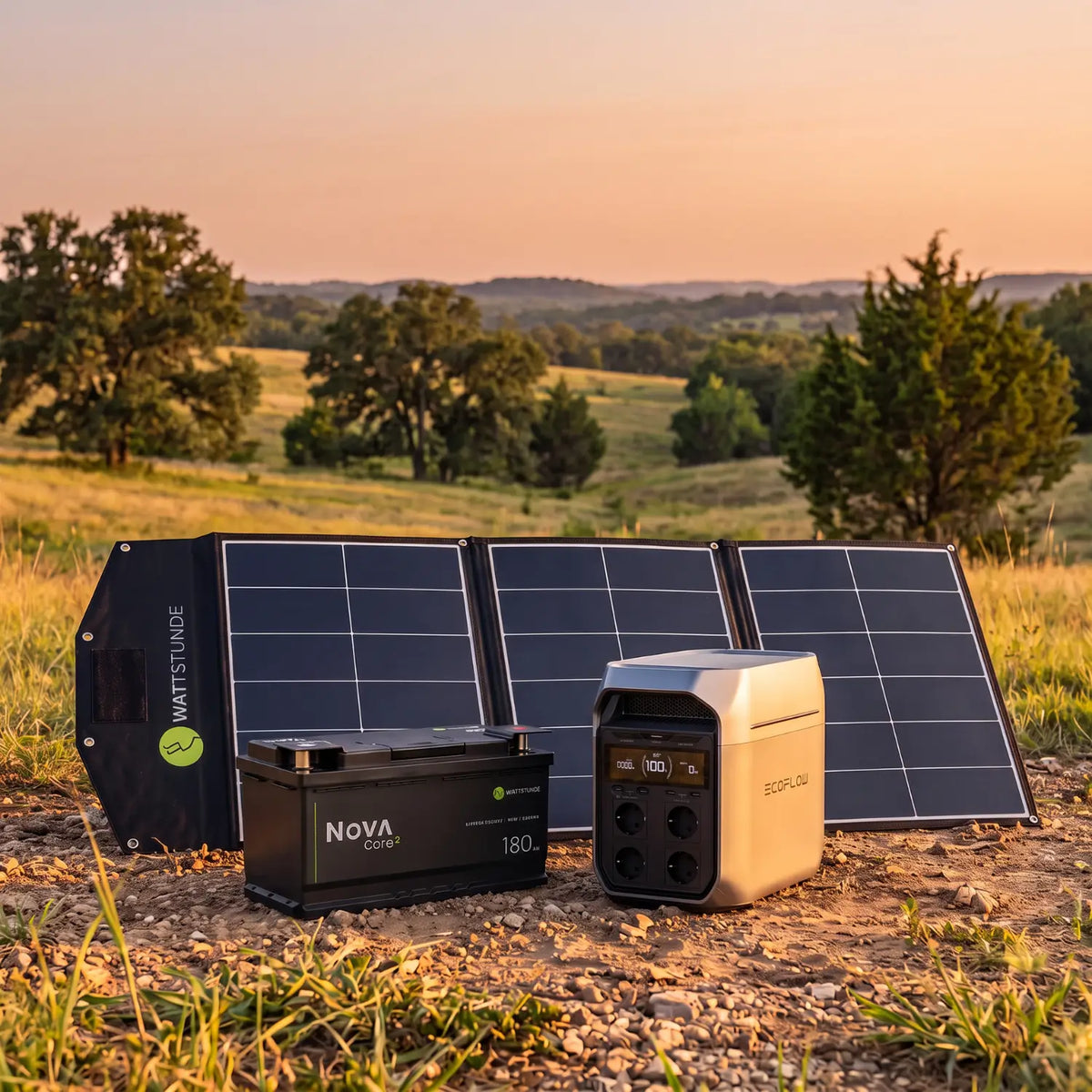
Backup : Small power station (300-500 Wh)
Safety : suitable cables and fuses, disconnect switches, smoke detectors, fire extinguishers
This setup is lightweight, compact, and ideal for minimalists or micro-campers. You have power for essential devices, remain flexible, and can expand your system at any time later.
🚐 Weekend Van – Refrigerator & Comfort
For those who are regularly on the go and want more comfort – with a refrigerator, water pump, light, laptop or even an e-bike charger.
Daily consumption : 800–1,500 Wh
Battery : LiFePO₄ with 200–300 Ah (2,500–3,600 Wh)
Solar : 350–400 Wp on the roof + optional solar bag (140 Wp)
Inverter : 1,500 W pure sine wave
Charging technology : MPPT controller, charging booster, classic shore power connection
Backup : Power station for flexibility and working away from home
Safety : suitable cables and fuses, smoke detectors & fire extinguishers
This setup is perfect for anyone who likes to be away for a weekend or a whole week – with power for cooling, coffee, laptop and light.
🏕️ Fully self-sufficient conversion – living in a camper van
For long-term travelers or vanlifers who frequently and for extended periods camp off-grid. Maximum performance and redundancy are the focus here.
Daily consumption : 1,800–2,500 Wh or more
Battery : Min. 400 Ah LiFePO₄ (≈ 5,000 Wh) or a comparable size in a 24 V system
Solar : 600–800 Wp+ on the roof, supplemented by mobile modules
Inverter : 2,000–3,000 W continuous
Charging technology : Powerful MPPT controller, large charging booster, shore power connection
Backup : Power station
Safety : Generous cable cross-sections, high-quality fuses, disconnect switches, smoke detectors, fire extinguishers
This allows you to remain self-sufficient for weeks – even with an induction hob, e-bike or high-performance appliances.
Which components do I really need?
Not everyone needs the biggest setup. What matters is what you actually want to do:
- Just light & USB? → Mini system
- Refrigerator & Laptop? → Weekend Van Setup
- Induction, e-bike, full-time travel? → Fully self-sufficient conversion
Ask yourself the following questions:
- What devices do I need daily?
- How long do I want to be able to stay off-grid?
- How much space do I have for a battery and solar panels?
- Do I want to expand later?
It's better to plan for some reserve capacity – but don't oversize unnecessarily, because large systems require more space, more budget and more installation effort.
Component Guide – An Overview of the Building Blocks
To give you an overview, here are the most important components of your electrical system:
1. Solar module – energy source
Permanently mounted for daily charging while driving or as a flexible solar bag for maximum freedom.
2. Solar charge controller – the link
It regulates the voltage of the modules and optimally charges your battery – MPPT is recommended for most systems.
3. Shunt & battery indicator – optional, but helpful
Provides precise information about charge level and consumption.
4. On-board battery – your energy storage
AGM or lithium – depending on budget, weight and power requirements.
5. Charging booster – Energy while driving
Essential for modern vehicles and lithium systems.
6. Starter battery – separate from the vehicle electrical system
So that your engine always starts safely.
7. Battery charger – for shore power
Practical for campsites or pitches.
8. 230 V shore power connection – external energy
Ideal if the sun isn't shining or you're going to be stationary for an extended period of time.
9. Inverter – 230 V on the go
For coffee machines, laptops, kitchen or work equipment.
10. Solar bag – flexible additional service
Perfect if your camper is parked in the shade and you still want to recharge.
Selection checklist – Your perfect start
This list will help you plan your own system step by step:
- How much electricity do I use daily? (Wh/day)
- Which 12V and 230V devices do I actually use?
- How long do I want to be self-sufficient?
- Where am I traveling to and what conditions can I expect there?
- How much space do I have for solar panels and a battery?
- AGM or Lithium
- Is a pure sine wave inverter necessary?
- Charging booster for Euro 6?
- Do I want to expand later?
- Backup solutions: Power station or second battery?
Conclusion & Outlook
Your perfect power system doesn't depend on the biggest battery or the most powerful solar panel – it depends on how you travel. These example setups will help you find the right scale and plan a system that is reliable, safe, and flexible.
This concludes our Component Guide series. If you'd like to delve deeper into individual components, you'll find detailed information on solar panels, solar charge controllers, batteries, charge boosters, shore power, inverters, and power stations in each article.