
Why the right energy supply is crucial
Camping stands for freedom, independence, and adventure. But without the right power source, comfort and functionality can quickly become limited. Whether you want to run your refrigerator, smartphone, lights, or air conditioner – a reliable power supply is essential. This raises the question: power station or lithium battery – which better suits your needs?
In this article, we explain the advantages and uses of both options, what you should pay attention to, and how to find the perfect solution for your motorhome, caravan, or camping adventure.
Analyze your energy needs while camping
Before choosing an energy source, it's important to know your individual electricity needs. Consider:
- How often do you travel? Do you only go on occasional weekend trips or are you planning long-term trips?
- Which devices do you want to operate? Smaller appliances like LED lighting and smartphones have different requirements than larger appliances like refrigerators or air conditioners.
- Are you planning off-grid camping without access to electricity? If you want to be completely independent, you need a reliable and powerful energy source.
For example, a power station might be ideal for a short trip with a caravan and low power requirements. But if you're traveling off-grid for a longer period, a lithium battery is a better fit.
What is a power station and who is it suitable for?
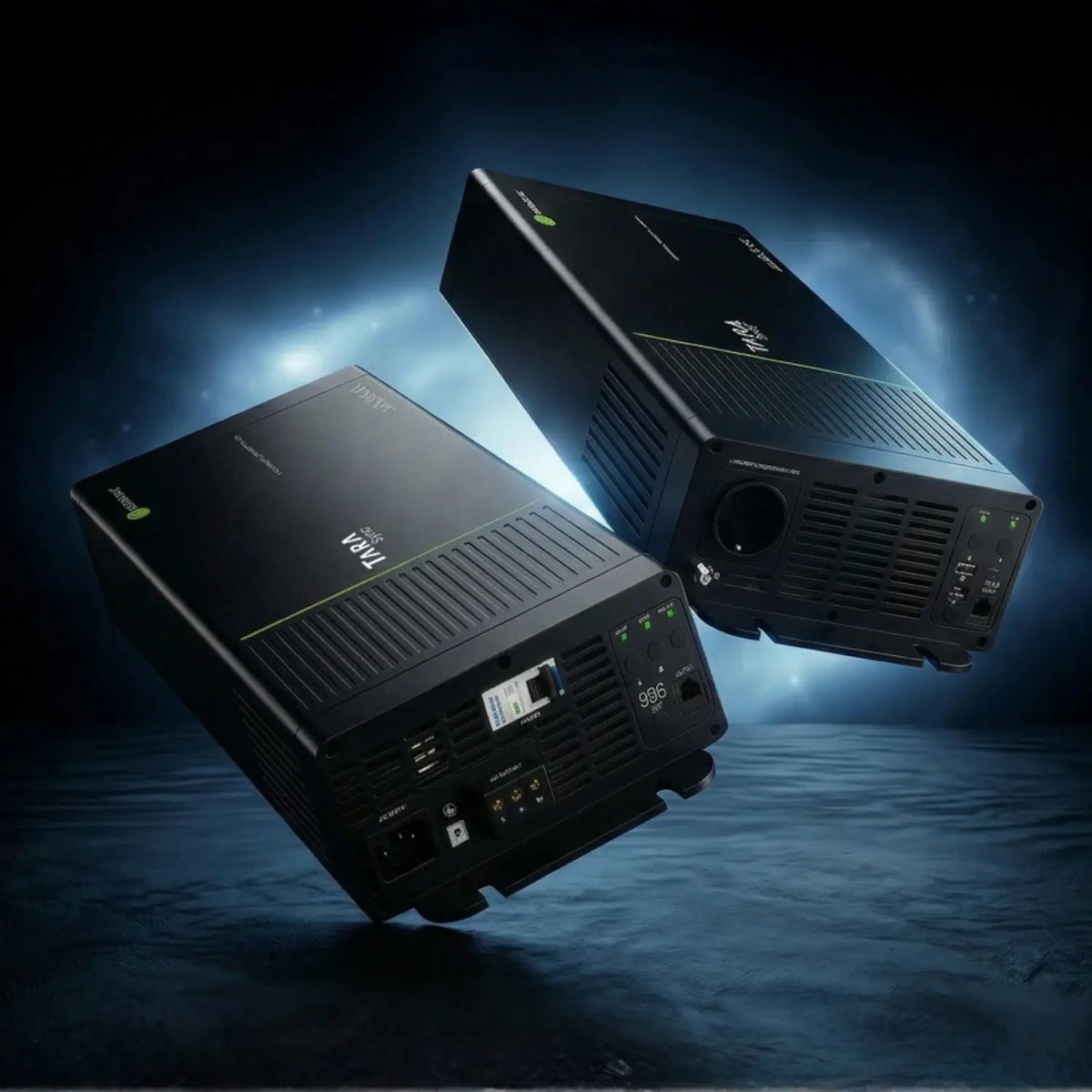
A power station is a portable, all-in-one power source that combines battery storage, an inverter, and connections (e.g., USB and 230V sockets) in a single compact device. These devices are particularly popular with campers and outdoor enthusiasts due to their ease of use and versatility.
The advantages of a power station
- Easy to use: No installation required. You can simply charge the power station and use it immediately.
- Flexibility: Portable and lightweight, perfect for spontaneous camping trips, tent holidays or festival visits.
- Versatility: Suitable for smaller devices such as smartphones, tablets, cameras or LED lamps.
The limitations of a power station
- Limited capacity: For energy-intensive appliances such as air conditioners or electric cooktops, the capacity is often insufficient.
- Limited runtime: Most power stations offer a limited runtime before they need to be recharged.
- Higher cost per watt-hour: Compared to lithium batteries, the purchase price for a similar performance is often higher.
When is a power station worthwhile for you?
- You are an occasional camper and need electricity for short trips.
- You are looking for a simple and portable solution for smaller devices.
- You want to remain flexible and use the power station outside the motorhome as well, e.g. for outdoor activities or at home as an emergency power supply.
What is a lithium battery, and when should you choose one?
A lithium battery , more precisely a lithium iron phosphate battery (LiFePO4), is a permanently installed energy storage solution particularly suitable for motorhomes and caravans. These batteries are durable, powerful, and can easily supply large electrical appliances.
The advantages of a lithium battery
- High capacity: Ideal for appliances such as refrigerators or air conditioners.
- Long lifespan: Up to 3000–6000 charging cycles, which corresponds to a usage period of up to approximately 10 years.
- Efficiency: Lithium batteries offer consistent performance and are significantly more efficient than lead-acid batteries.
- Space-saving: They are lighter and more compact than traditional AGM batteries.
The challenges of a lithium battery
- Higher acquisition costs: The initial investment is higher, but it pays for itself through the long service life.
- Installation required: Lithium batteries require professional installation, especially when combined with solar power systems.
When does a lithium battery make sense for you?
- You are a long-term camper or travel frequently and want to be self-sufficient.
- You have high energy demands and want to operate large appliances.
- You are looking for a long-lasting solution for your motorhome.
Power station vs. lithium battery: The big comparison
| Power station | Lithium battery | |
| mobility | Portable and flexible in its use | Permanently installed, not portable |
| capacity | Suitable for smaller devices | Ideal for large consumers |
| life | Fewer charging cycles (approx. 500-800) |
Long service life (3000-6000 cycles) |
| Price-performance | Higher costs per watt-hour | More durable and efficient |
| installation | Plug and Play | Professional installation necessary |
Power station or lithium battery – which solution suits you best?
Power station: Perfect for flexibility and occasional campers
A power station is particularly suitable for campers who are looking for a portable, flexible power source and only travel occasionally. You can also use it outside your vehicle, for example for outdoor activities or as an emergency power solution at home.
Lithium battery: Ideal for long journeys and high demands
For long-term campers or RV enthusiasts who want to power larger appliances and are looking for a long-term, efficient solution, a lithium battery is the best choice. Despite the higher initial cost, its longevity and efficiency make it a worthwhile investment.
The ideal combination
If you are looking for both a permanently installed power source and a flexible solution, the combination of both is perfect: Use the lithium battery as your main power supply and the power station for mobile applications.
Our tip: Get personal advice!
Are you unsure which solution best suits you? No problem! Feel free to contact us. call , write to or us Visit us in person for a personal consultation. We'll help you find the perfect energy source for your motorhome, caravan, or camping adventure. Also, check out our Magazine where you can find more tips and product recommendations.