
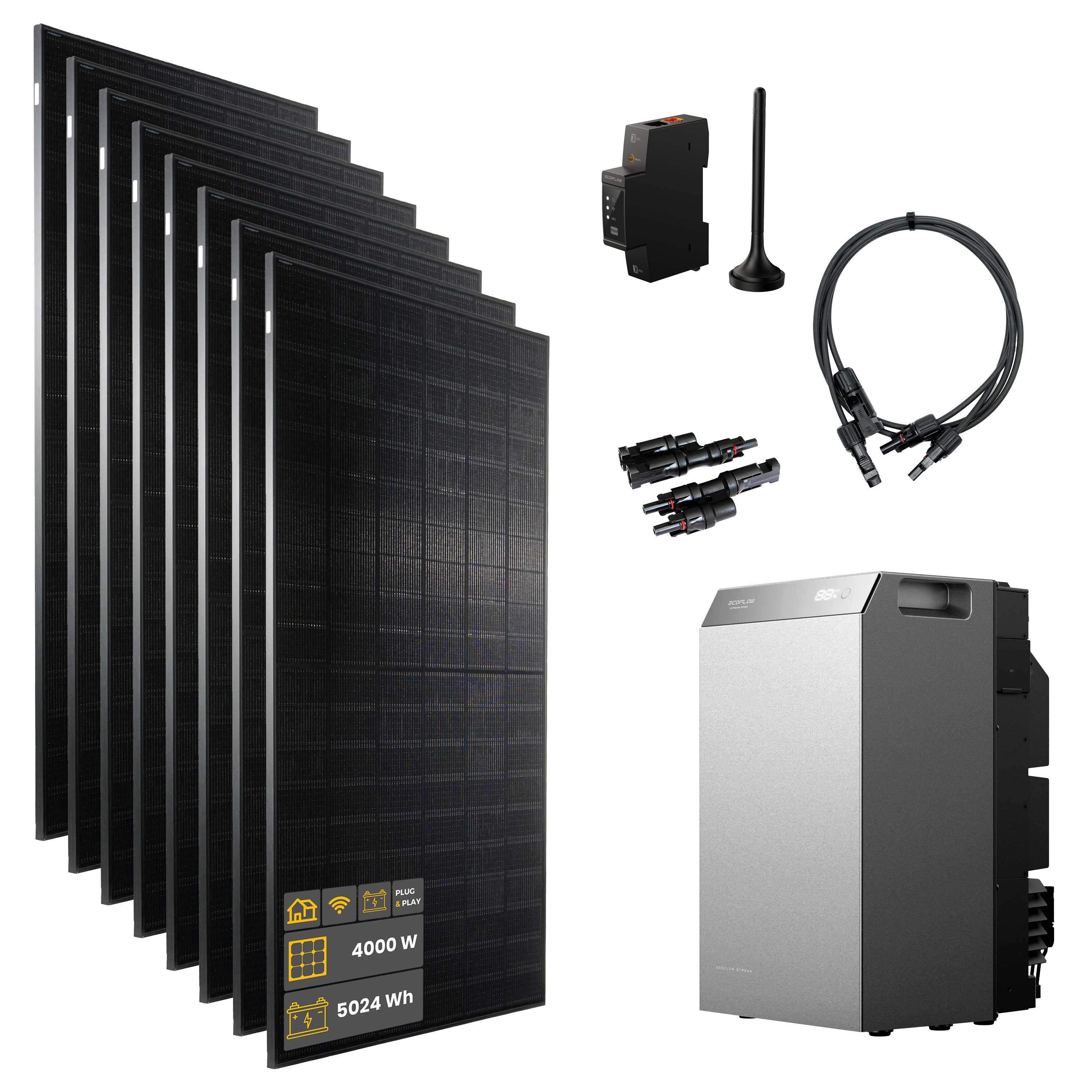
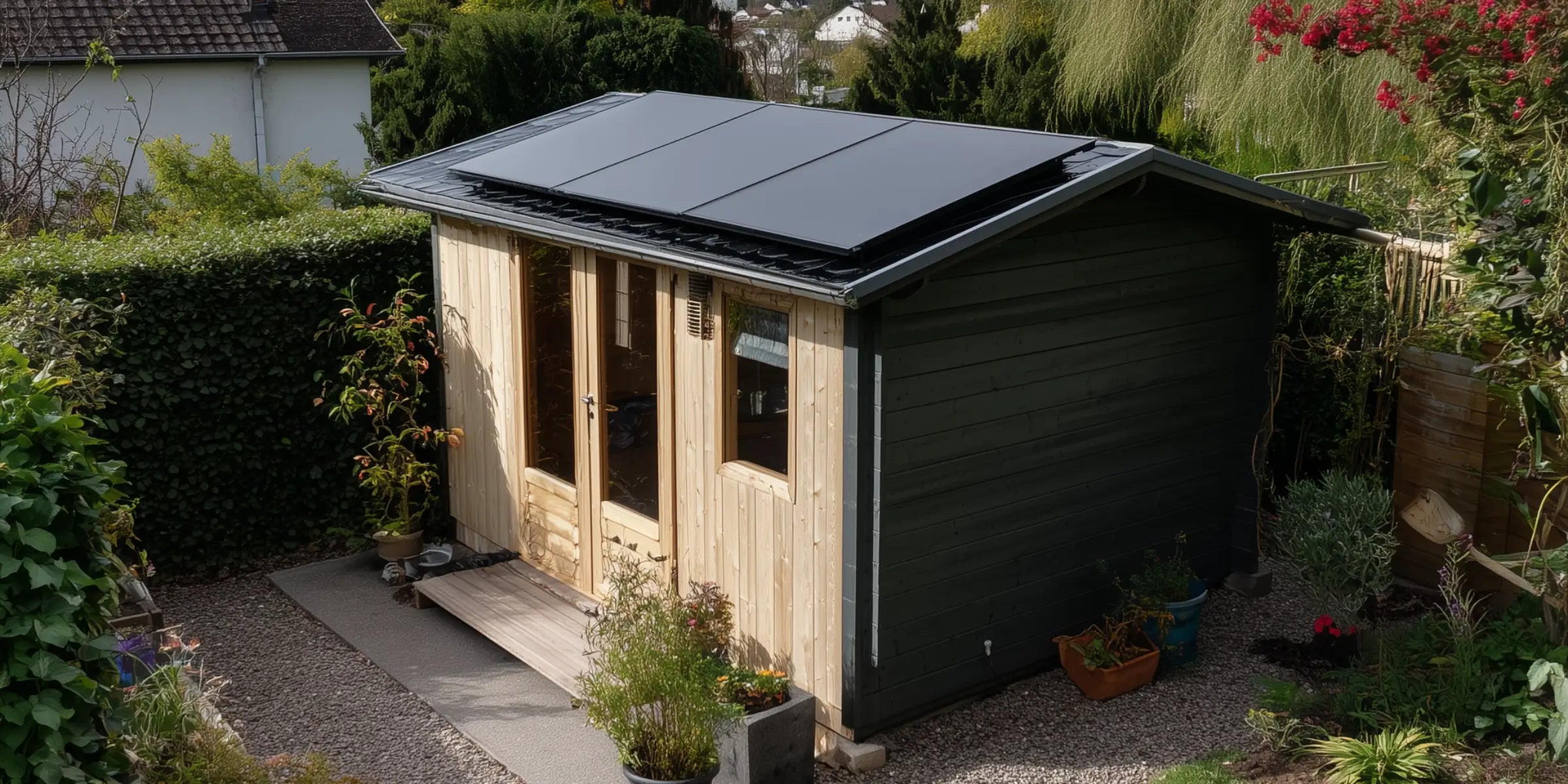
With a solar off-grid system, you become independent of the public power grid, whether in your garden shed, tiny house, or while camping. Your photovoltaic off-grid system provides reliable, clean solar power that you can store and use whenever you want. Simply install it, generate your own electricity, and live self-sufficiently anywhere.
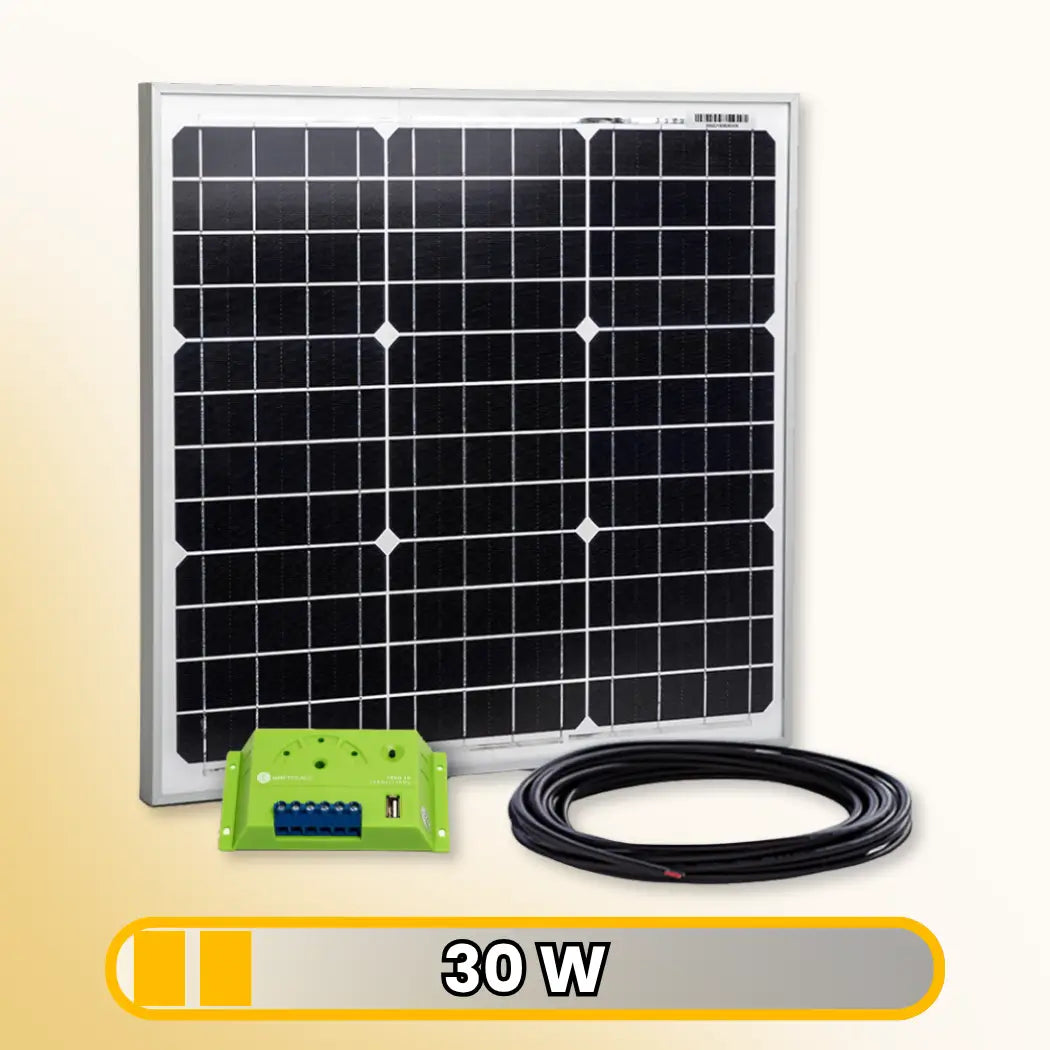
30W off-grid solar system kit
- WS30M monocrystalline solar module with MC4-compatible connectors
- WATT-HOUR PWM solar charge controller
- 5 m solar connection cable 2 x 2.5 mm²
- MC4-compatible plug and socket
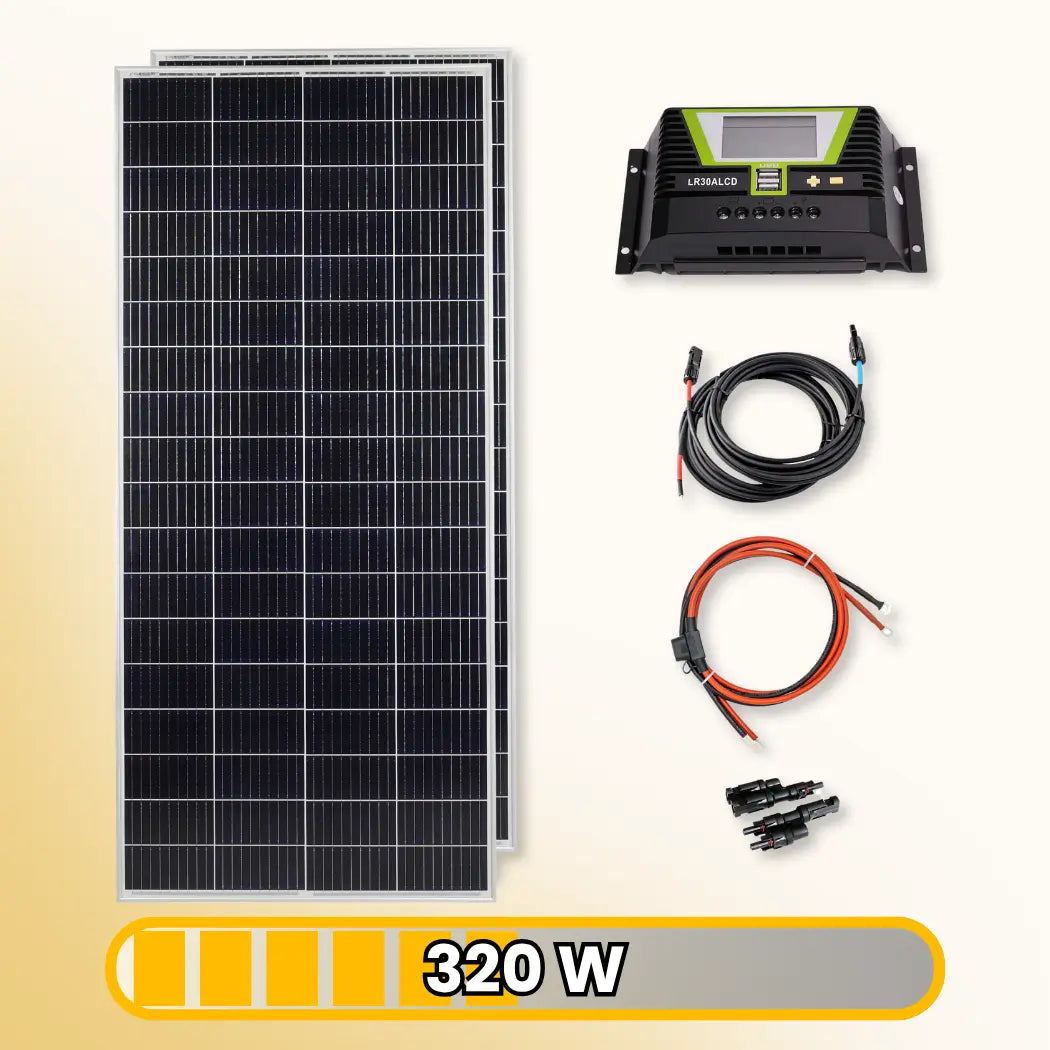
320 W off-grid solar system kit (2 x 160 W)
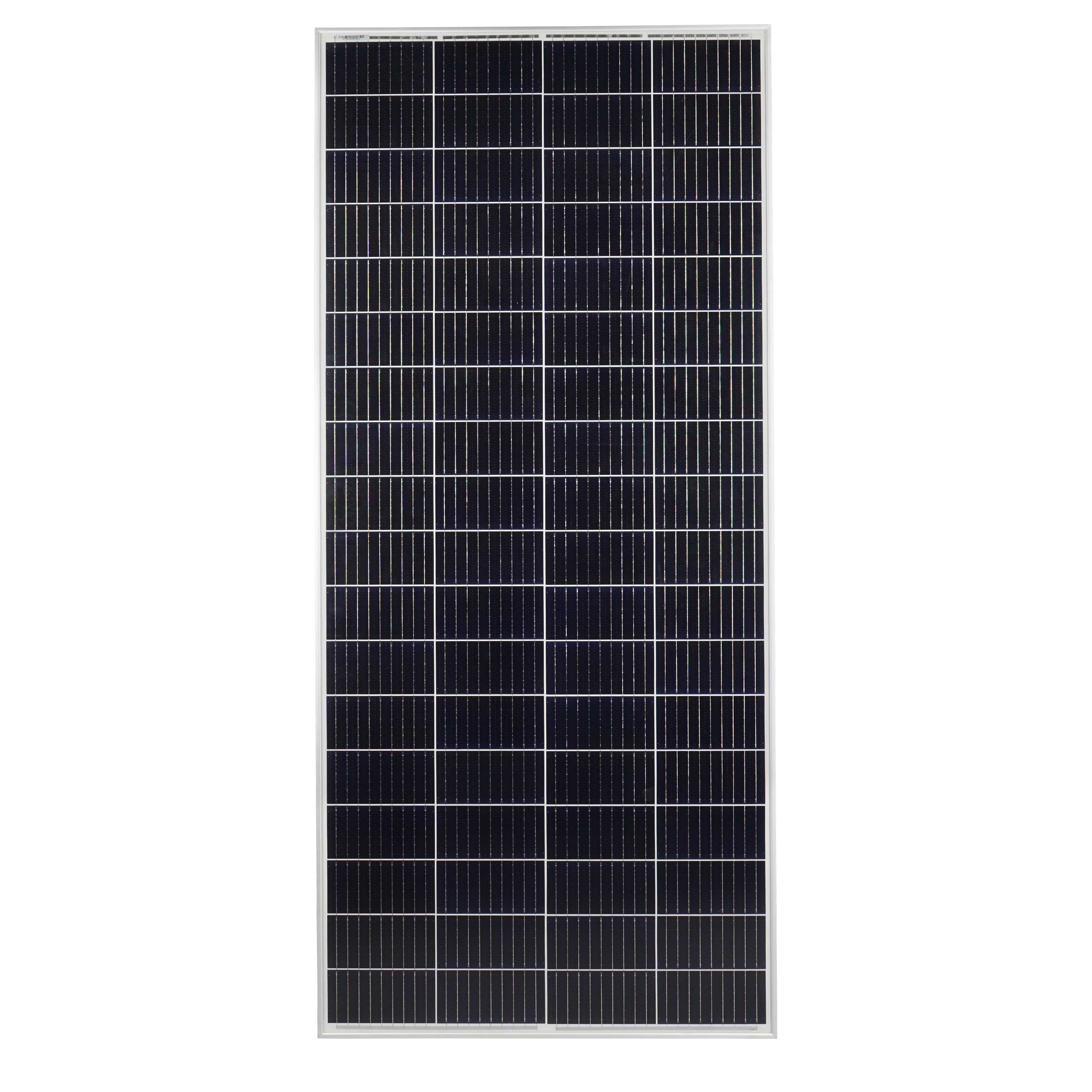
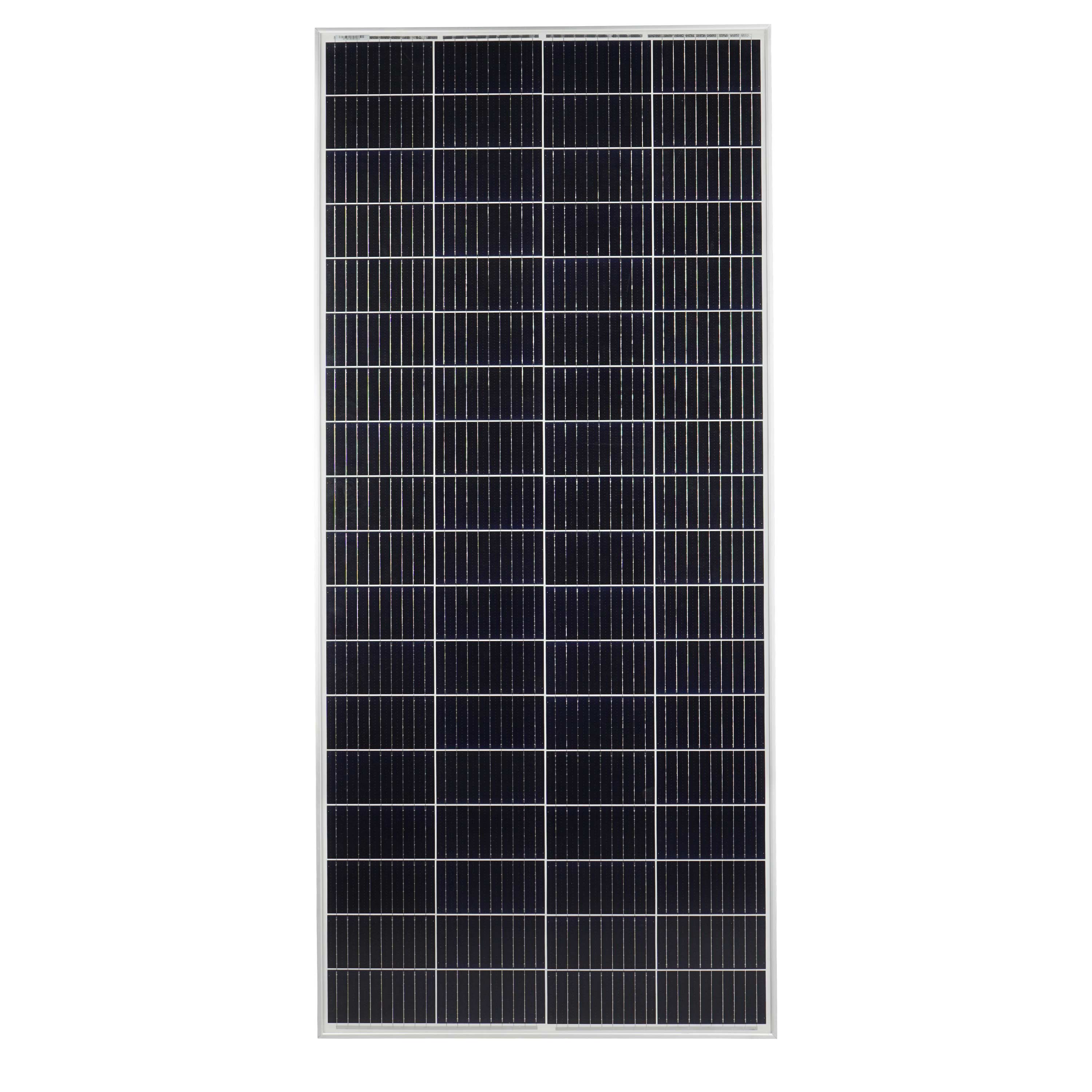
- 2 x 260 W-HV SOLA Frame monocrystalline solar module with MC4-compatible connectors
- WATT HOUR 30 A PWM charge controller LR30ALCD
- 2 x 5 m solar connection cables 6 mm²
- MC4-compatible connector set (socket + plug) already pre-assembled
- 1.5 m battery connection cable 6 mm² incl. 30 A blade fuse
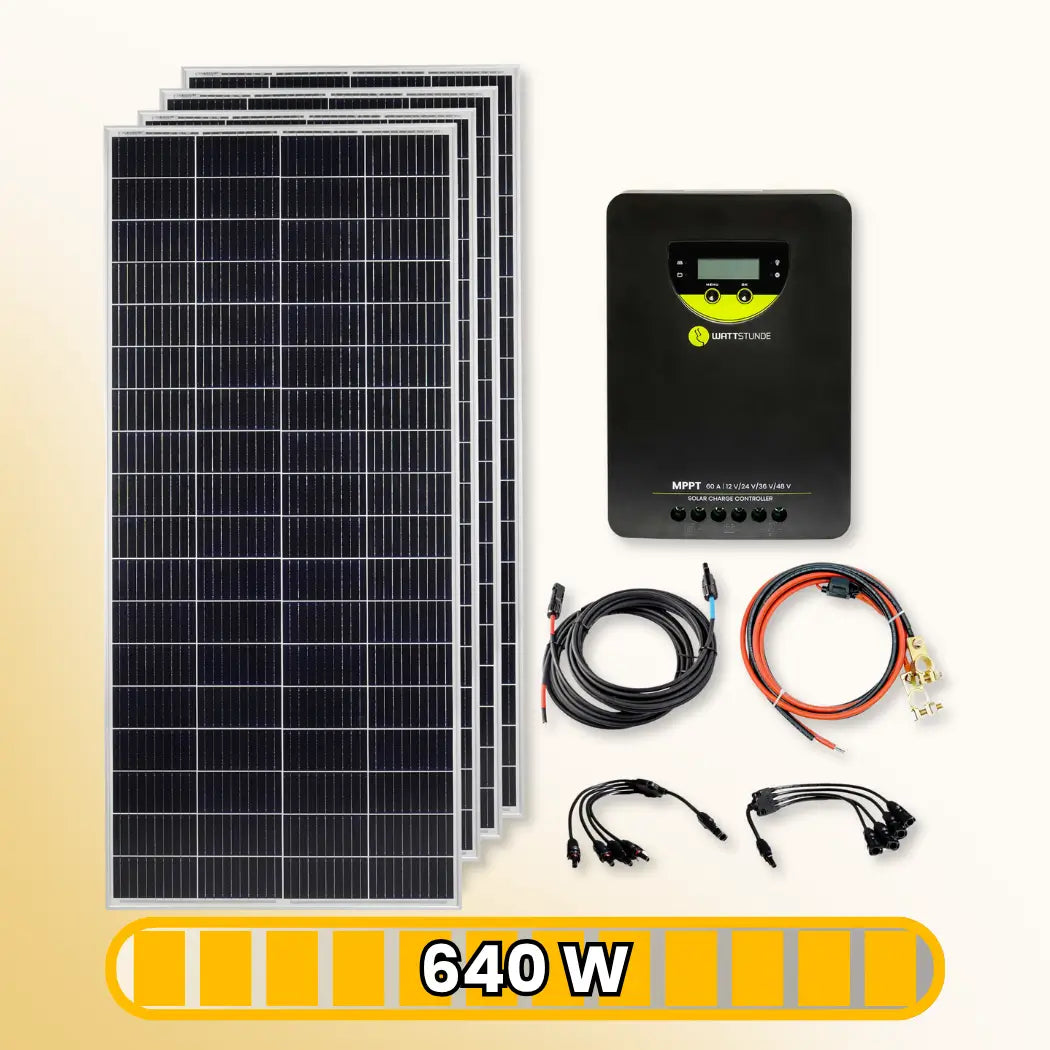
640 W off-grid solar system kit (4 x 160 W)
- 4 x 160 W-HV SOLA Frame monocrystalline solar module with MC4-compatible connectors
- WATTSTUNDE 60 A MPPT Charge Controller WLR-BT 60.140 MPPT
- 2 x 5 m solar connection cables 6 mm²
- MC4-compatible connector set (socket + plug) already pre-assembled
- 1.5 m battery connection cable 10 mm² incl. 40 A blade fuse
How to find the right off-grid solar system
The most important step towards a reliably functioning off-grid system is accurately determining your electricity consumption . Only when you know how much energy your devices need daily can you properly plan the size of solar panels, battery, and inverter.
SOLAR CALCULATOR
Calculate your energy needs and check how self-sufficient you are with your solar system.
The results are for guidance only and may differ from the actual yield.
Your advantages with an off-grid system


Your added opportunities with our off-grid systems



Individual consultation & planning for your off-grid solar system
Are you unsure which off-grid system is right for your project?
Our experienced team will advise you independently of manufacturers and help you to perfectly tailor your system to your energy needs – modular, efficient & future-proof.
Contact us via the form or call us directly – we will accompany you from the planning stage to the implementation of your self-sufficient power supply.
Contact form
Questions about an offer, product or your order?
Then please write us an email and briefly describe your request.
We will get back to you as soon as possible.
FAQ | Frequently Asked Questions about Solar Off-Ground Systems
Here you'll find answers to frequently asked questions about off-grid solar systems. Learn how you can become independent of the power grid with a self-sufficient solar system, which components you need for installation, and how to optimally match the output to your energy needs – ideal for garden sheds, cabins, boats, or remote locations without a grid connection.
It's quite simple: Solar panels capture sunlight and convert it into electricity. A charge controller protects the battery from damage and ensures the correct voltage. The battery stores the electricity so you can use it even when the sun isn't shining. And the inverter converts the direct current (DC) into alternating current (AC) so you can connect your regular household appliances.
Sure! Our 230V off-grid systems provide you with power just like from a wall socket. So you can easily run your lamps, TV, or even a small refrigerator. The only important thing is that the system is large enough for your needs.
The size of the system depends on your energy needs. Feel free to use our solar calculator for guidance. Alternatively, you can create a list of all the devices you want to operate and calculate their electricity consumption in watt-hours per day. Also, consider the amount of sunshine in your region and plan for sufficient battery capacity to store electricity for cloudy days or nights. Our team will be happy to help you calculate and select the right system.
Our solar panels are weatherproof and can easily withstand rain, snow, and wind. However, the battery and inverter should be protected from extreme weather conditions, for example, by a weatherproof box or a sheltered location such as a garden shed.
