


Filters
41 products


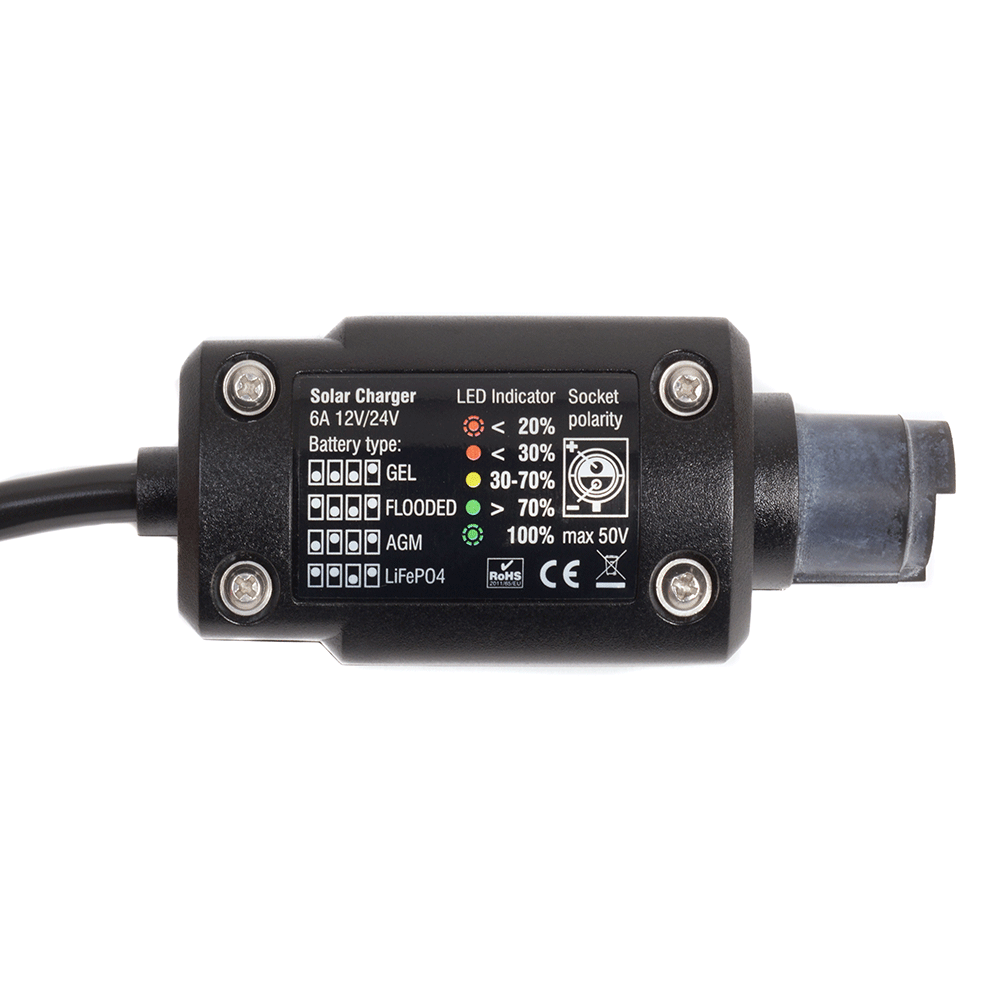


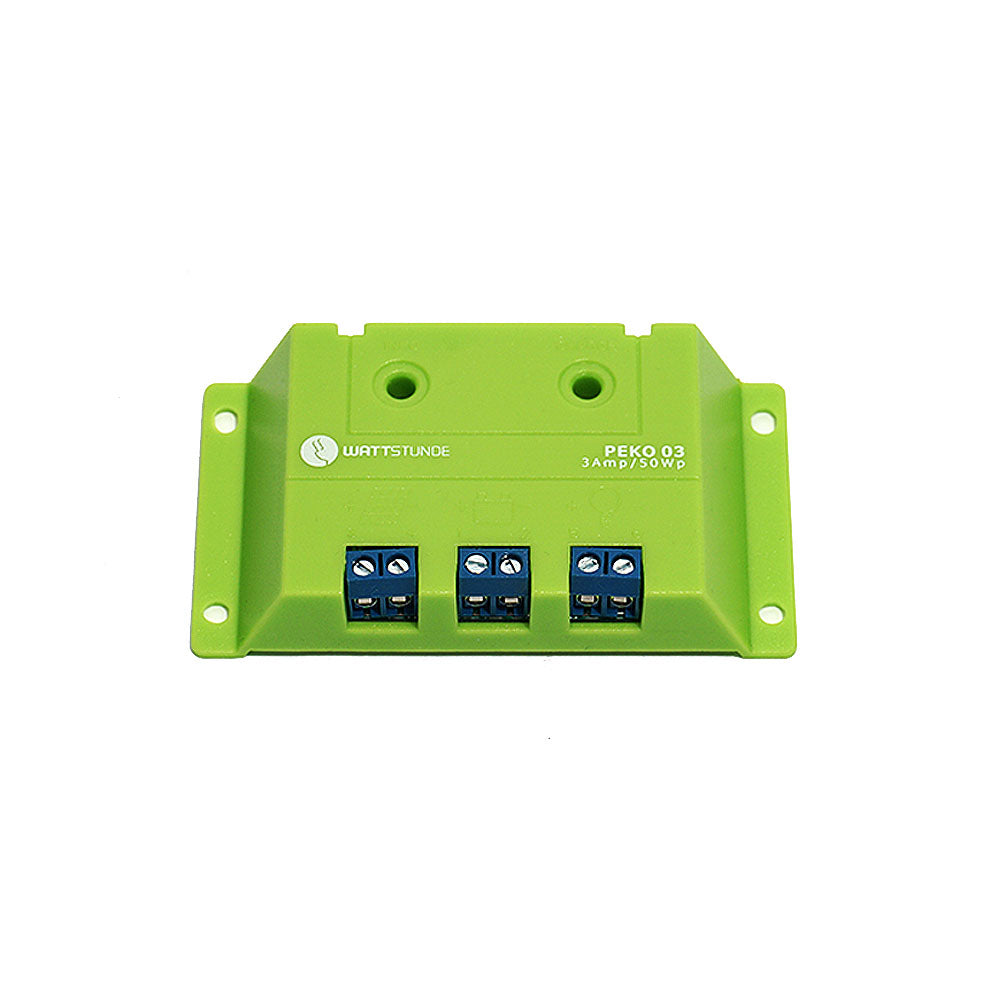


PWM charge controllers are a proven solution if you want to build a simple, robust, and affordable 12 V or 24 V solar system with a battery. On this page, you will find PWM charge controllers in various current ratings, as well as a brief selection guide to ensure that the controller, solar panel, and battery are compatible.
Who a PWM charge controller is suitable for
- 12 V/24 V off-grid systems with a battery: e.g., garden sheds, cabins, electric fences, lighting, or small loads.
- Panels with a "suitable" voltage: particularly useful when the panel voltage matches the battery voltage (typically 36-cell panels for 12 V and 72-cell panels for 24 V).
- Focus on simplicity: straightforward installation, solid basic functions, and often a load output for DC loads.
PWM vs. MPPT: when PWM is the right choice
- PWM: regulates the charge by "matching" the panel voltage more closely to the battery voltage. This is particularly suitable when the panel and battery voltages are close to each other.
- MPPT: extracts more power from higher panel voltages and at cooler temperatures, but is usually more complex and expensive.
If you want to use a panel with a significantly higher voltage than the battery or prioritize maximum yields, an MPPT controller is often the more suitable choice.
How to choose the right current rating (A)
The most important figure is the maximum charge current in amperes (A). It should match your panel power and battery voltage. As a rule of thumb:
- 12 V system: required controller current roughly = panel power (W) / 12
- 24 V system: required controller current roughly = panel power (W) / 24
Plan for extra capacity as well (e.g., for excellent sunlight conditions or later expansion). If you are unsure, choose the next higher controller class.
12 V or 24 V: system voltage and auto-detection
Many PWM charge controllers support 12 V/24 V and automatically detect the battery voltage. It is important that:
- the battery matches the system voltage (12 V or 24 V),
- the solar panel is suitable for the selected system voltage,
- for 24 V, you generally use two 12 V batteries in series or one 24 V battery.
Battery type & charge profiles: what to look out for
To ensure that your battery is charged reliably and gently, the controller should support suitable settings/charge profiles. Pay particular attention to compatibility with:
- Lead (AGM/Gel/Wet): often standard and usually well covered.
- Lithium (e.g., LiFePO4): only suitable if the controller offers a suitable charge profile or if the charge voltages can be precisely set.
If you use lithium, also check whether your battery BMS specifies the charging parameters and whether the controller is suitable for them.
Load output, USB & loads: practical differences
Many PWM charge controllers offer a load output (for DC loads) and sometimes USB. This can be practical, but does not replace proper circuit protection. Pay attention to:
- Load current: The load output is often rated lower than the charge current.
- Low-voltage shutdown: protects the battery from deep discharge when using DC loads.
- Protection functions: reverse polarity, short circuit, overtemperature (depending on the model).
Installation & safety: short, but important
- Order: usually connect the battery to the controller first, then the solar panel (follow the manufacturer's instructions).
- Circuit protection: fuses placed close to the battery and properly sized cables reduce risks and voltage losses.
- Installation location: dry, well-ventilated, and away from direct heat.
Typical setups with PWM charge controllers
- Garden shed 12 V: solar panel + PWM controller + AGM/Gel + LED light/USB.
- Electric fence: robust 12 V solution with simple charge control.
- Small 24 V off-grid system: if you want to reduce line losses with 24 V and use suitable panels/batteries.
Suitable accessories for your installation
For a clean setup, the following are often also useful: suitable fuses, cables, connectors, and depending on the system, a battery monitor or DC distribution board.
More in the cluster: compare charge controllers
If you are unsure whether PWM or MPPT is better suited to your setup, a comparison of the designs in the charge controller cluster will help you.
View charge controllers and compare designs
FAQ: PWM charge controllers
Can I use any solar panel with a PWM charge controller?
Not every panel. PWM is particularly suitable when the panel voltage matches the battery voltage. If the panel voltage is significantly higher, an MPPT controller may be the better choice.
What ampere rating do I need?
Base your choice on the panel power and system voltage (W/12 or W/24) and plan for extra capacity. When expanding, a larger controller is often the more hassle-free choice.
Is PWM suitable for LiFePO4?
Only if the controller offers a suitable charge profile or if the charge voltages can be precisely set. Check your battery's specifications (BMS) and the controller's specifications.
What is the load output on the controller for?
For DC loads with functions such as low-voltage shutdown. Pay attention to the load output's current limits and properly protect the loads.
