
Independence begins when you can comfortably power your devices away from the mains and rely on the reliable interplay of your equipment.
WATTSTUNDE® stands for exactly this systemic approach: thoughtfully designed solar technology that you can build modularly and expand as needed. From solar panels and solar charge controllers to batteries and inverters, you get solutions that are practical and remain economically viable.
In this article, you will learn what WATTSTUNDE® stands for, what product areas are available, and how to select the right components for your off-grid energy system.
Who is WATTSTUNDE® and why is this exciting for you?
WATTSTUNDE® is a brand that has been developing solar technology for off-grid energy supply since 2014 – both for mobile applications (e.g. motorhomes, vans, boats) and for stationary off-grid projects (e.g. garden sheds, huts, tiny houses).
The special thing: It is not just about individual products, but about system thinking. For you, this means: components are coordinated, can be cleanly combined, and are often easier to retrofit later.
This saves you many typical questions about compatibility and sizing, for example whether cables, solar charge controllers, batteries, and inverters really fit together.
Solar technology with a plan: How your off-grid energy system is created
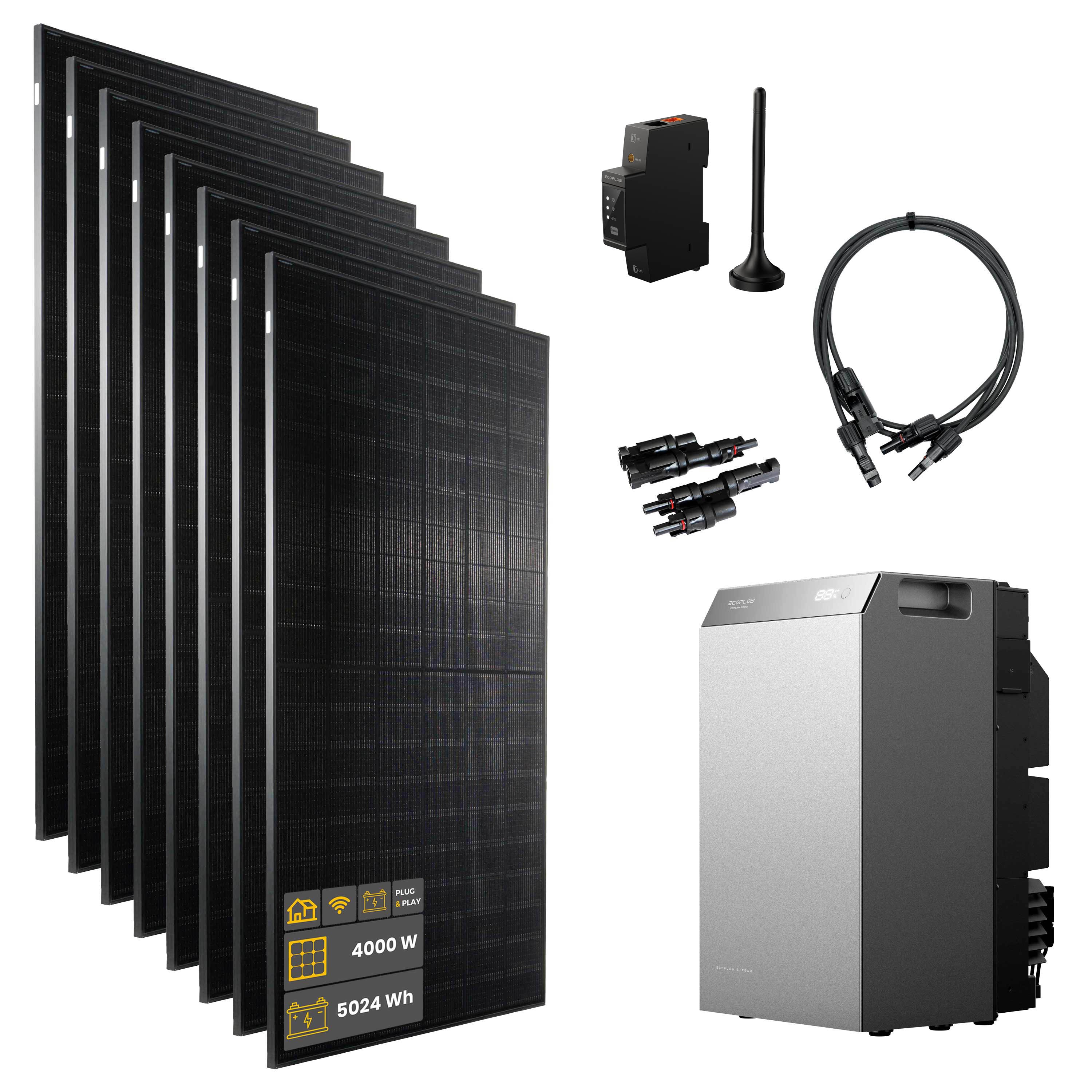
An off-grid setup consists (almost always) of these basic components:
- Solar panel(s): Generate electricity from sunlight
- Solar charge controller: Controls the charging of your battery (and protects it)
- Battery / energy storage: Stores energy for evenings, nights, and bad days
- Inverter: Converts 12 V/24 V battery current into clean 230 V for household appliances
- Mounts, cables, fuses & accessories: So that everything is installed safely and durably
Depending on whether you are more of a "weekend camper" or an "I live off-grid" type, the sizing will differ greatly. The important thing is: You always plan based on the consumption (watts) and the duration of use (hours).
If you want to make the calculation easier for yourself, use our solar calculator and find out in a few steps which panel and storage size fits your needs.
WATTSTUNDE® solar panels: SOLA Frame, SOLA Flex, and SOLA Ease
So that you can find the right panel for every application, there are different types of panels.
SOLA Frame: framed solar panels for fixed mounting
SOLA Frame is ideal if you want a stable, permanent installation, for example on the roof of a motorhome, on a carport, or on a fixed substructure on a garden shed.
Typical for framed modules:
- very robust
- good for permanent screwing/clamping
- ideal if there is space and it is meant to stay "forever"
SOLA Flex: semi-flexible solar panels for uneven surfaces
SOLA Flex is exciting if you want to save weight or the surface is not perfectly flat, e.g. on slightly curved roofs.
Advantages depending on installation:
- low weight
- flatter design
- often easier with special shapes
SOLA Ease: foldable solar bags for maximum flexibility
Do you want to "hunt" the sun because your vehicle is in the shade or you only need solar occasionally? Then foldable solar bags like SOLA Ease are super practical.
This is typical for them:
- You set them up flexibly and align them optimally towards the sun
- perfect for mobile use (camping, vanlife, emergency setup)
- no fixed mounting required
Solar charge controller: MPPT or PWM – what suits you?
The solar charge controller is the heart between the solar panel and the battery. It ensures that your battery is charged safely, efficiently, and appropriately.
MPPT charge controller (Maximum Power Point Tracking): more yield from your panel
MPPT controllers get, simply put, more out of your panels, especially at cooler temperatures or when the panel voltage is significantly above the battery voltage.
One example from the WATTSTUNDE® portfolio is the TARA Flow as an MPPT charge controller.
PWM controller: compact and cost-efficient for simple setups
PWM controllers are often a sensible choice if your system is small and you want to keep it deliberately simple.
Important: Regardless of MPPT or PWM, the controller must fit the battery type, system voltage (e.g. 12 V), and panel power.
Batteries & energy storage: LiFePO₄ or AGM?
Without storage, solar is quickly frustrating in everyday life. Because the sun does not shine when you absolutely need your devices.
WATTSTUNDE® covers different storage technologies.
NOVA Base LiFePO₄ (20 Ah to 200 Ah): light, compact, modular
LiFePO₄ (Lithium Iron Phosphate) is today the first choice for many camper and off-grid systems:
- low weight
- high cycle resistance
- good charging and discharging performance
The NOVA Base LiFePO₄ is particularly suitable if you want to build a modular setup.
NOVA Core LiFePO₄ (100 Ah to 480 Ah): for demanding environments
If you are also on the road in the cold or your storage is in an environment where it can become critical, a solution with an integrated heating mat is a real comfort and safety upgrade.
That is exactly what the NOVA Core LiFePO₄ is designed for.
NOVA Lead AGM: proven for classic applications
AGM batteries are the classic variant that has worked in many vehicles for years. They are often cheaper, but also come with more weight and have – depending on use – different strengths and limitations.
If you are unsure: Start with your consumption calculation and your installation situation (space, weight, temperature range). From that, it usually quickly becomes clear which technology makes sense for you.
Inverter: 230 V in the camper and off-grid system
Do you want to charge a laptop, use a coffee machine, or power devices with a Schuko plug? Then you need an inverter that makes a stable 230-V supply from battery voltage (e.g. 12 V).
WATTSTUNDE® relies on pure sine wave voltage – important if you operate sensitive consumers.
TARA Sync: compact sine inverter (800 W to 2200 W)
The TARA Sync is a solution for mobile and stationary applications if you need a reliable 230-V supply.
TwinPeak: combo island inverter for stationary island systems
If you want to be stationary off-grid, a combo device can make sense, for example with an integrated MPPT controller and charger.
The TwinPeak is designed exactly for this.
Mounts, cables & accessories: The underestimated heroes of your system
Solar panels and batteries are the heart of your system, but only with clean mounting and safe wiring do they really work reliably.
With WATTSTUNDE® MOUNT mounts, suitable solar cables, adapters, and mounting material, you get the parts that make the difference in practice:
- secure fastening (even with vibrations in the vehicle)
- tidy cable management
- fewer sources of error
- longer-lasting installation
Cables: basis for efficiency and safety
Especially in 12-V and 24-V systems, suitable cable cross-sections, high-quality connections, and clean transitions decide about losses and operational safety.
For the right sizing, our cable calculator helps you find the right cable cross-section for your distance and currents.
Accessories: For an installation that lasts long-term
Accessories include, for example, cable glands, fuses, adapters, distributors, and suitable mounting material. These components ensure that your system is neatly built and can be expanded or maintained more easily later.
Our tip: Plan fuses, cable cross-sections, and cable glands from the beginning. This saves you time, nerves, and in case of doubt, also money later.
For the right sizing, our cable calculator helps you find the right cable cross-section for your distance and currents.
Why "system thinking" brings you advantages
As an end customer, you notice system competence by how stress-free your project runs.
This is what a systemic approach brings you:
- Compatibility: components fit together technically better
- Modularity: You can expand later (more solar, more storage, stronger inverter)
- Predictability: You know better what you need – and what you don't
- Troubleshooting: If something is wrong, it is easier to find the cause
When you invest in self-sufficiency, one thing above all should matter in the end: a well-planned setup that reliably supplies power.
How to find the right WATTSTUNDE® setup
We recommend following these steps:
- Determine consumption: Which devices? For how long each day?
- Size the battery: How many Wh do you really need usable?
- Plan solar capacity: How many Wp will fit on the roof or in the bag – and how much do you need?
- Select a charge controller: MPPT or PWM – suitable for the module, battery, and system voltage
- Determine the inverter: Which 230-V appliances? What continuous power in W?
- Plan accessories carefully: Cables, fuses, mounts, cable glands
And if you have any questions along the way: Our support team will be happy to help and assist you in selecting and sizing the right components.
WATTSTUNDE® makes self-sufficiency easier – because it is designed as a system
WATTSTUNDE® is a strong choice if you want to build a self-sufficient energy system that is suitable for everyday use: with suitable solar panels (SOLA Frame, SOLA Flex, SOLA Ease), efficient solar charge controllers (MPPT or PWM), modern batteries (NOVA Base and NOVA Core LiFePO₄), and inverters (TARA Sync, TwinPeak).
If you want a setup that is planned cohesively from the start and can be expanded later if needed, this exact systems approach is a major advantage.