
Why you should get a photovoltaic system this year!
Obtaining clean and independent energy is already in the interest of many homeowners, apartment owners, and renters. Solar energy is definitely one solution. Are you also interested in a photovoltaic system but hesitant due to the relatively high purchase costs, the installation effort, or the legal requirements? We want to dispel your doubts and show you why purchasing one is particularly worthwhile this year and what financial support you can obtain.
Four reasons to install a photovoltaic system in 2023
The Renewable Energy Sources Act (EEG) has been in effect for over 20 years. On July 7, 2022, the German government passed a revised version, parts of which came into force on July 30, 2022. The regulations of the EEG 2023 have been fully in force since January 1, 2023. This revision makes photovoltaic systems considerably more attractive for private households. Besides the fact that solar energy is a renewable energy source and that installing a photovoltaic system benefits both the environment and yourself, there are other reasons why it's a worthwhile investment. We'll show you four of them:
-
Higher feed-in tariff
If you don't use all the electricity produced by your photovoltaic system for your own consumption, feeding it into the public grid has become significantly more worthwhile since mid-2022. The feed-in tariff has been increased to 8.2 cents per kWh for systems smaller than 10 kWp, to 7.5 cents per kWh for systems smaller than 40 kWp, and to 6.2 cents per kWh for systems larger than 40 kWp. This increased feed-in tariff is a clear incentive from the government to install solar panels this year. -
VAT exemption for solar power systems
Photovoltaic systems are particularly affordable this year because VAT is waived on solar modules, related components, and battery storage. This applies if the system is located near a residence or installed on public buildings used for activities that serve the common good. It is also important that you are the operator of the solar system yourself and do not engage in commercial trading or resale of the purchased components.
-
Greater independence from price fluctuations
Since the war in Ukraine, demand for solar energy has skyrocketed, and for good reason. This war has once again highlighted how quickly things we take for granted can change. The energy market has shifted dramatically, and this has been very detrimental to consumers. With a photovoltaic system, you produce (at least some of) your own electricity. This gives you a degree of independence, and fluctuating prices won't affect you as much.
-
Financial support
In addition to low-interest loans and repayment subsidies, since 2023, federal states and municipalities have also offered financial support for the purchase of photovoltaic systems. Several subsidy options have been available since 2023, especially for balcony power plants. A prerequisite for every funding program at the state and municipal level is that you intend to use the solar power in the federal state where you live. The non-profit online portal CO2online can help you determine which funding options are available to you. We would like to discuss one of these funding opportunities in more detail. The KfW (German Development Bank) offers very attractive funding options, which we will outline for you here.
Financial support through KfW
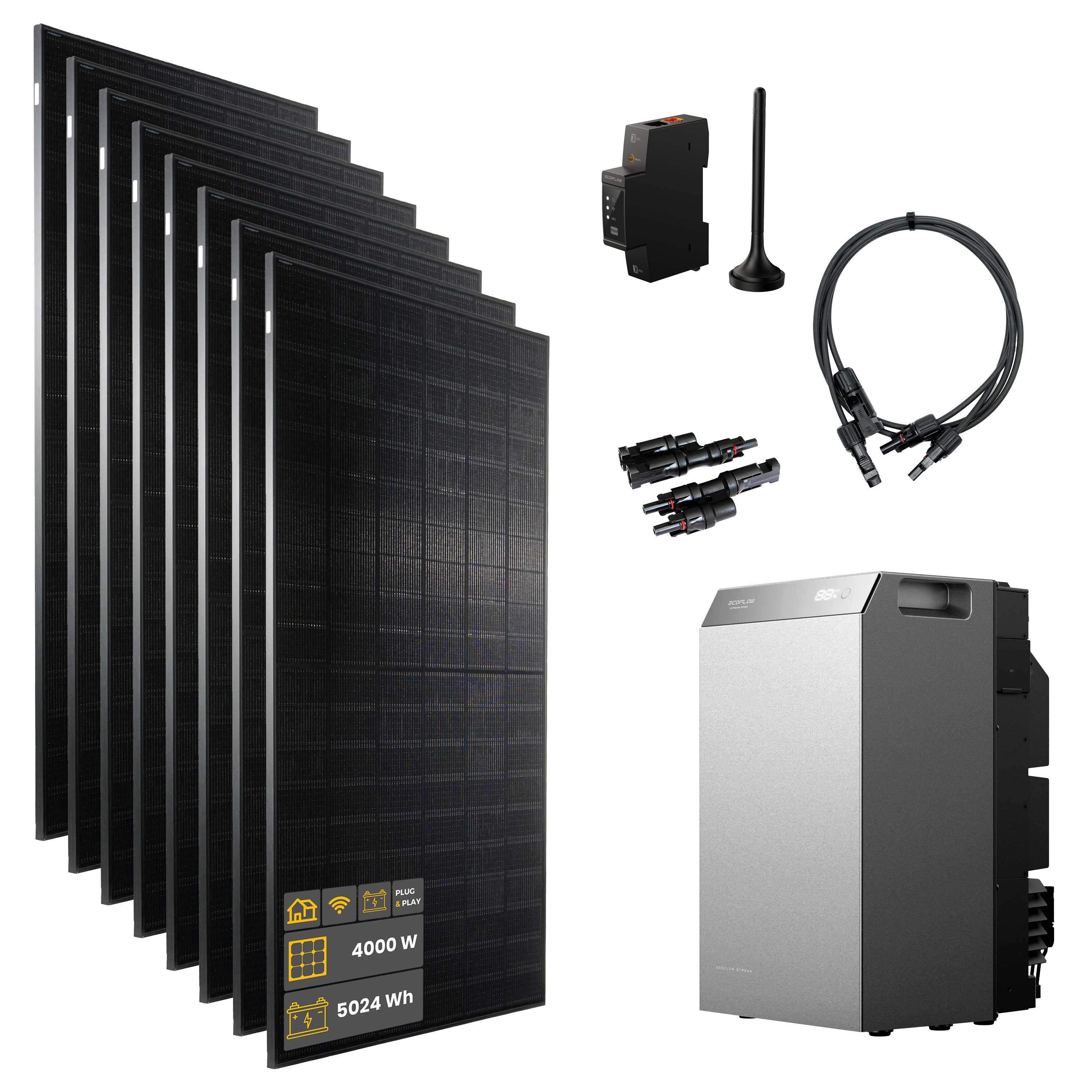
KfW is a state-owned banking group that launched the Renewable Energy 270 loan program to promote solar energy systems. We think it's a great program, because it allows you to finance your photovoltaic system at favorable interest rates. The financing covers photovoltaic systems with and without battery storage, or even just battery storage alone. The heart of a photovoltaic system is, of course, the solar modules , which you can find in our shop in numerous variations and power outputs.
In addition to the purchase costs, planning and installation costs are also taken into account. It's also worth noting that you can receive financial support not only for newly installed photovoltaic systems, but it may also be possible to obtain loans for existing systems. In this case, the system must not have been connected to the grid for a full year or must have undergone significant modernization to improve its performance. Loan terms range from 5 to 30 years, and in the best-case scenario, the effective annual interest rate is 4.03% (as of early 2023). The contractual arrangements are generally handled through your bank, which will also check your creditworthiness before you submit your application. KfW provides a daily updated overview of the terms and conditions for borrowers. If you decide to use KfW as your lender, we recommend preparing the KfW application before speaking with your bank or savings bank. This step will facilitate the loan application process and help you reach your goal more quickly.
Your KfW promotional loan in just a few steps
You can prepare your loan application for your bank or savings bank using the KfW funding assistant . Ideally, contact your bank before purchasing your photovoltaic system. The further processing then takes place between your bank, which submits your application to KfW, and KfW, which concludes the loan agreement with you after approval. Generally, all major credit institutions support KfW's loan program 270, but you should still check beforehand. It is essential that you intend to install your photovoltaic system on your own, owner-occupied property.
The incentive to purchase a solar power system is particularly high in 2023.
There are several reasons to seriously consider purchasing a photovoltaic system this year. These include the VAT exemption, the uncertainties in the energy market, and the potential for significant long-term savings. Since the investment is usually in the four-figure range or higher, we fully understand that this step requires careful consideration. However, even a small photovoltaic system can be worthwhile. A self-generated kWh of solar power from your system costs you approximately 10 to 16 cents. In contrast, you typically pay three times as much for electricity from the grid. Therefore, check which funding programs are available to you and calculate your long-term cost-benefit analysis. In our shop , you'll find high-quality solar modules and many other components you need to build your own solar system. Of course, we're happy to advise you if you have any questions about our products.
