
Unterwegs mit

Self-sufficient on the road with Marc and Janine

Autark unterwegs mit Marc und Janine

Self-sufficiency in the VW T3: More freedom when wild camping with a well-thought-out power setup

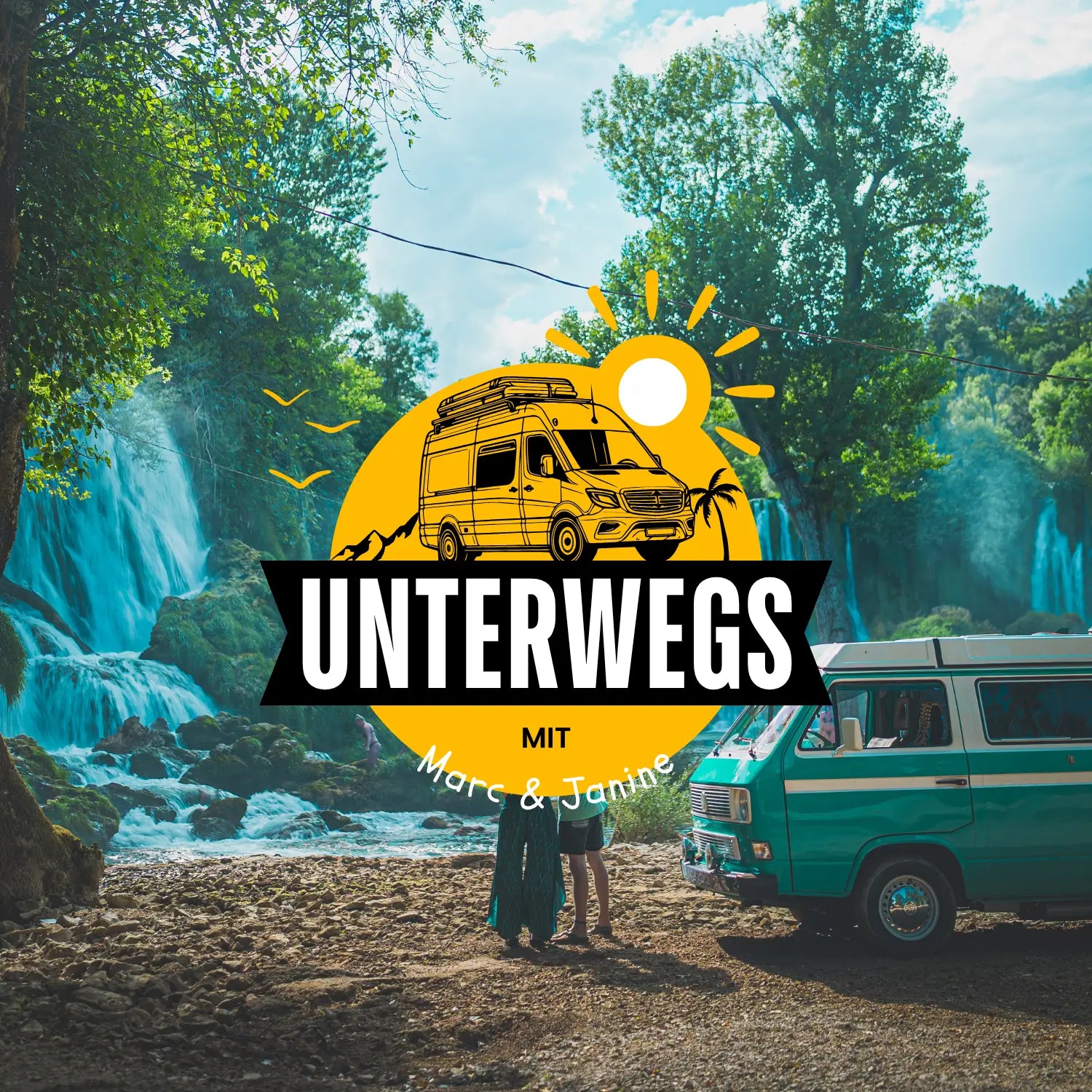
We are Marc and Janine. Together with our dog Elli, we prefer to be where it is quiet and hardly anyone else can get to. Marc has been traveling in a van for 17 years and completely converted our T3 himself. 

What drives us? Freedom. No fixed plans, no campsites, no alarm clock. Just drive off and see what comes.

Wild camping is the core of camper life for us. Not because we generally avoid campsites, but because the most beautiful places are often where there is no power outlet. With a dog, that is even more valuable to us. Less hustle and bustle, more peace, more space.

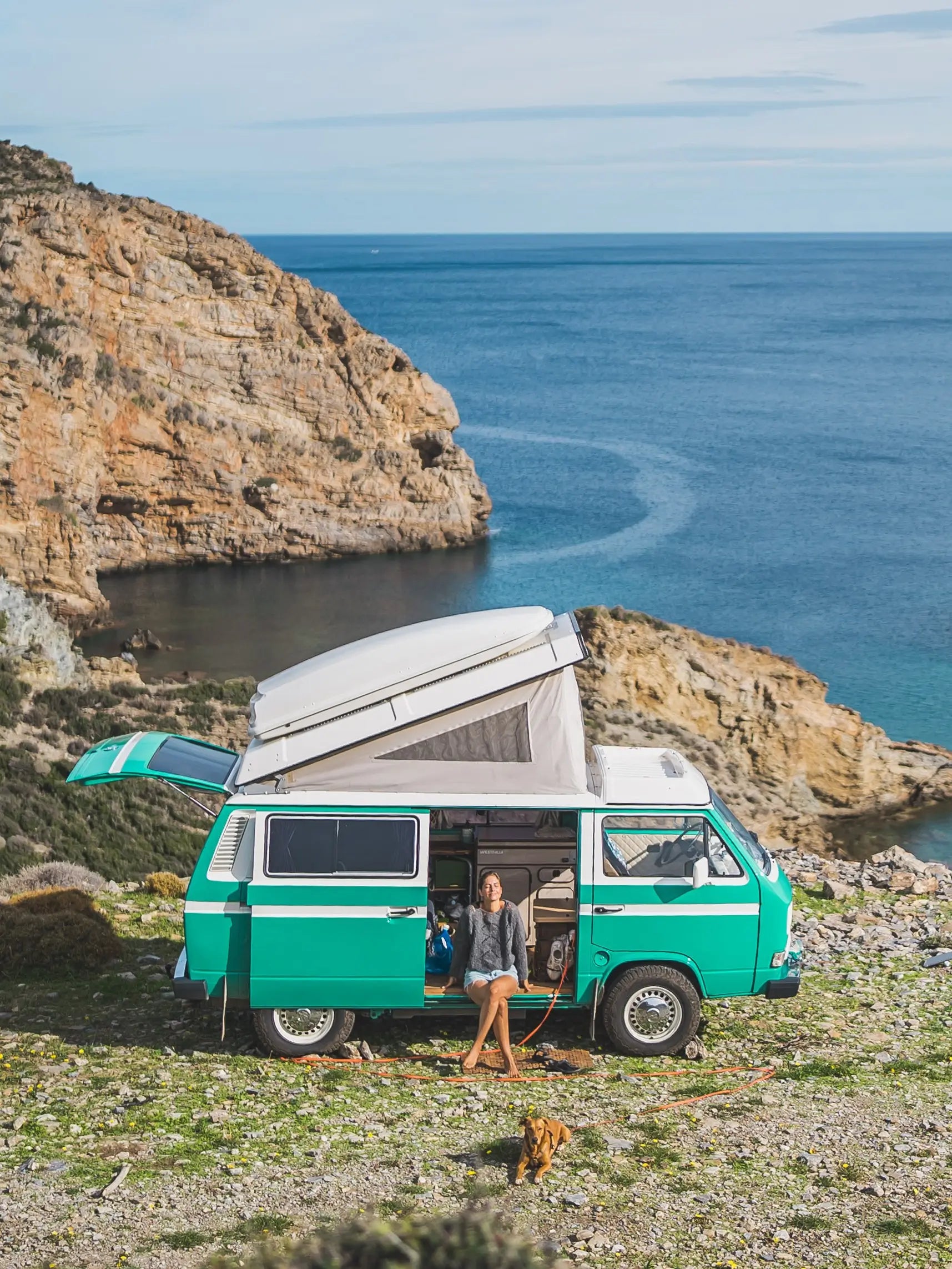
Last winter we spent three months traveling in Greece, the two of us with our dog Elli. Lots of sea, a few mountains, often just peace and quiet. And almost always wild camping, without a fixed plan.

For this to work stress-free, it requires a power setup that runs reliably in the background. Technology is not an end in itself for us. It is the prerequisite for waking up in the morning and simply staying put when the spot is right.

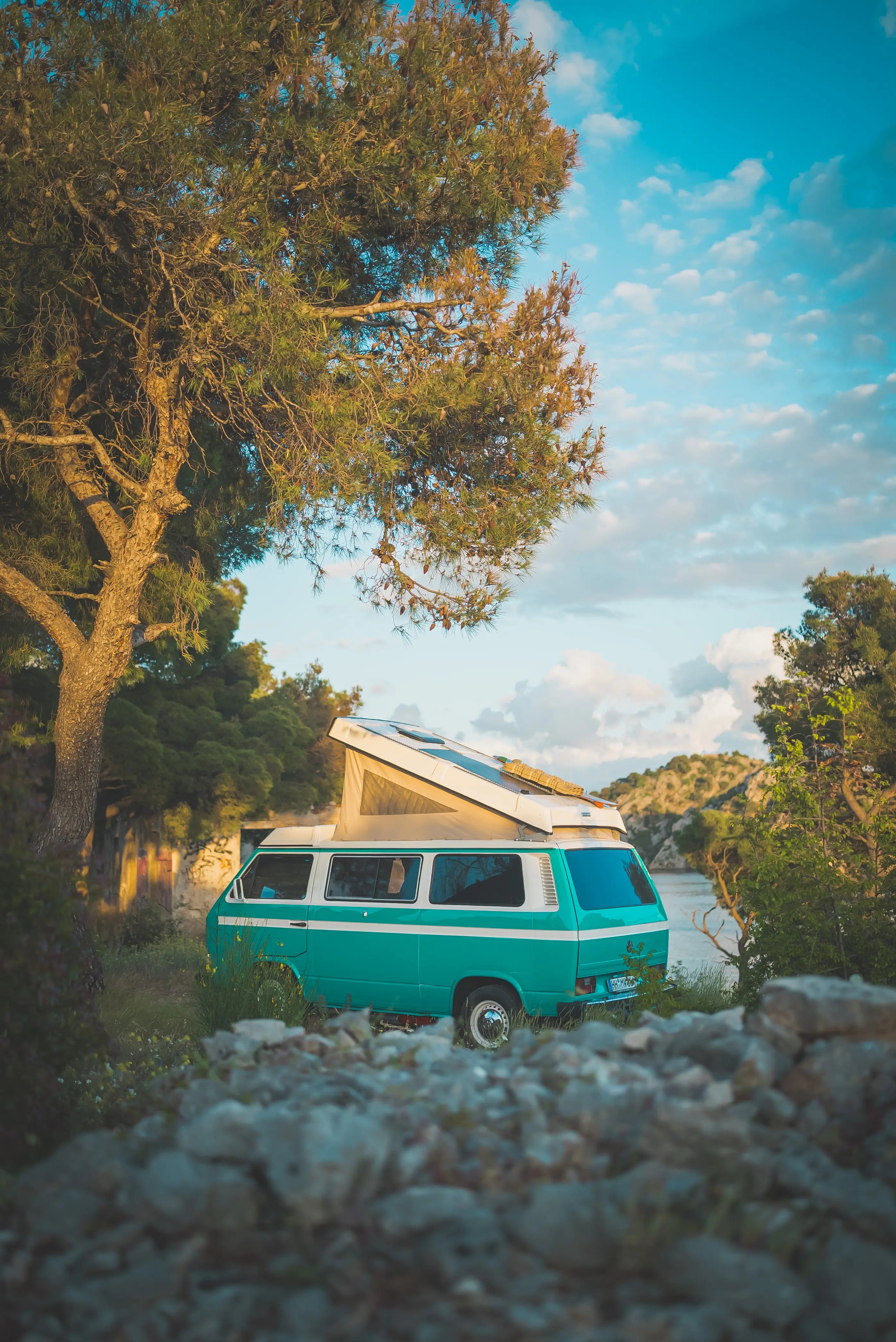
The VW T3 “Stulle” as a Travel Companion

“Stulle” is our restored and self-converted VW T3. It’s not a fully integrated, high-tech motorhome, but a classic that has been deliberately kept small. It’s precisely this combination that makes traveling so enjoyable for us: Stulle is compact, but has the same kind of technology as a large camper, and that’s exactly what allows us to go where the large campers have to stop. To us, self-sufficiency doesn’t mean taking as many appliances as possible. It means being independent—from shore power, from time pressure, and from having to choose a campsite based on available facilities.

Solar on the roof: unobtrusive, lightweight and practical for everyday use

On the roof sits a SOLA Flex solar panel with 160 watts peak. We have a pop-up roof, and that is exactly why one thing was particularly important to us: The panel must not be too heavy, so that the roof can still be raised easily and cleanly.

In addition, the roof is slightly curved. Flexible panels adapt to this shape much better than rigid framed panels. The SOLA Flex is glued on and remains flat. Only a small hole is needed for the cable routing. This keeps the vehicle height practical for everyday use.

In everyday life, the roof panel covers our basic needs. But in winter, the typical limitations quickly become apparent: low-lying sun, shorter days, and shadows from the pop-up roof, roof box, or trees. When we are parked freely, we don't want to keep moving the vehicle just to get a few more watts.

Mobile solar energy: flexible when the installation site has shade

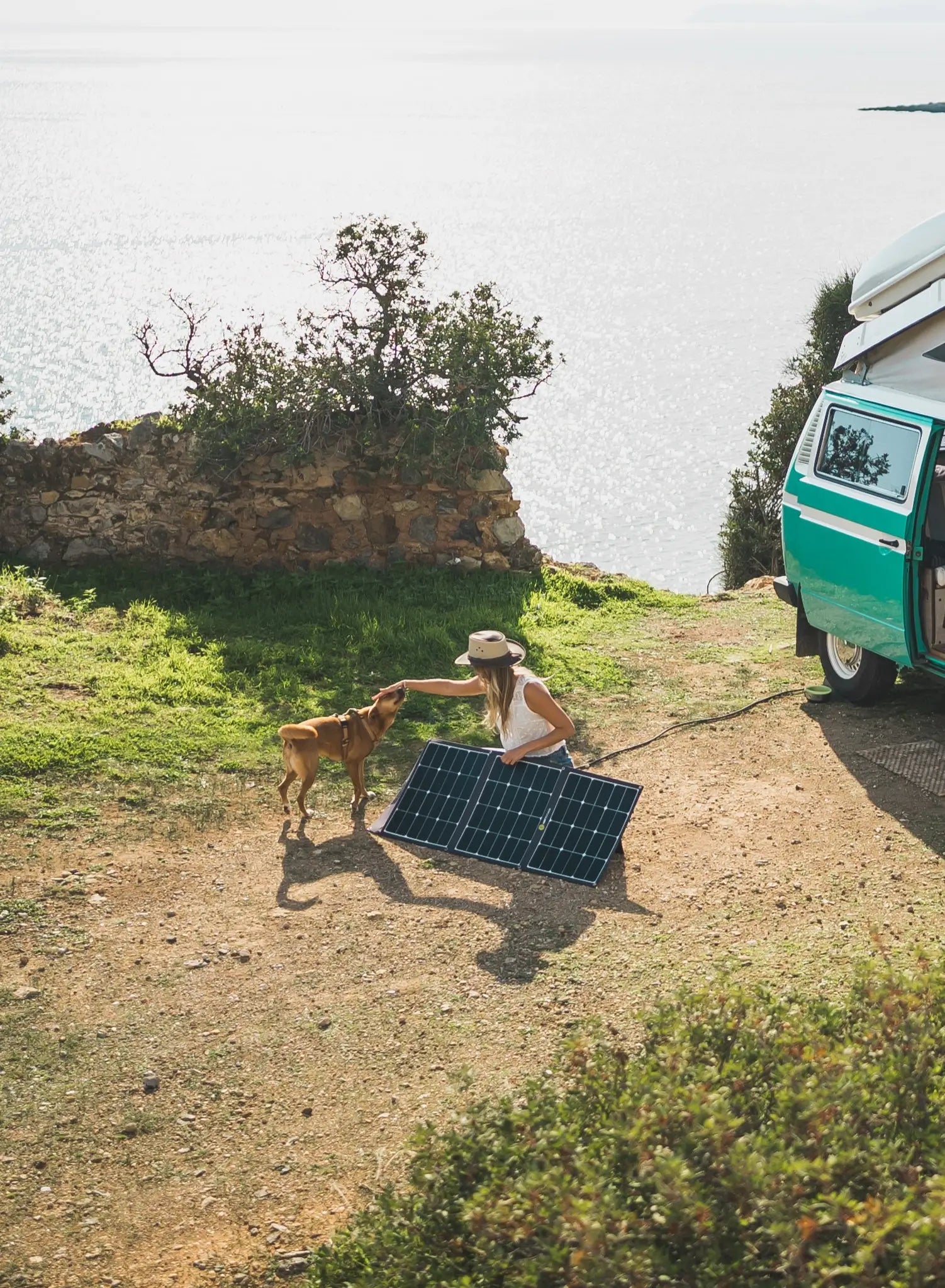
That is exactly why a portable panel is always part of our setup, in the form of a solar bag with 140 watts peak. The big advantage is not the number on paper, but the flexibility. The Stulle can stand in the shade while the panel is in the sun. Especially when camping freely, this is often the difference between "it's okay" and "everything runs smoothly."

In practice, a well-positioned portable panel can generate a lot over the course of the day because we consistently position it at the best possible angle to the sun. This makes our setup significantly more independent of the campsite.

The battery as a buffer: Store energy when it is available

Inside, a 150 Ah lithium battery from WATTSTUNDE serves as the house battery. Lithium really shines in everyday camper life, especially when charging windows are small. Our battery accepts a charge quickly, is cycle-resistant, and saves weight. That is exactly what helps when boondocking, when the sun and weather are not always on your side.

The battery is the heart of our electrical system. This is where energy is collected, stored, and delivered exactly when we need it. This applies not only at night or in bad weather, but also when solar power is available.

This keeps everyday life relaxed: lights in the evening, charging devices, starting up in the morning, without having to think about the nearest power outlet first.

Charge controllers and overview: calculate less, get more feel

To ensure that solar power reliably reaches the battery, you need a suitable charge controller. We use an MPPT controller. It optimizes the yield even under changing conditions.

Just as important as the hardware is having a clear overview. When living off-grid, we don't want to constantly recalculate, but we want to know what is happening. What is coming in. What is going out. Is there enough to spare, or is today a day to be economical.

This works best via an app. As soon as you have a feel for your own consumption, self-sufficiency becomes much easier.

Our tips for standing out from the crowd that really help in everyday life

A good setup is only half the battle. The other half is behavior. A few simple decisions often make more of a difference than the next component.

  • LED instead of halogen: Warm-white LEDs save electricity and still create a cozy atmosphere.

  • Use the beam angle consciously: A solar panel only delivers good yields if it is positioned correctly toward the sun. A simple trick helps with alignment: Stick a pen into the panel; the angle is correct when no shadow is visible anymore.

  • Also use the drive to charge: In winter or in bad weather, solar power is not always enough. A battery booster can use the driving time to reliably recharge the battery.

  • Fixed plus mobile beats fixed only: The combination of a roof-mounted module for basic needs and a mobile panel for optimal placement in the sun makes off-grid living significantly more relaxed.

  • Know your consumption instead of guessing: Anyone who takes a quick look at the app and understands their own daily routine saves themselves the stress.

The next winter chapter is already planned

Today, our setup primarily gives us one thing: freedom. It allows us to stand where it’s beautiful and stay when it feels good. That is exactly the essence of freedom camping.

At the same time, our setup has reached its limits in winter. Short days, a low-hanging sun, shadows, and longer periods of grey weather are exactly the moments that reveal what is truly missing and what is merely “nice to have.”

And that is exactly why we are continuing. Until next winter, we will optimize our system step by step and adapt it so that freedom camping remains relaxed even in difficult conditions.

Our goal: complete self-sufficiency. Will we manage to convert the little VW T3 Stulle into a perpetual motion machine for electricity? 

Stay tuned and find out how we further develop the setup and get it ready for next winter.

Guide

View all
Unterwegs mitUnterwegs mit den Bullikindern: Solarupgrade für eine Balkan-Offroad-Reise im Pickup-Camper Unterwegs mit

On the Road with the Bulli Kids: Solar Upgrade for a Balkan Off-Road Trip in a Pickup Camper

Who We Are Hi, we are Freddy, Anne, Henri, Karl and Lotti from bullikinder.de. We love traveling together as a family. Whether it's a spontaneous weekend trip, a cozy camping holiday or an a...

ProduktvorstellungSimarine Tanksensor: Radar statt Schwimmer im Tank für eine wirklich zuverlässige Tankanzeige Produktvorstellung

Simarine tank sensor: radar instead of a float in the tank for a truly reliable fuel gauge

Simarine STR tank sensor: measure the fill level using radar, with no float in the tank and no contact with the liquid. Find out how STR1 and STR2 work, how to install them, and which version is ri...

ProduktvorstellungEcoFlow STREAM 5000 vs. STREAM Pro und STREAM Ultra: Was hat sich verändert? Produktvorstellung

EcoFlow STREAM 5000 vs. STREAM Pro and STREAM Ultra: What has changed?

What has changed with the EcoFlow STREAM 5000 compared to the STREAM Pro, STREAM Ultra, and AC Pro? This comparison highlights differences in storage capacity, PV inputs, output power, and expandab...