
About a year ago, I shared my first review here of our balcony solar system. Back then, I was already really excited about how easy it was to generate your own electricity. But if I'm honest, I also knew the frustration: the sun shines at noon, my partner and I are at work, and the valuable solar power simply goes to waste. Everything we didn't use at that exact moment went entirely back into the grid as surplus.
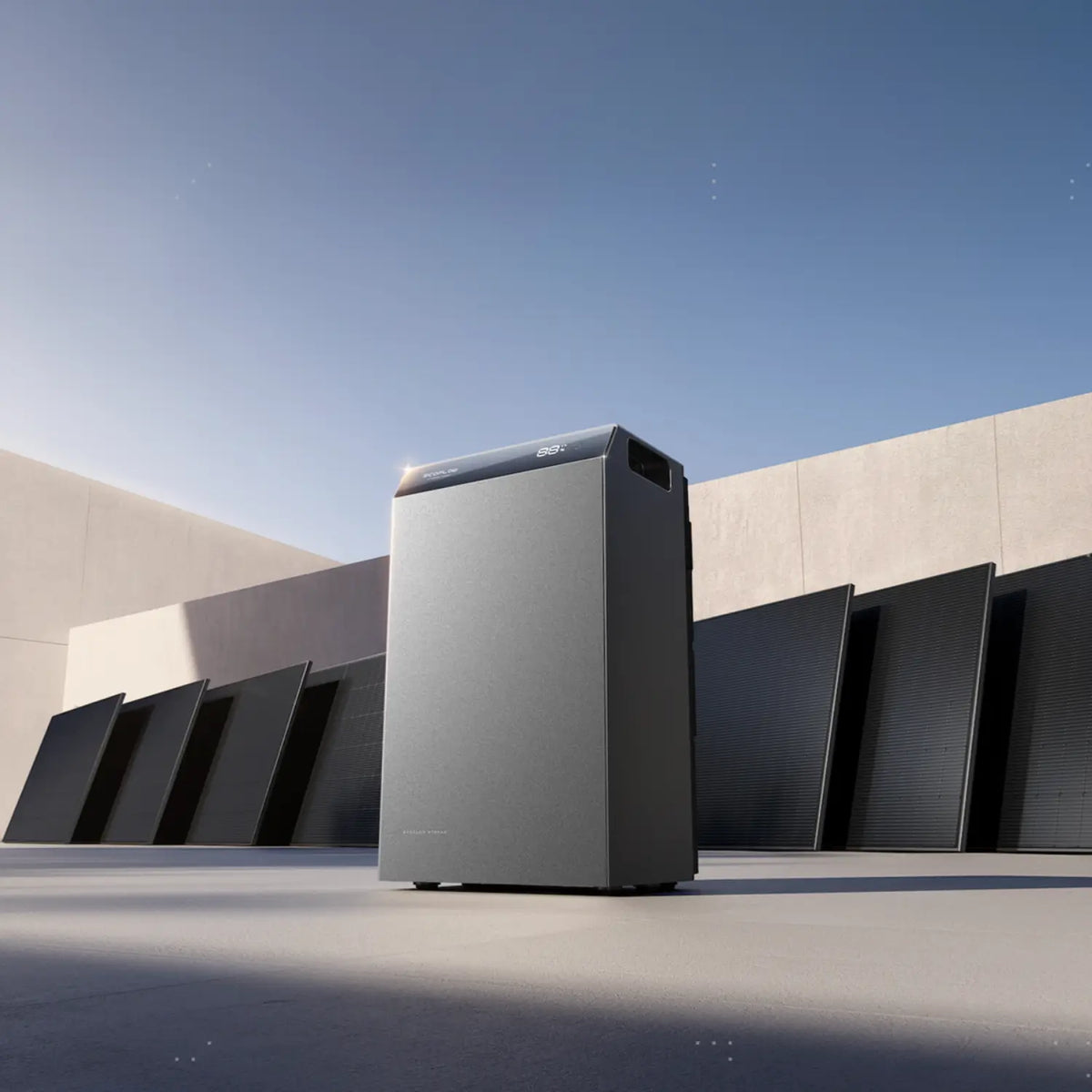
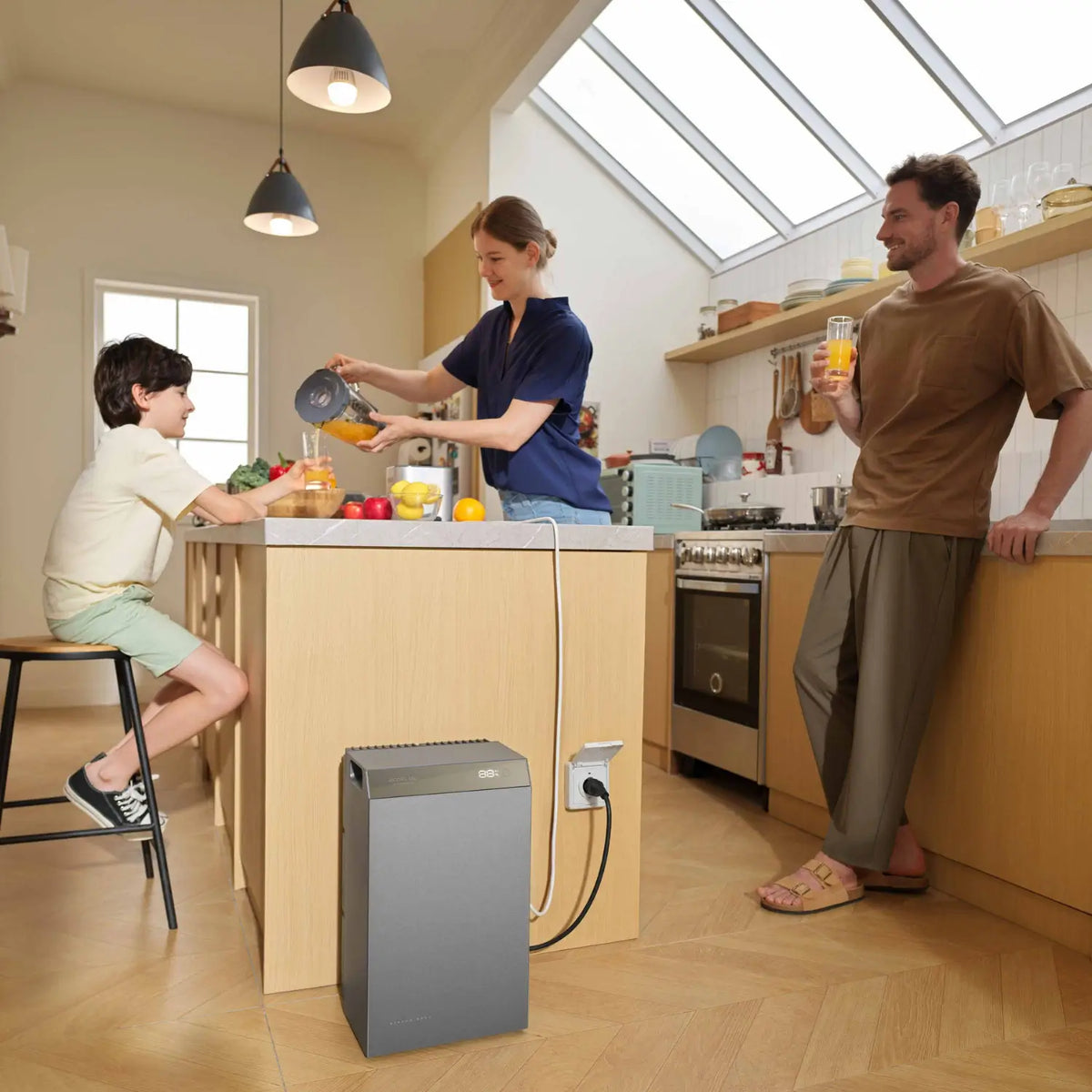
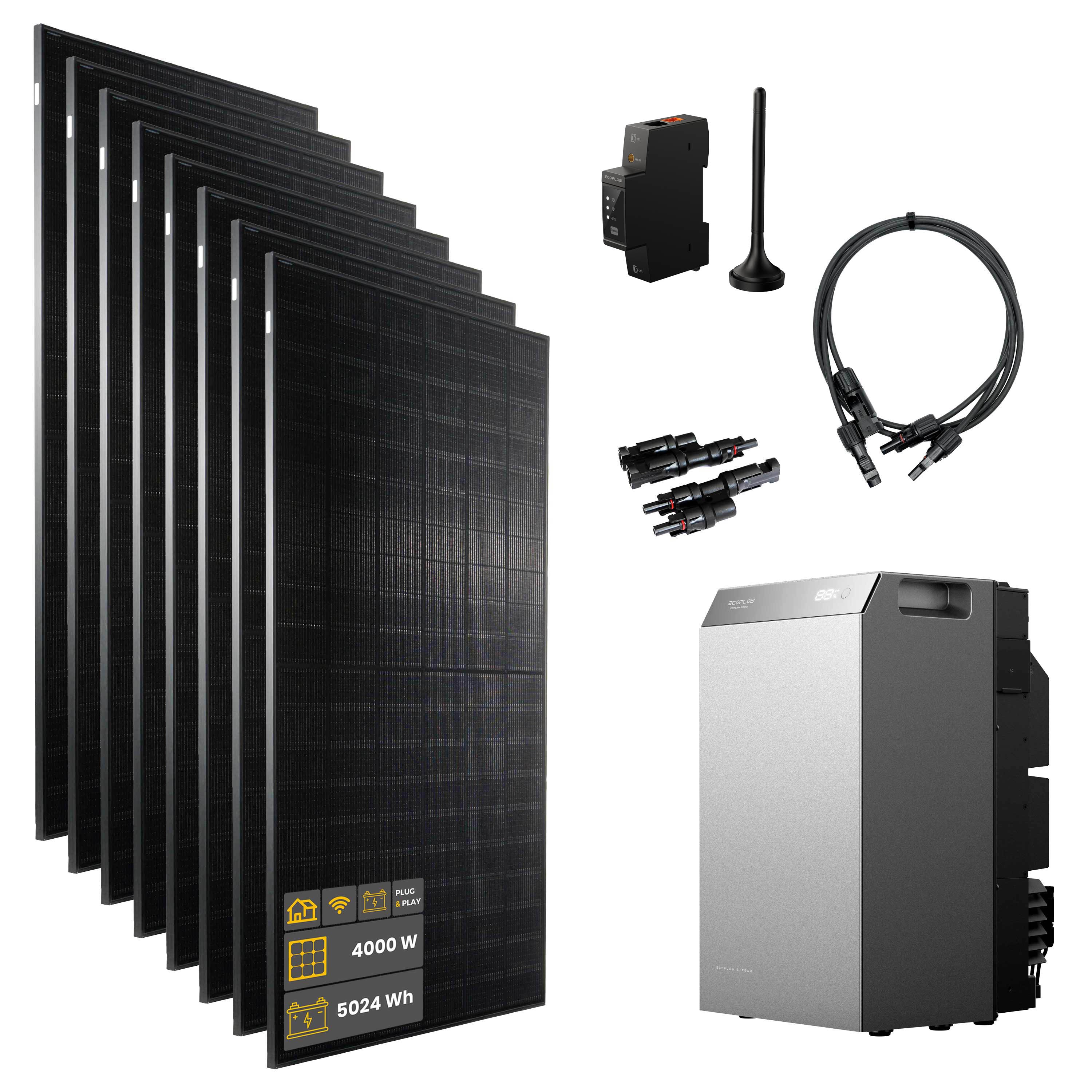
That was exactly the point where I said, we need storage now. In 2026, we integrated it, and honestly, a lot has changed since then. Our system, which used to simply feed surplus power back into the grid, has become a system that actively thinks along. It detects how much we are currently consuming and stores the rest of the solar power in the battery instead of simply giving it away.
In this update, I'm taking you along for a direct comparison: April, May, and June 2025 without storage versus the same months in 2026 with storage. I'll show you the real numbers from my app, how I interpret them, and above all, how the difference really feels in everyday life.
Mareike
Marketing Manager at SOLARKONTOR

Quick recap: How our balcony solar system performed without storage
In the original review, we carefully documented for a year what our balcony solar system produced, how the installation went, and how much we were actually able to save. In short: the system ran reliably, was maintenance-free, and was simply fun in everyday life because you could see your own electricity and use it consciously.
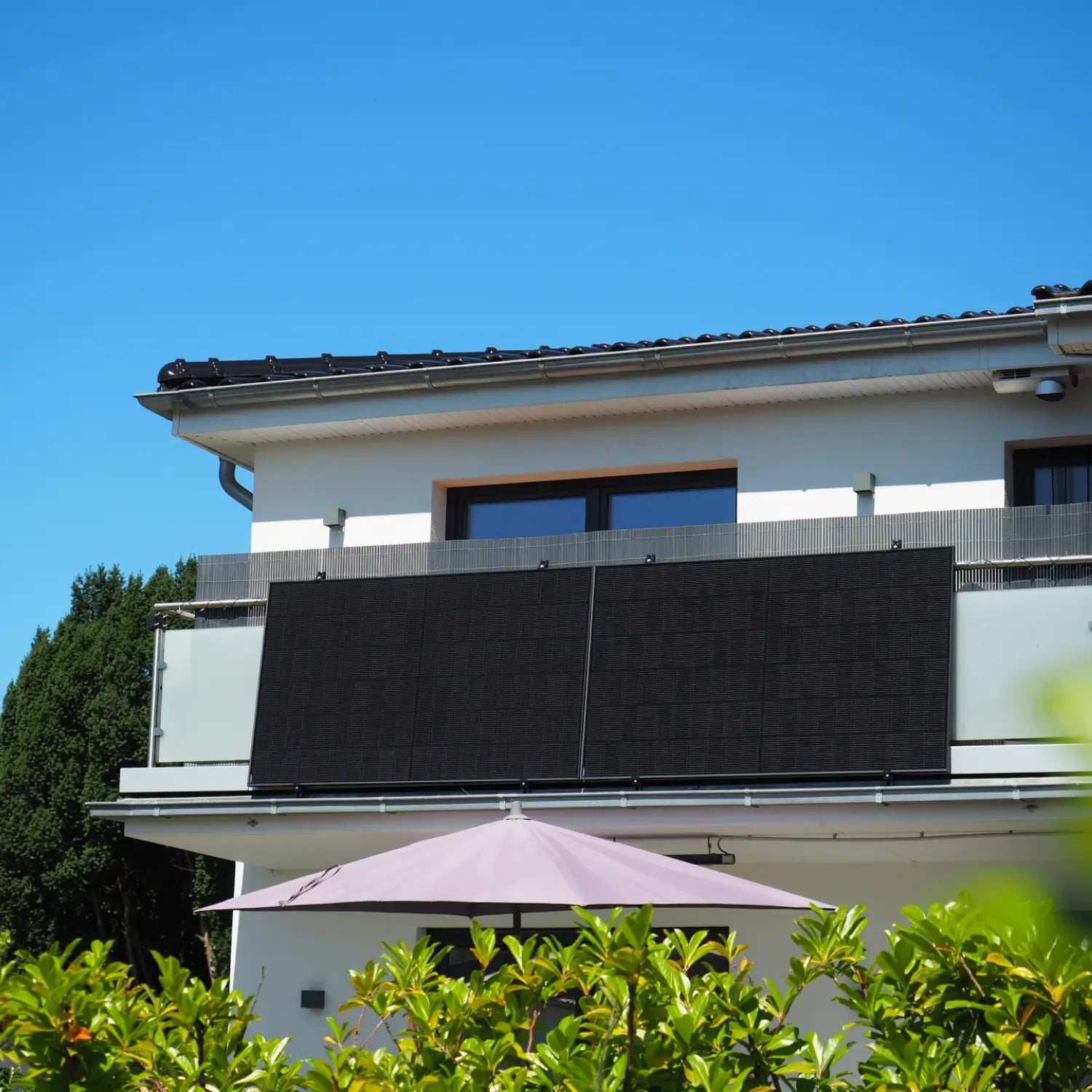
At the time, the setup included, among other things, the EcoFlow PowerStream micro inverter, two WATTSTUNDE SOLA Frame Black 480 Wp solar panels, suitable balcony mounts, and extension cables. So the basis is a classic balcony solar system setup, like the one many people use on their balcony or terrace.
Here is the first blog post:
https://solarkontor.de/blogs/ratgeber/balkonkraftwerk-test-erfahrungen-und-ertrage
The game changer in 2026: Storage plus intelligent consumption detection
With storage, the behavior changes fundamentally. The storage detects how high your current household consumption is. Then, simply put, the following happens:
The solar power first covers your current consumption in the house. Whatever is produced beyond that is automatically stored in the battery. Only when the battery is full or there is no meaningful demand does electricity flow into the grid.
That sounds simple, but it is exactly the lever that changes a large part of everyday life with a balcony solar system. We have to turn on consumers "at the right time" less often, because the system does not immediately feed the surplus back into the grid, but stores it for later.
Our testing method: How we compare fairly
So that you can correctly interpret the numbers, we deliberately keep it simple and transparent:
- Comparison period: April, May, and June 2025 without storage versus April, May, and June 2026 with storage
- We look at the solar yield in kWh
- In the storage year, we also look at the distribution: to the house, to the battery, to the grid
Important: Weather and sunshine duration differ from year to year. The comparison therefore shows you not only "how much sun there was," but above all, how the electricity flow changes with storage.
The numbers: April, May, and June in a direct comparison
2025 without storage: Solar yield per month
|
Month |
Solar yield 2025 without storage |
|
April 2025 |
93.93 kWh |
|
May 2025 |
83.43 kWh |
|
June 2025 |
71.96 kWh |
2026 with storage: Solar yield plus distribution
|
Month |
Total solar 2026 |
To the house |
To the battery |
To the grid |
|
April 2026 |
94.52 kWh |
31.54 kWh |
49.90 kWh |
13.08 kWh |
|
May 2026 |
76.98 kWh |
28.58 kWh |
44.87 kWh |
3.53 kWh |
|
June 2026 |
71.33 kWh |
31.15 kWh |
39.33 kWh |
853 Wh |
What the numbers really say
When you put 2025 and 2026 side by side, it is immediately obvious: The pure solar yield is higher sometimes, lower other times. This is normal because weather and solar radiation fluctuate.
The real difference lies in our usage:
- Without storage, the surplus is gone immediately.
- With storage, the surplus is shifted to the battery.
- This significantly reduces unwanted feed-in, especially when there is little load in the household during the day.
Quite practically, this means: Our balcony solar system became less of a "noon project" and more of a system that also noticeably contributes in the evenings and mornings.
What has changed in everyday life
The biggest difference is not that suddenly much more electricity falls from the sky. The biggest difference is that we can use the electricity more efficiently.
In 2025, it was often like this: When the sun is out at noon, it pays to consciously run appliances. Dishwasher, washing machine, maybe even the laptop or the fan. If we didn't do that, the surplus went entirely into the grid.
In 2026 with storage, it is different. The storage detects our current consumption and automatically controls:
- When there is load, it is covered directly.
- When there is little load, the surplus is stored.
So we are less guided by the sun, because the system does not immediately feed the surplus back into the grid.
Is the upgrade with storage worth it
Whether storage is worth it depends heavily on your daily profile.
Storage is particularly useful if:
- You are often not at home during the day and consume more in the evenings
- You notice that your balcony solar system frequently produces a surplus
- You want to increase your self-consumption without actively timing it every day
Storage is usually worth it less if:
- You already have a sufficiently constant base load during the day and consume almost everything directly
- Your modules are heavily shaded and the overall yield remains low
In short: Storage does not turn a balcony solar system into a power plant for the entire apartment. But it helps you to bring your self-generated electricity much better into your everyday life.
Our tips so that your balcony solar system with storage runs really well
Pay attention to your base load
If you know what is permanently running at your place, you can assess how much solar power you use directly during the day anyway and how much will rather end up in the storage.
Use the app displays correctly
The displays "to the house", "to the battery", and "to the grid" are worth their weight in gold. They show you not only yield, but behavior. And that is exactly what ultimately determines self-consumption and benefit.
Orientation remains the most important factor
Storage is an amplifier for self-consumption. But it does not replace good orientation and sensible installation. If the modules hardly see any sun, there is simply little to store.
Conclusion and outlook
In 2025, our balcony solar system was a great entry into self-generation. It ran reliably, produced measurable electricity, and we could see directly how much we used.
In 2026 with storage, it feels much more like a system that thinks along. The surplus no longer goes entirely into the grid, but is intelligently pushed into the battery. And that is exactly what makes the difference in everyday life.
Next, we want to look at how the whole thing develops in the really high-yield summer months and how well the system then copes with more surplus and longer days.