Coffee in the camper – why many don't want to do without it
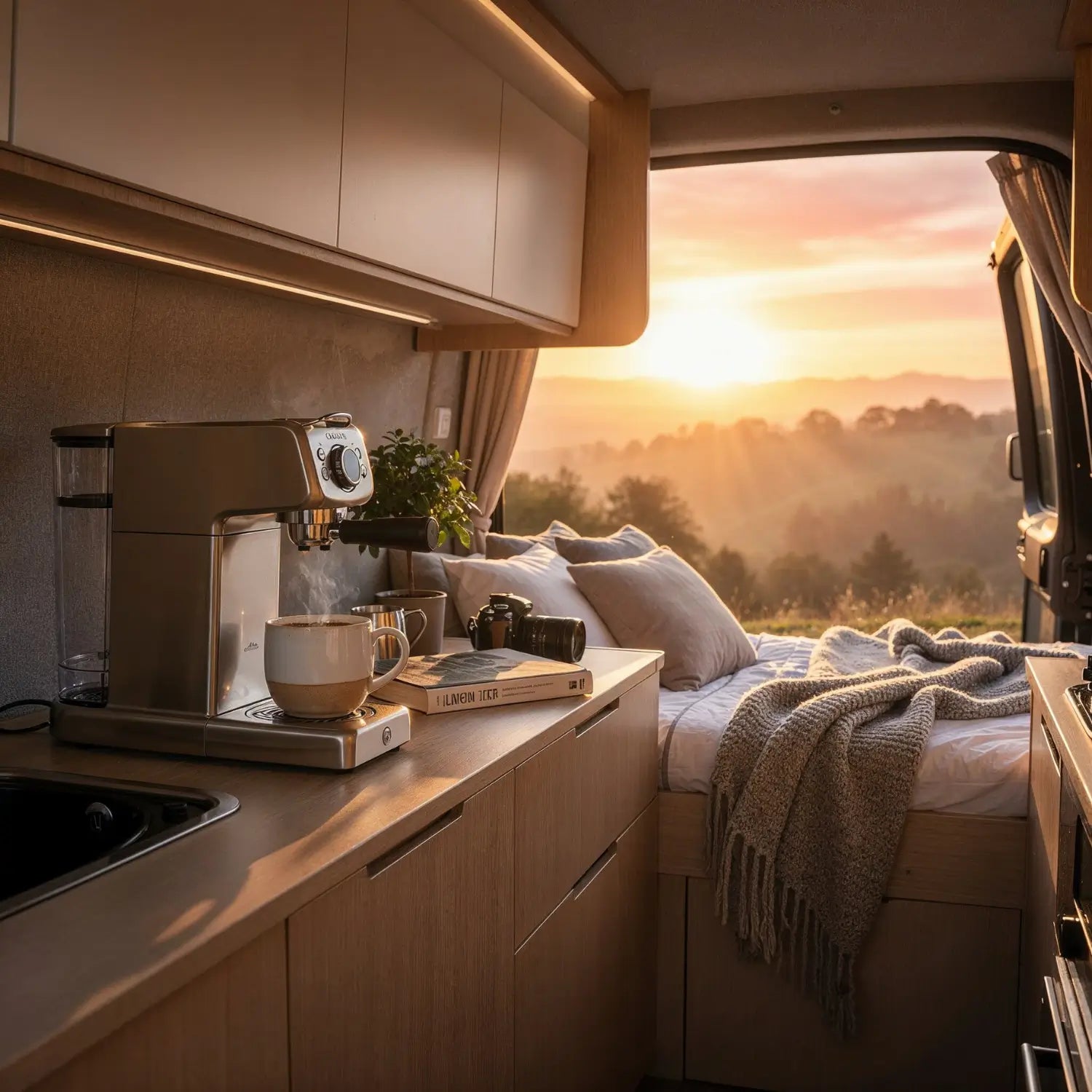
For many, that first cup of coffee in the morning is simply part of the routine – even when traveling. Whether at a campsite, on the beach, or somewhere off the beaten track: having your own coffee machine in your camper makes starting the day familiar and comfortable.
Especially on longer journeys or when working on the go, coffee quickly becomes more than just a moment of enjoyment. It's part of everyday life. However, to ensure that the coffee machine runs reliably even far from shore power, a suitable power solution is needed.
Why a coffee machine needs an inverter
The electrical system in a camper van typically operates on 12V DC. Many appliances, such as lights, water pumps, and refrigerators, run without problems on this. Coffee makers, however, are classic household appliances and require 230V AC.
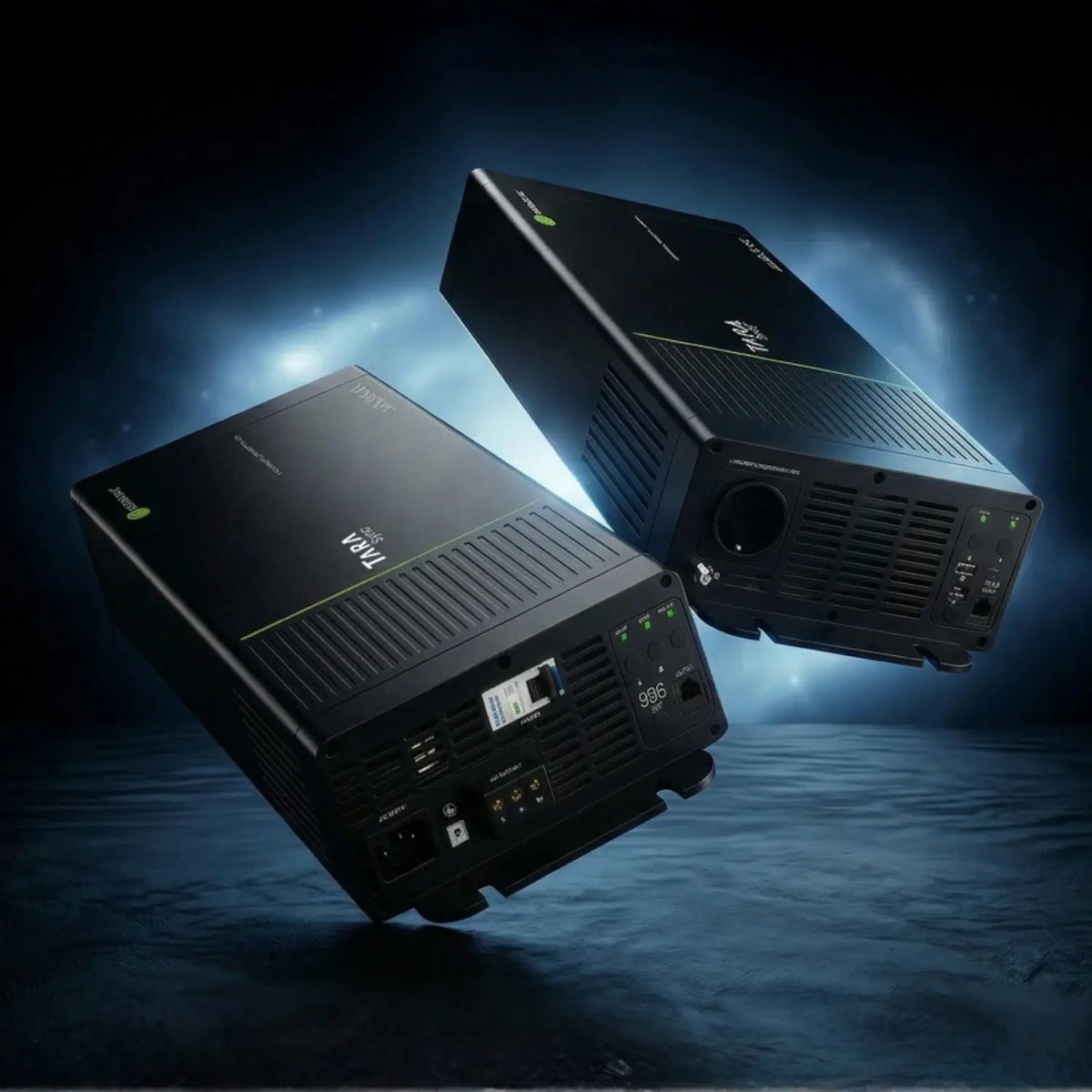
This is where the inverter comes in. It converts the 12V from the on-board battery into standard household 230V, making it possible to operate a coffee machine in the camper in the first place.
Which coffee machines can be used in a camper van
In principle, many coffee machines can also be used on the go – their performance and design are crucial.
- Capsule coffee machines are compact, heat up quickly and are particularly popular in campervans.
- Filter coffee machines usually require slightly less power, but take longer.
- Espresso machines deliver the best coffee enjoyment, but place higher demands on inverters and batteries.
Which machine is right for you depends primarily on your power setup and your coffee requirements.
Power consumption and starting current of coffee machines
Coffee machines are among the most energy-intensive appliances. Many models range from 800 to 1,500 watts. However, some coffee machines consume significantly more power. A particularly high load occurs briefly during the heating phase.
These inrush currents, also known as starting currents, are crucial for the inverter's design. If the inverter is undersized, it may shut down or the machine may not start at all.
Therefore, it is important to pay attention not only to the continuous power output, but also to the possible peak power output of the inverter.
Suitable inverter and battery for the coffee machine
The inverter should have sufficient power reserves to operate a coffee machine. An adequate power reserve is advisable without unnecessarily oversizing the inverter.
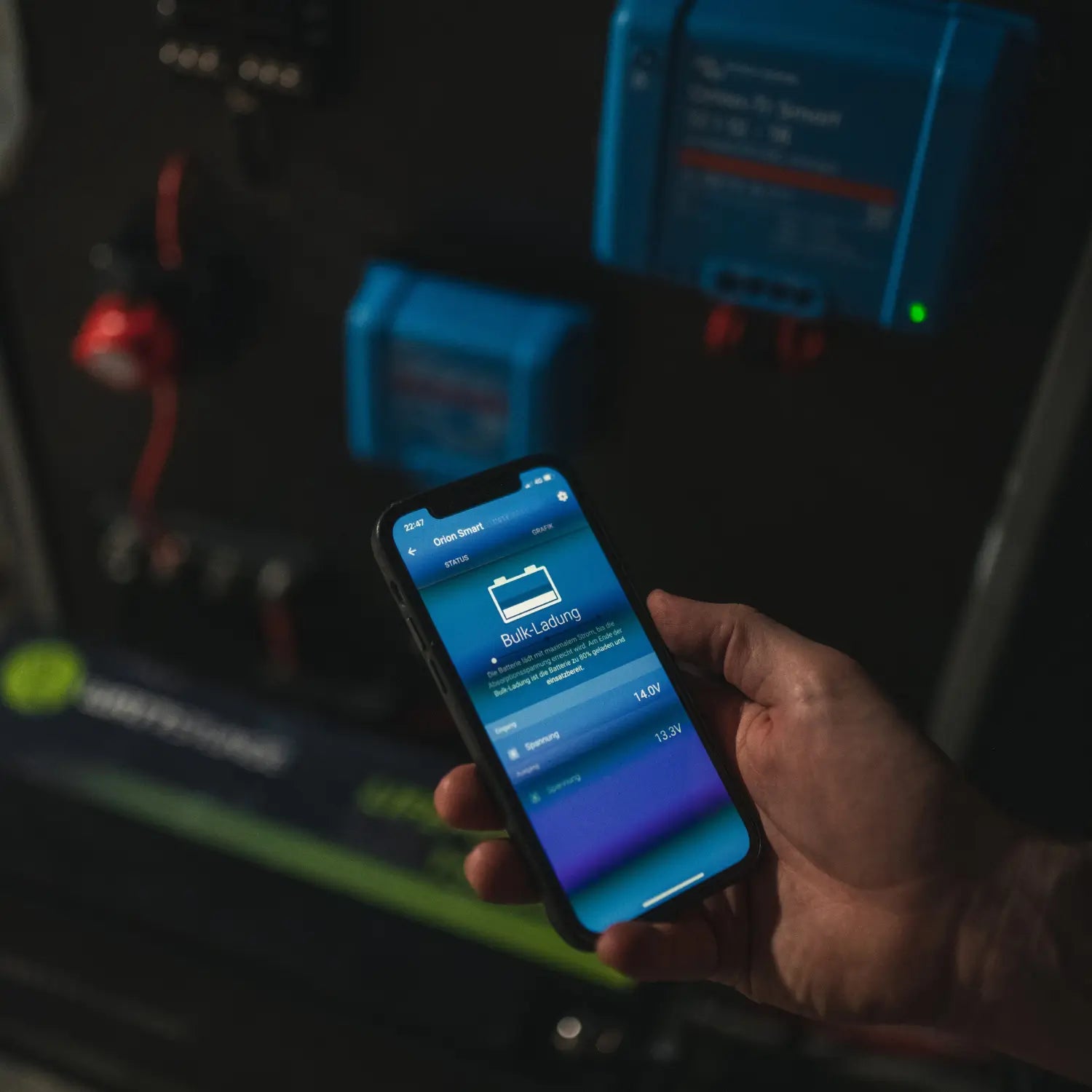
Equally important is a high-performance onboard battery . Brewing coffee draws a high current from the battery for a short period. The battery used must be able to supply a corresponding continuous discharge current. The better the battery, wiring , and inverter are matched, the more reliably the machine will operate.
A well-planned electrical system ensures that you can easily prepare several cups in succession.
Tips for stress-free coffee enjoyment on the go
With a few simple habits, enjoying coffee in your camper becomes relaxed and reliable:
- Do not use the coffee machine at the same time as other large 230V appliances.
- Only turn on the inverter when you really need it.
- Pay attention to short cable runs and a clean installation.
- Plan your coffee break carefully, especially when your battery is low.
This way your electrical system remains stable and your coffee stays hot.
Reliable coffee on the go with the inverter
A coffee machine in a campervan is not a luxury, but for many an integral part of everyday travel. With a suitable inverter and a well-matched electrical system, preparing coffee on the road is just as easy as at home.
Those who keep an eye on performance, battery and installation can enjoy their coffee regardless of location – completely without mains power.