

If you have ever tried to generate power reliably with solar panels on a camper roof, you know the classic situation: on paper, everything looks great, but in practice, you end up with less power. Not because solar is inherently unreliable, but because life on the roof is real. A little shade from a roof hatch or antenna. A little dirt. A few leaves. Diffuse light when the sky isn't cooperating. And in summer, heat that really hits hard on the roof.
WATTSTUNDE developed the new SOLA Frame SHADOW modules specifically for this reality. The focus is on stable yields under partial shading, fewer hotspots, and reliable performance even in diffuse light and at high temperatures.
What partial shading on a camper roof really means
Partial shading might sound like a minor problem at first. In practice, however, even a small patch of shade is often enough to cause a standard module to lose a significant amount of power. On a camper roof, this happens faster than you think.
Typical causes are leaves, dirt, or bird droppings.
And then there are the unavoidable roof fixtures. You can try to work around them, but in everyday use, they can rarely be completely shut off.
The new technology
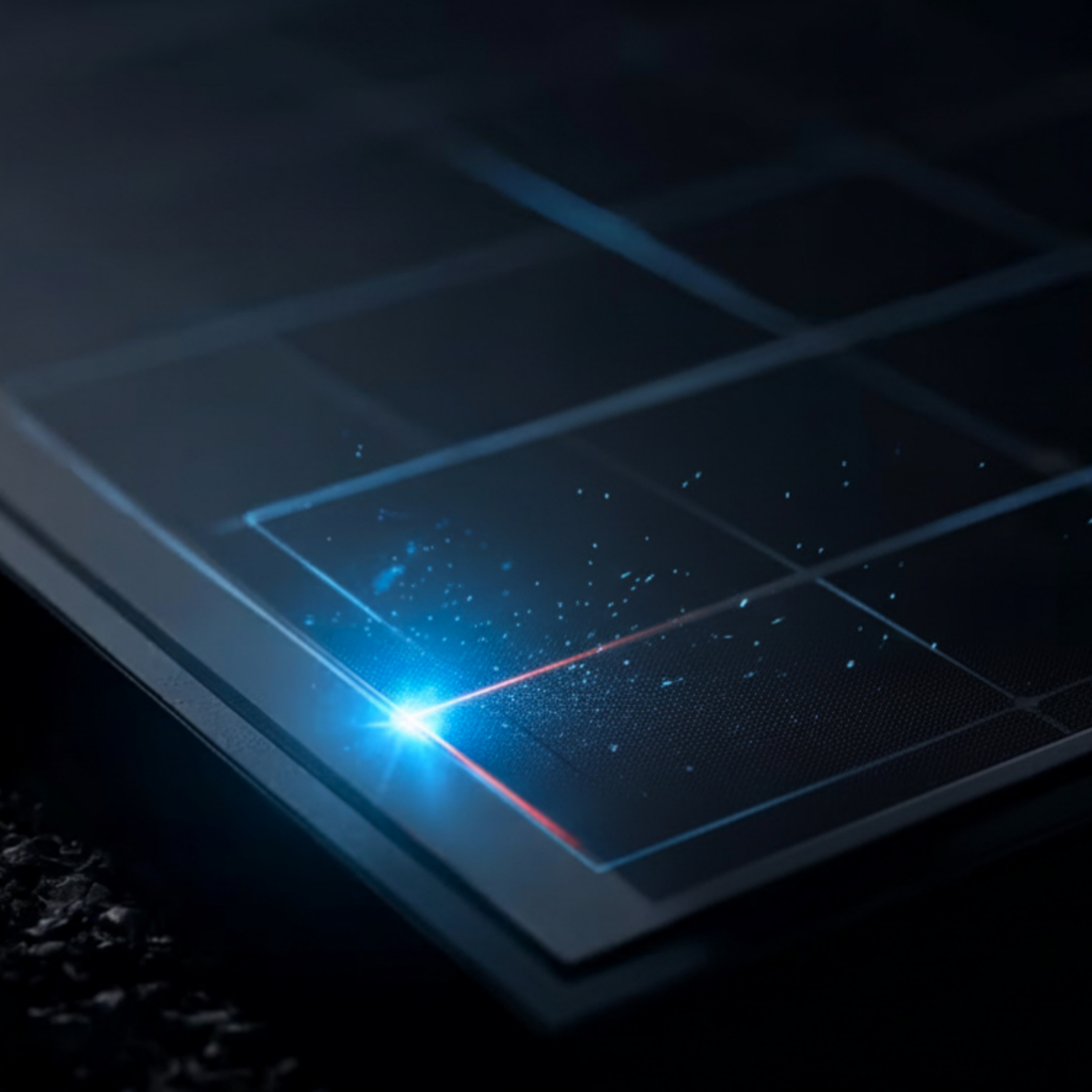
At the heart of the SHADOW series is the cell architecture. WATTSTUNDE combines modern N-type back contact cell technology with an anti-shading architecture. The abbreviation for this is ASBC.
What this means for you in everyday use can be broken down into three points:
More power under partial shading
With many modules, partial shading quickly causes a larger area to be electrically bypassed or entire cell strings to switch off. In the SHADOW series, the cell-integrated bypass function works to reduce power losses before entire cell strings are switched off.
Fewer hotspots
Hotspots are local temperature peaks that can be caused by shading, among other things. In the SHADOW series, the voltage within the cell is controlled and limited. This results in significantly lower local temperature peaks and noticeably reduces the risk of hotspots.
Higher yield in diffuse light
Not every travel day has postcard weather. N-type cells still generate power even in imperfect weather or weak sunlight. This makes a real difference in everyday camping, because you don't just want to benefit on perfect summer days.
How much benefit does this offer under partial shading
WATTSTUNDE states that the SHADOW series can offer up to 80% more power under partial shading compared to standard modules. The comparison refers to mono PERC, TOPCon, and shingled cells.
An important note here is the clear disclaimer: The results depend on the shading pattern, the irradiance, and the season. It is therefore not a promise for every situation, but a technology that typically experiences a less severe drop under real conditions.
Stable in the heat: Why the temperature coefficient is not just a datasheet value
In summer, peak wattage is not the only thing that matters on the roof. What matters is how stable a module remains in the heat when the roof surface gets really hot and light and shade constantly alternate.
The SHADOW series relies on a very low temperature coefficient and optimized performance under partial shading. The result: stable performance even on hot days and a lower risk of hotspots.
Series concept: Easy expansion and module combination
A practical point that is often underestimated in everyday camping: systems grow. First one module. Then later a second, because the refrigerator and inverter end up running more often than expected.
Within the SHADOW series, the module voltages are almost identical. This makes it easy to combine modules from the series. This helps you when retrofitting, when expanding the system later, and also when you want to use the available roof area as efficiently as possible.
Overview: These SOLA Frame SHADOW modules will be available
All variants are N-type back contact with ASBC.
|
Model |
Power |
Dimensions |
Weight |
|
SOLA Frame SHADOW 80 W |
80 W |
1145 x 350 x 30 mm |
4.3 kg |
|
SOLA Frame SHADOW 120 W |
120 W |
1050 x 545 x 30 mm |
6.1 kg |
|
SOLA Frame SHADOW 125 W |
125 W |
1560 x 392 x 30 mm |
6.5 kg |
|
SOLA Frame SHADOW 150 W |
150 W |
1425 x 510 x 30 mm |
7.7 kg |
|
SOLA Frame SHADOW 175 W |
175 W |
1170 x 720 x 30 mm |
8.7 kg |
|
SOLA Frame SHADOW 220 W |
220 W |
1385 x 765 x 30 mm |
11.4 kg |
If you have limited roof area, narrow formats are particularly interesting. If you want as much power as possible per module, the larger variants are interesting. The selection makes the most sense when you consider it together with your roof area and consumption. The easiest way to determine your consumption is to use the solar calculator, enter your typical appliances and operating times, and have it display your required watt-hours.
Your benefits at a glance
- ASBC technology for optimized yields under partial shading
- More stable performance in the heat due to a low temperature coefficient
- The same module voltage within the series
- 26% cell efficiency
- 100% light-active cell surface due to back contact
- 10-year manufacturer warranty
Who the SHADOW modules are particularly interesting for
The SHADOW modules are a particularly good fit for you if partial shading is normal on your roof, for example due to a roof hatch, antenna, or a little dirt. That is exactly when not only the peak wattage matters, but also how stably the module continues to operate under real conditions.
With the ASBC cell architecture made of N-type back contact and anti-shading architecture, the SHADOW series is designed to keep yields as stable as possible under partial shading, heat, and diffuse light. And because the module voltages within the series are almost identical, you can expand or combine your system more easily later.
Our tip for your planning: Start with your roof area and consumption. You can quickly determine the required power using the solar calculator. Then choose the module size so that it fits your space and everyday life.