
230V in your camper – what an inverter really makes possible
Many components in a campervan run perfectly well on 12V: lights, water pump, refrigerator, and USB sockets. However, as soon as you want to use everyday appliances, the 12V system reaches its limits. Coffee makers, laptop power adapters, hair dryers, and chargers for camera and e-bike batteries require 230V – exactly the voltage you use at home.
An inverter makes these devices possible while traveling. It ensures that a stable 230V voltage is generated from the on-board battery and adds the same comfort to your camper that you are used to at home.
The role of the inverter in the on-board power system
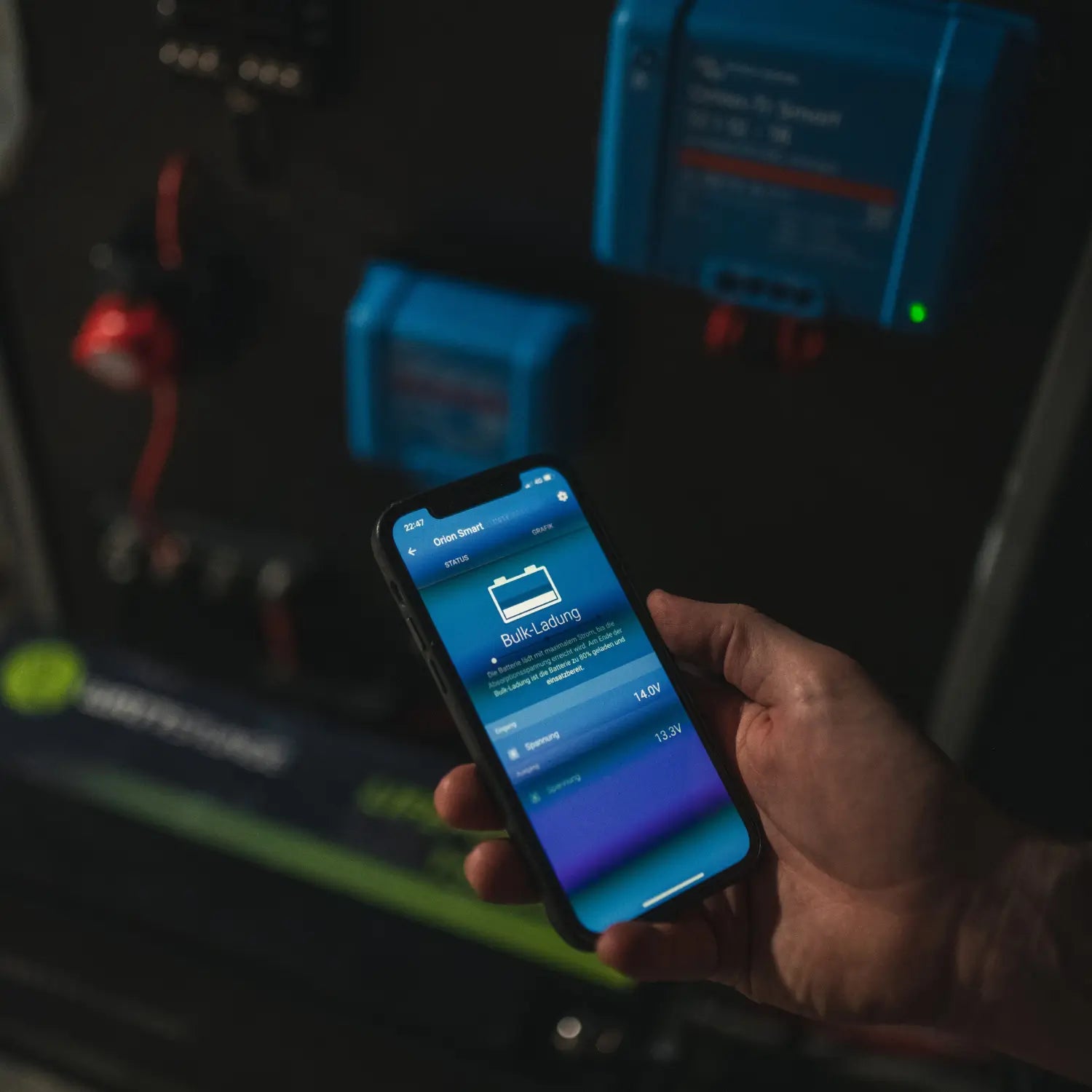
The inverter converts the 12V power from your battery into standard 230V power for wall sockets. The charger does the opposite: it converts 230V power from the shore power supply into 12V to charge your battery. Together with solar panels and the battery, the charger forms your 12V system, while the inverter provides the 230V power supply in the camper.
It therefore largely determines which devices you can use and how reliably they run. If it is appropriately sized and properly integrated, your on-board power system will be flexible and suitable for everyday use.
Why a pure sine wave inverter is the right choice
Basically, a distinction is made between inverters with modified sine waves and those with pure sine waves. The difference lies in the quality of the generated voltage.
A pure sine wave inverter delivers a clean, consistent voltage – comparable to the electricity from a wall socket at home. This is particularly important for sensitive electronics, modern chargers, and devices with control electronics.
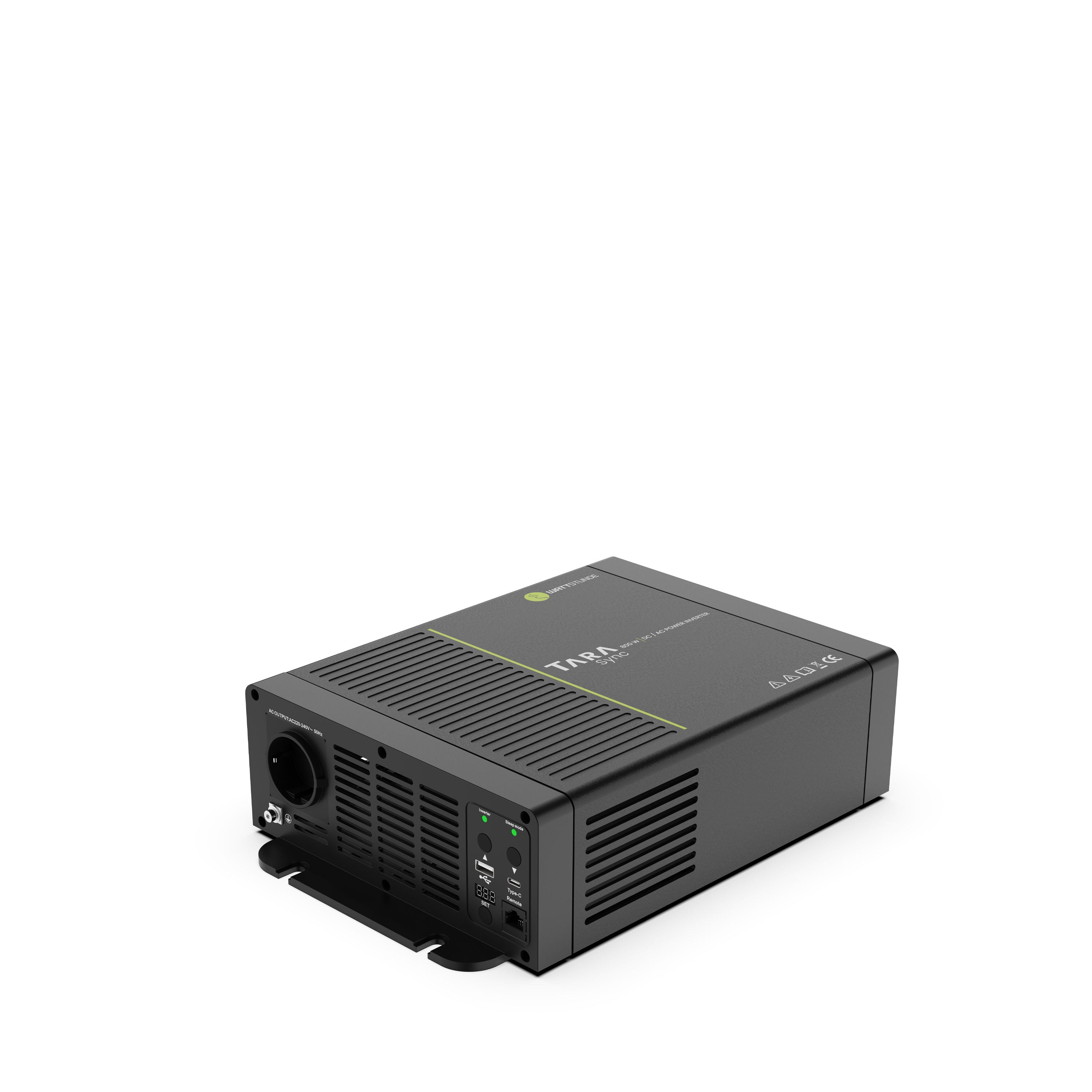
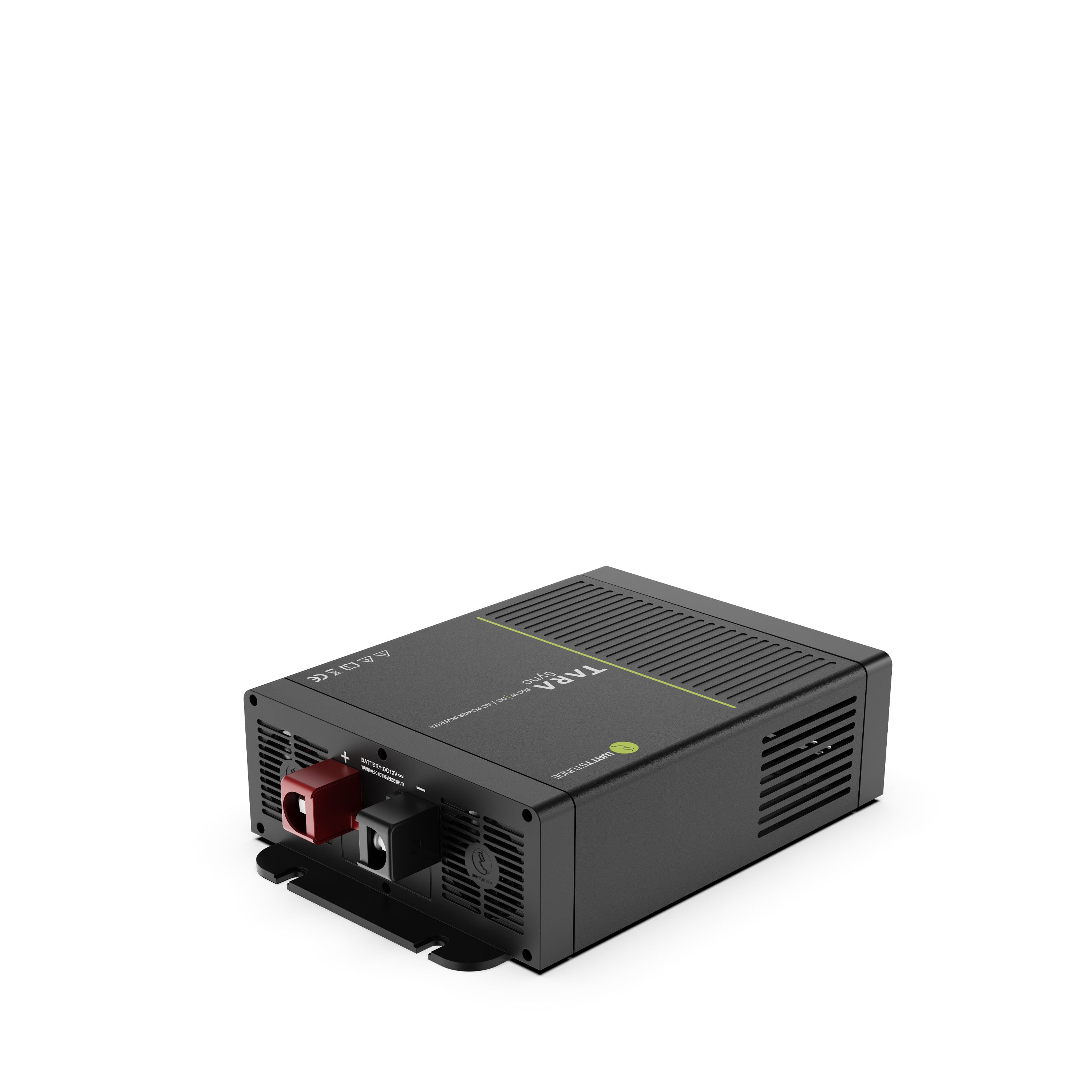
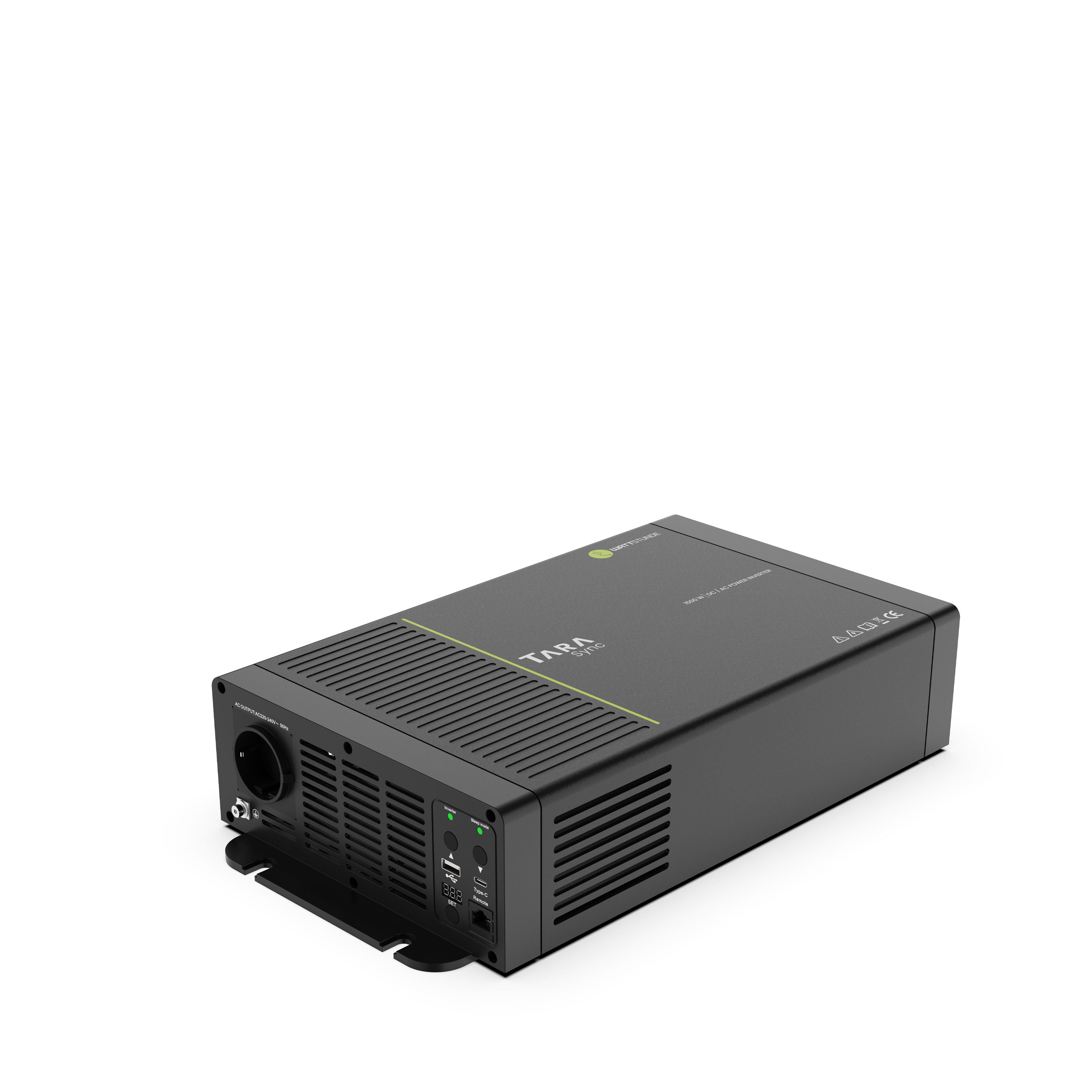
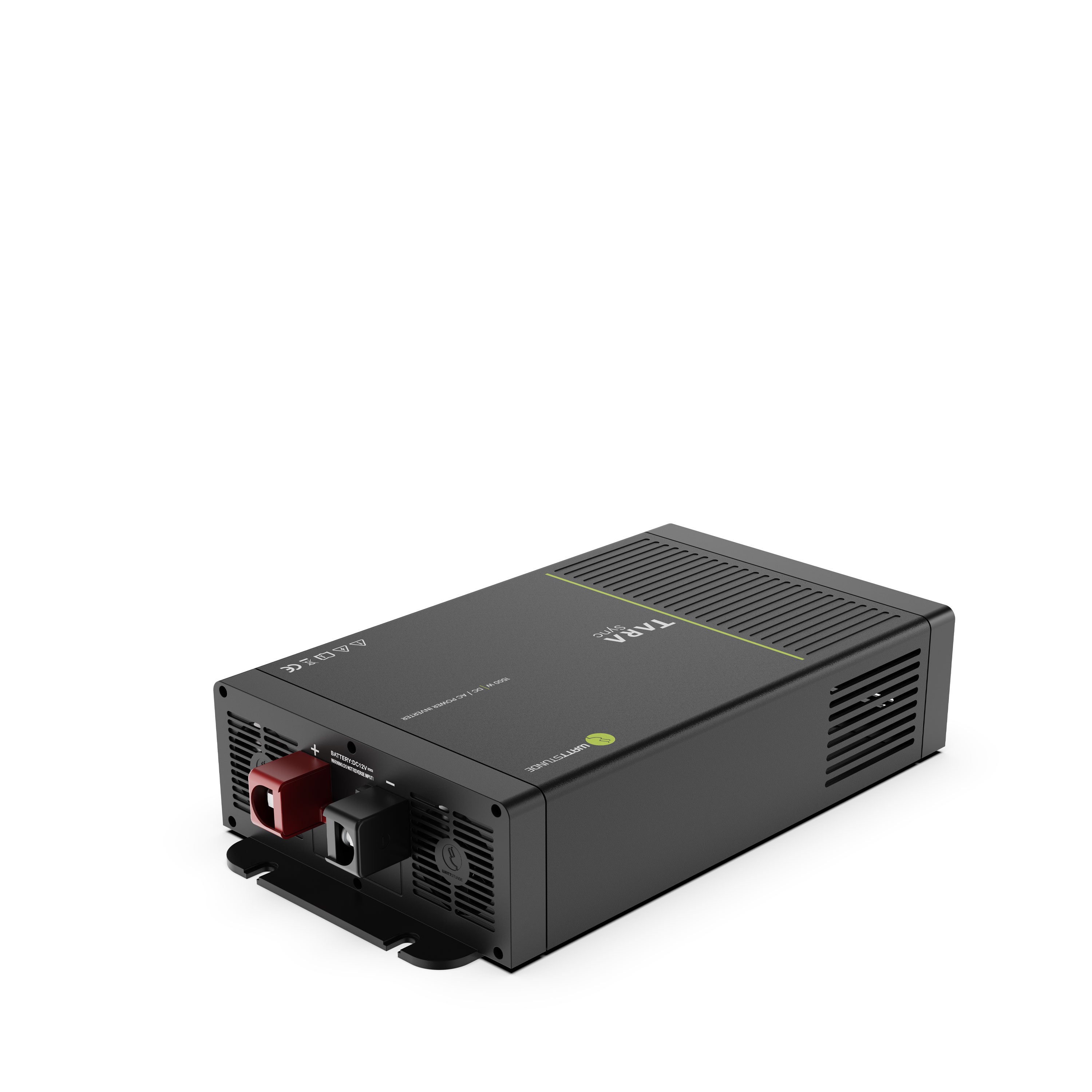
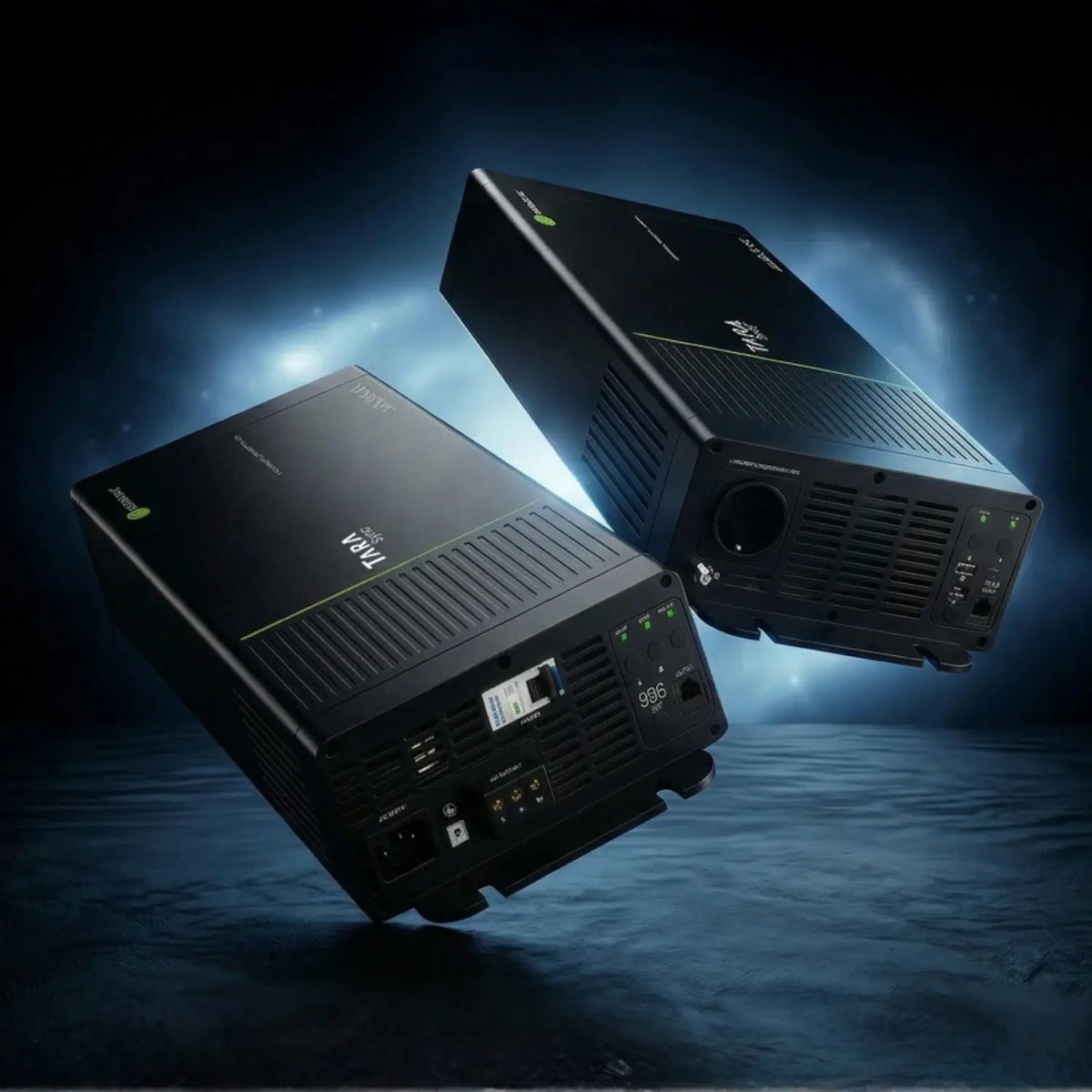
The TARA Sync inverter series consistently uses pure sine wave output. This allows you to operate almost all 230V devices safely and without restrictions.
At the same time, it's true that whenever a device can be operated directly with 12V, this is the most energy-efficient solution. An inverter converts electricity – and every conversion involves slight losses. If you consciously use 230V devices and otherwise rely on 12V appliances, you'll get the most out of your battery capacity and make your system particularly efficient.
Typical 230V appliances when traveling

With a suitable inverter, many possibilities open up for you in everyday life on the go:
- Working in the camper: laptop, monitor, chargers
- Kitchen & Household: Coffee machine, kettle, blender
- Technology & Leisure: Camera, drone and e-bike chargers
- Tools: Drill or battery chargers
Especially on longer journeys or when working on the go, 230 V quickly becomes indispensable.
The right inverter power for your setup
The required power output of your inverter depends on the devices you want to operate – and whether they will be running simultaneously. An undersized inverter will shut down under overload. Conversely, an oversized inverter will consume unnecessary energy when idle – and even during operation if only small devices are connected. A properly selected inverter therefore ensures stable and efficient operation.
As a rough guide:
- 300–600 W : Notebook, camera chargers, e-bike charger
- 1,000–1,500 W : Coffee machine, kettle, smaller household appliances
- 2,000–3,000 W : Induction hob, high-performance appliances
A reserve of about 20–30% ensures safety without unnecessarily burdening your system.
Properly plan for inrush current and peak load
Many devices require significantly more power briefly when switched on than during normal operation. These so-called inrush currents occur primarily in devices with heating elements, motors, or compressors.
Typical examples include coffee machines, kettles, hair dryers, or power tools. The inverter must be able to handle this peak power, otherwise it will shut down.
Therefore, pay attention not only to the continuous power rating but also to the specified peak power of the inverter. The TARA Sync models are designed to reliably handle these short-term power peaks. Thanks to the integrated soft-start technology, inrush currents when starting connected devices are reduced, thus further protecting the battery, while the temperature- and load-dependent fan control ensures pleasantly quiet operation – ideal for mobile use or enclosed spaces.
Making good use of multiple inverters in a camper van
In some setups, it can be advantageous to use two inverters: a small one for everyday appliances and a larger one for high-performance devices. This avoids the unnecessary standby power consumption of a large inverter – because not only in standby mode, but also when operating small appliances, an oversized device often consumes more power than necessary.
It is important to clearly separate the 230V circuits. Inverters must not feed into the same socket simultaneously. Separate sockets or changeover switches ensure safe operation.
Installation of the TARA Sync inverter – this is what matters
Proper installation is crucial for reliable operation. The inverter should be mounted as close as possible to the battery to avoid voltage drops and to keep cable cross-sections within reasonable limits.
Equally important are:
- adequately dimensioned battery cables
- a suitable fuse near the battery
- good ventilation for heat dissipation
A properly planned installation ensures that your inverter works efficiently and reliably supplies your technology.
Important: The battery used must also be able to provide the required continuous discharge current. You can find this information in the battery's datasheet. A 2200 W inverter, for example, requires a minimum continuous discharge current of 175 A. If several batteries are connected in parallel, the possible continuous discharge current is added accordingly.
Comfort and control with the TARA Sync remote control

With the optional TARA Sync remote control, you can conveniently control the inverter from your living space. It mirrors the controls of the main unit, allowing you to install the TARA Sync safely and discreetly without sacrificing ease of use. In the Base version, the inverter itself and the sleep mode can be controlled directly via the remote control.
This increases everyday comfort and helps you to consciously control your electricity consumption.
Maximum freedom while traveling with the TARA Sync inverter
An inverter is the key to greater flexibility in your camper. With the TARA Sync inverter series, you can use 230V on the go just as easily as at home.
Properly sized, cleanly installed and sensibly used, the inverter becomes the central component of your on-board power system – for more freedom, comfort and independence while traveling.