Step by step you will learn how to become self-sufficient – and at the end you will find the right products to implement your system.
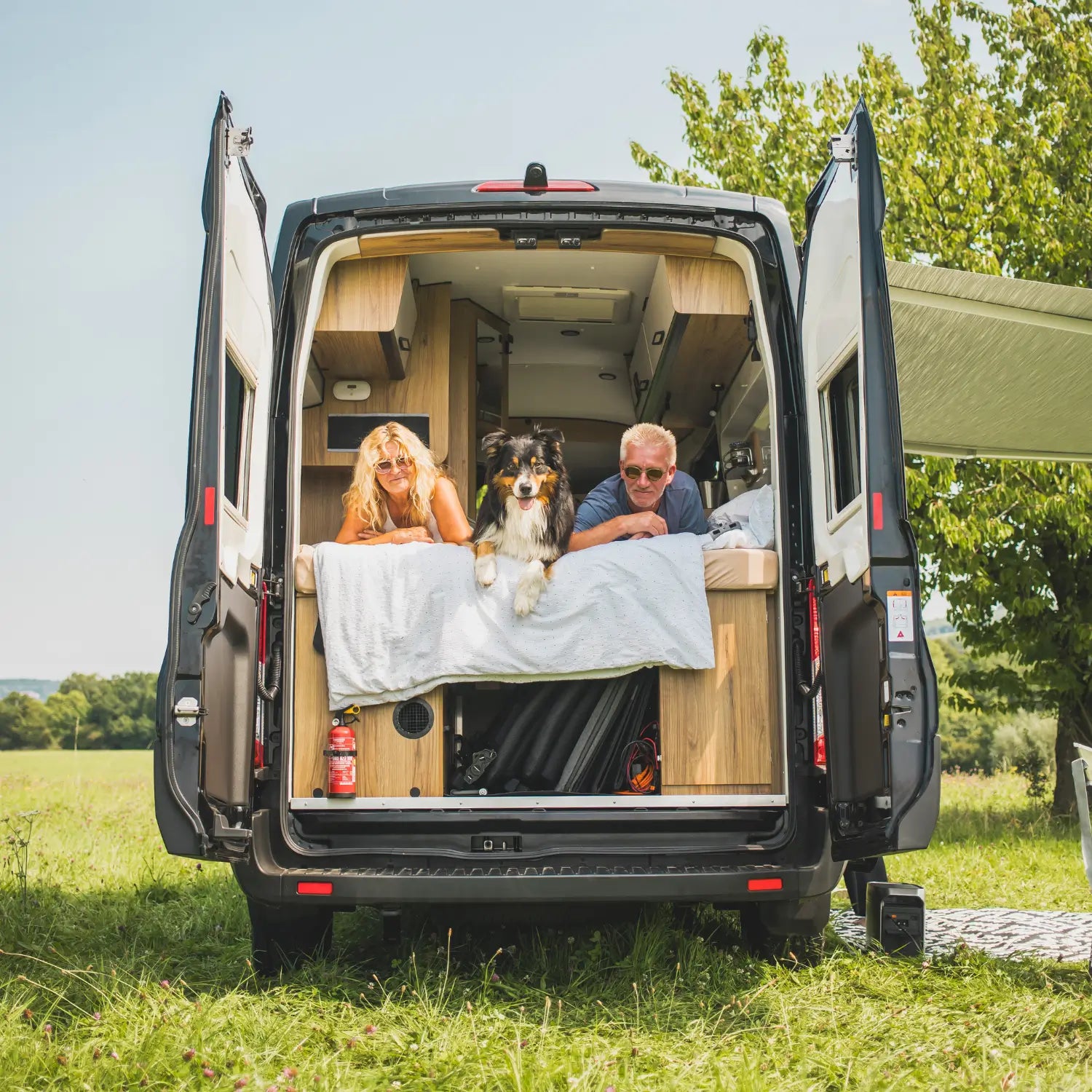
Camping is trending – but so are the costs! Anyone traveling by campervan quickly realizes: campsites have become expensive, and electricity costs extra. What used to be considered an affordable vacation now really adds up. But there is a solution: equip your campervan with its own power supply. This way, you save yourself the expensive power outlets at campsites – and enjoy maximum freedom. You also have the option of foregoing campsites altogether and simply camping wild – even more freedom and often the most beautiful views included.
Why electricity is so expensive at campsites
Many campsites in Europe no longer just charge for the pitch. Electricity is almost always charged separately – and this adds up considerably. In countries like Spain or Denmark, you can easily pay €5–6 per night for electricity; in popular holiday regions, it can even be €7–8. On a month-long trip, this can quickly add up. €150–200 , in some cases even more €250 for electricity alone. On top of that, there are the campsite fees, averaging €40–70 per night. This quickly turns what seems like a cheap motorhome holiday into an expensive affair – especially if you're traveling for an extended period.
Self-sufficiency through independent power supply – what does that mean?
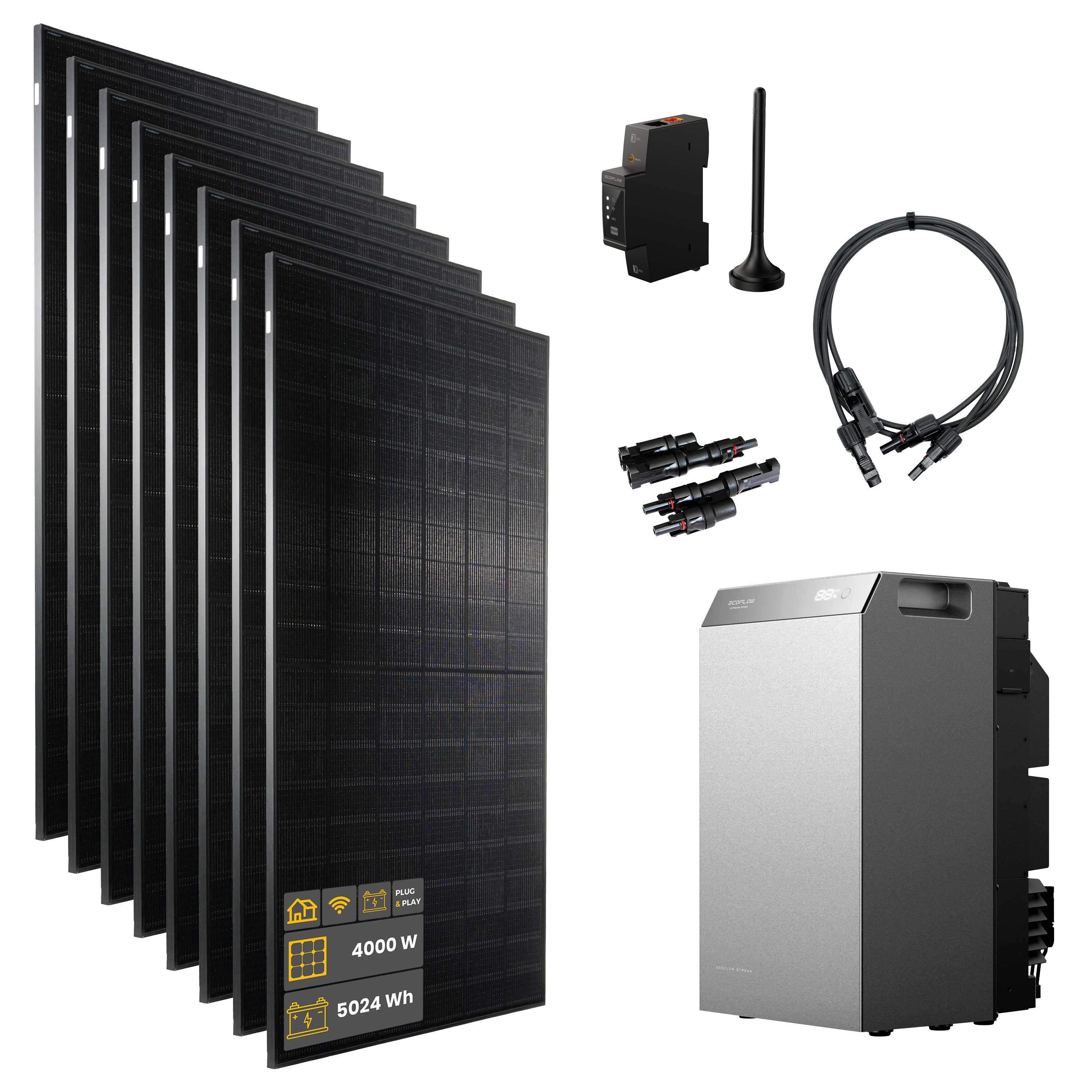
A self-sufficient motorhome means you generate and store your own electricity. This makes you independent of the infrastructure at campsites. The most important components are:
- Solar modules – fixed on the roof or flexible for setup
- Battery system – lithium or AGM, depending on budget and requirements
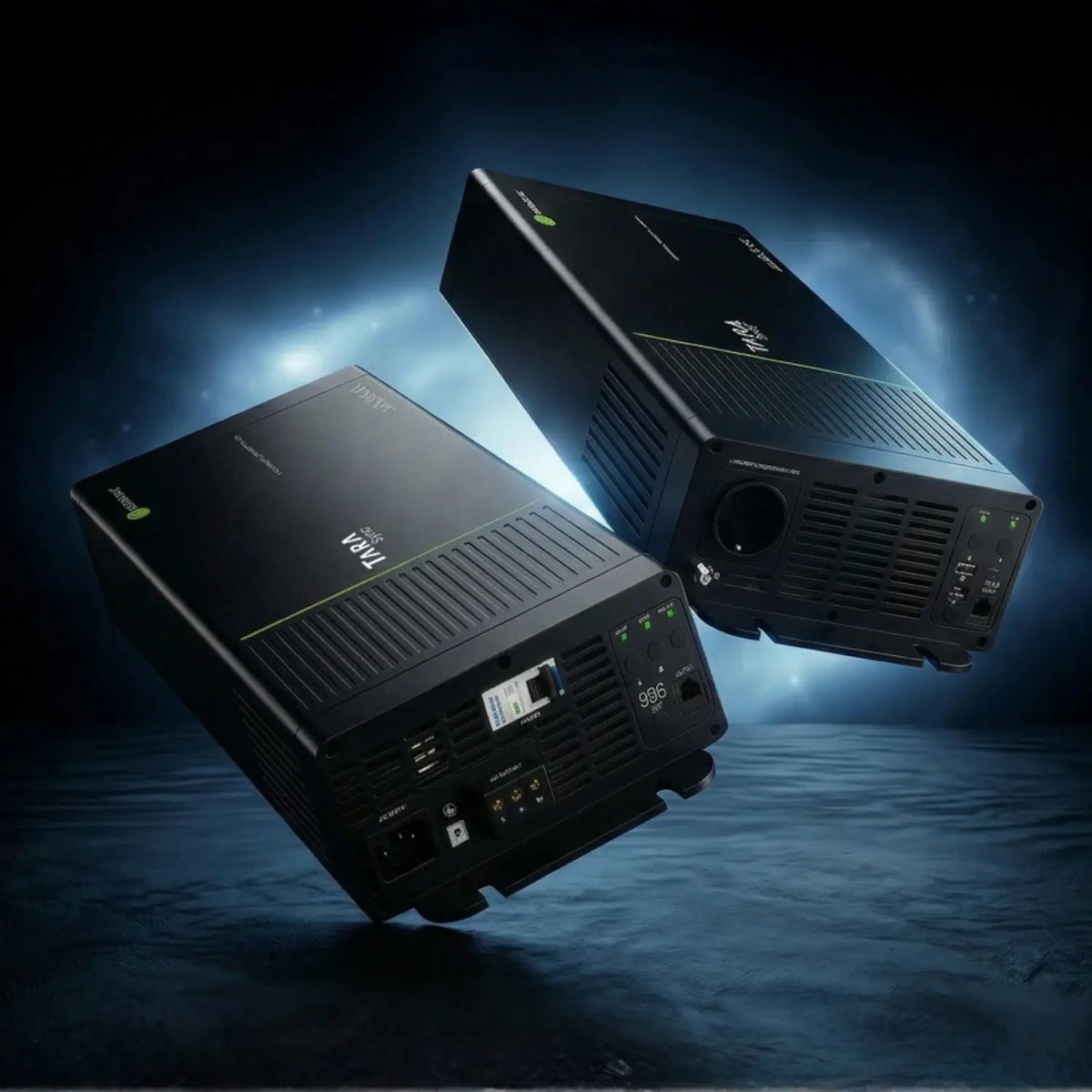
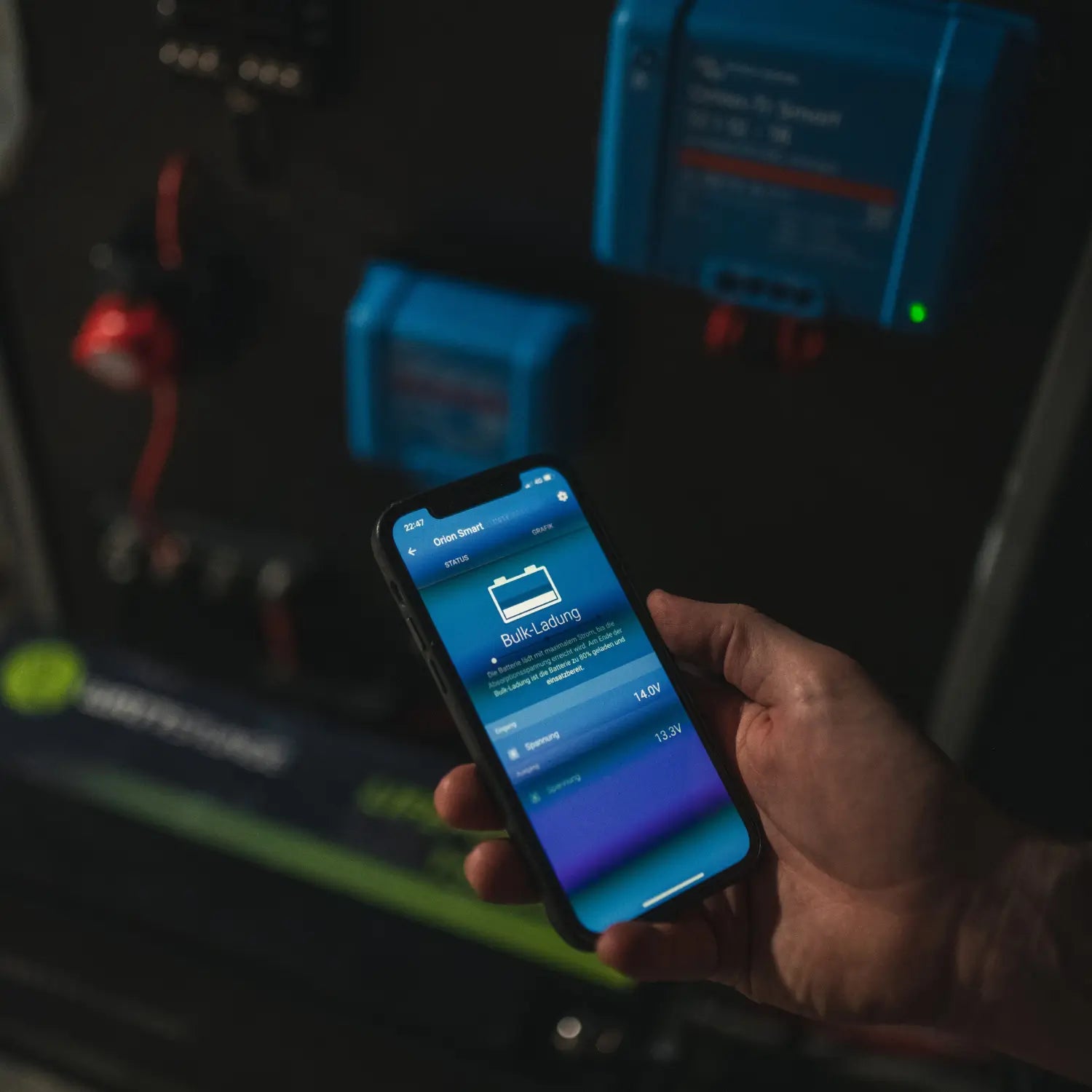
- Charge controllers & inverters – for efficient charging and the use of 230 V devices
Alternative solutions for flexible campers
Not everyone wants to install a complete solar power system on their roof. Depending on electricity needs, there are also compact solutions:
- Power station : A mobile all-in-one solution with integrated battery, inverter and connections.
- SOLA Ease SunFolder : Portable, foldable solar panels that can be flexibly positioned.
- CEE power supply cable with residual current device (RCD) protection : This allows you to safely feed power into the vehicle's electrical system – ideal if you want to remain flexible.
The advantage: You decide how much independence you really need. Everything is possible, from a small setup to a fully equipped system.
Investment vs. Savings: When does it really pay off?
You invest €3,000 in your energy setup (e.g., solar panels, lithium battery, MPPT charge controller, inverter, or a high-performance power station with SunFolder and CEE inlet cable with residual current device). The crucial question now is: After how many vacations will it have paid for itself?
Assumptions for the calculation
- Electricity at the campsite: €6 per night (conservative rate)
- Parking space fee (with electricity connection): €50 per night (simplified average)
- Trip duration: 1 week (7 nights)
- Annual travel pattern: 4 weeks of vacation, of which 3 weeks are wild camping (without a campsite), 1 week is camping.
Formulas
Savings per week of free camping = 7 × (€50 pitch + €6 electricity) = €392
Savings per campsite week (own electricity) = 7 × €6 = €42
Annual savings = 3 × €392 + 1 × €42 = €1,218
Break-even (years) = €3,000 / €1,218 ≈ 2.5 years
In short: With 3 weeks of free camping and 1 week at a campsite per year, a €3,000 electricity setup pays for itself after about 2.5 years (at the latest within the 3rd travel season ).
Optional for classification:
At continuous freestanding The savings would amount to €392 per week → Break-even after Approximately 8 weeks of freestanding parking .
At Campsite only, no electricity available You save €42 per week → Break-even only after 72 weeks .
Countries where energy self-sufficiency is particularly worthwhile

Especially in countries where wild camping is possible, having your own power supply offers you great advantages:
- Scandinavia : In Norway and Sweden, you can camp almost anywhere thanks to the right of public access.
- France : Hundreds of free parking spaces rarely have electricity – with your own power supply, it's not a problem.
- Spain & Portugal : Electricity costs are high at campsites, and wild camping is tolerated in many places – self-sufficiency pays off twice over.
- Germany : The legal situation is stricter, but spontaneous overnight stays are permitted. Having your own electricity gives you significantly more flexibility.
Techniques & tips for greater freedom from electricity
To ensure your energy self-sufficiency setup works optimally, you should consider a few points:
- Sizing your solar system : Consider how much electricity you need daily. 300–400 Wp is often sufficient for two people.
- Battery choice : Lithium batteries are more expensive, but lighter and longer lasting. AGM batteries are cheaper, but heavier and take up more space.
- Inverter : For coffee machine, laptop or hairdryer you need 230 V – an inverter is therefore essential.
- Save energy : Use LED lighting, efficient cooling appliances, and charge devices when the sun is shining.
- Backup solutions : A power station can be helpful in an emergency.
Energy independence brings freedom & saves money
Campsite electricity is expensive – and often unnecessary. With your own power supply, you become independent and significantly reduce your travel costs. Whether with solar panels on the roof, a mobile power station, or a flexible SunFolder: an investment of just €1,000–€4,000 secures you long-term freedom and full cost control.
Make your motorhome ready for energy self-sufficiency – and decide for yourself where you spend the night!