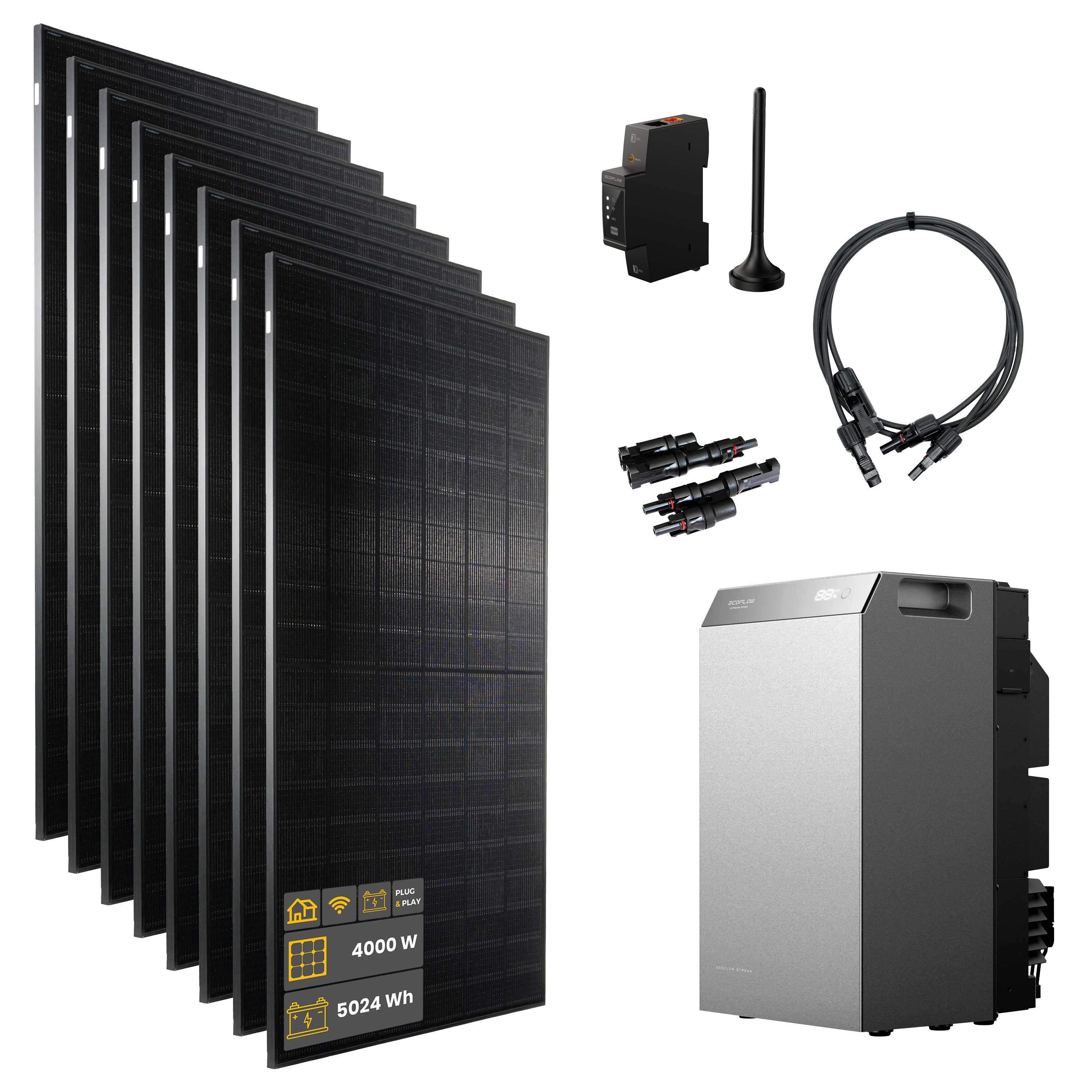

Solar modules – overview, types and applications
Solar panels make it possible to convert solar energy directly into usable electricity – whether in a camper van, on a boat, in the garden or on a balcony. They form the basis of modern, self-sufficient power systems and can be flexibly adapted to different applications.
If you would like to directly compare suitable products, you can find an overview of all variants here: All solar modules .
How do solar panels work?
Solar modules consist of multiple solar cells that generate direct current (DC) when exposed to light. This DC power can be used directly, stored, or converted into alternating current (AC) via an inverter. Depending on the system design, charge controllers, batteries, or energy storage devices are used.
You can find a detailed explanation of how they work, how to plan and calculate their performance in our solar module topic area .
What types of solar panels are there?
- Framed solar modules are suitable for fixed installations and offer high stability.
- Flexible solar modules are particularly lightweight and ideal for curved surfaces such as vehicle roofs.
- Foldable solar panels offer high mobility and flexible application possibilities.
For which applications are solar modules suitable?
- Self-sufficient motorhome and camping systems
- Boats and maritime applications
- Garden sheds and off-grid projects
- Balcony and mobile solutions
Performance and planning
The required module power depends on the power consumption and the planned usage time. For mobile applications, it is recommended to calculate the requirements realistically and plan for a power reserve.
You can find a practical step-by-step guide here: Calculate a solar system for your motorhome .